
Common Mistakes to Avoid on a Tanzania Self-Drive Safari
A self-drive safari in Tanzania is one of the most exciting ways to explore East Africa. Driving through the vast plains of the Serengeti, descending into the Ngorongoro Crater, or navigating the baobab-filled roads of Tarangire gives travelers complete freedom and flexibility. You decide where to stop, how long to stay, and which routes to take.
However, that freedom also comes with responsibility. Tanzania is not a destination where you can simply rent a car, rely on your phone, and assume everything will work itself out. Distances are longer than they appear, road conditions can change dramatically, and wildlife areas require careful planning.
Many travelers make avoidable mistakes that turn what should be an unforgettable adventure into a stressful experience. From choosing the wrong vehicle to underestimating driving times, these errors can cost you money, waste valuable safari time, and even put your safety at risk.
This guide explains the most common mistakes to avoid on a Tanzania self-drive safari and gives you practical advice to help you travel smarter.
1. Underestimating Distances in Tanzania
One of the biggest mistakes travelers make is assuming that a short distance on the map means a quick drive.
In Tanzania, roads between parks and towns are often slower than expected. A drive that appears to be 150 kilometers may take four or five hours because of rough roads, roadworks, speed limits in villages, wildlife crossings, and long stretches of gravel.
Inside national parks, driving is even slower. In places like Serengeti National Park, Ngorongoro Conservation Area, and Tarangire National Park, game drive roads are often uneven, dusty, rocky, or muddy depending on the season. Average speed may be only 20 to 30 kilometers per hour.
For example:
- Arusha to Tarangire can take around 2.5 to 3 hours
- Tarangire to Central Serengeti can take 6 to 8 hours
- Serengeti to Ngorongoro Crater may take most of the day
Many self-drive travelers create unrealistic itineraries that require too much driving in one day. This leaves little time for enjoying the parks and often results in arriving after dark.
How to Avoid This Mistake
- Plan fewer destinations and spend more time in each park
- Use realistic travel times, not just map distances
- Start early in the morning
- Leave extra time for unexpected delays
- Never plan to arrive at your accommodation after sunset
A slower, more relaxed itinerary almost always creates a better safari experience.
2. Choosing the Wrong Vehicle
Trying to save money by renting a small car is one of the worst decisions you can make on a Tanzania self-drive safari.
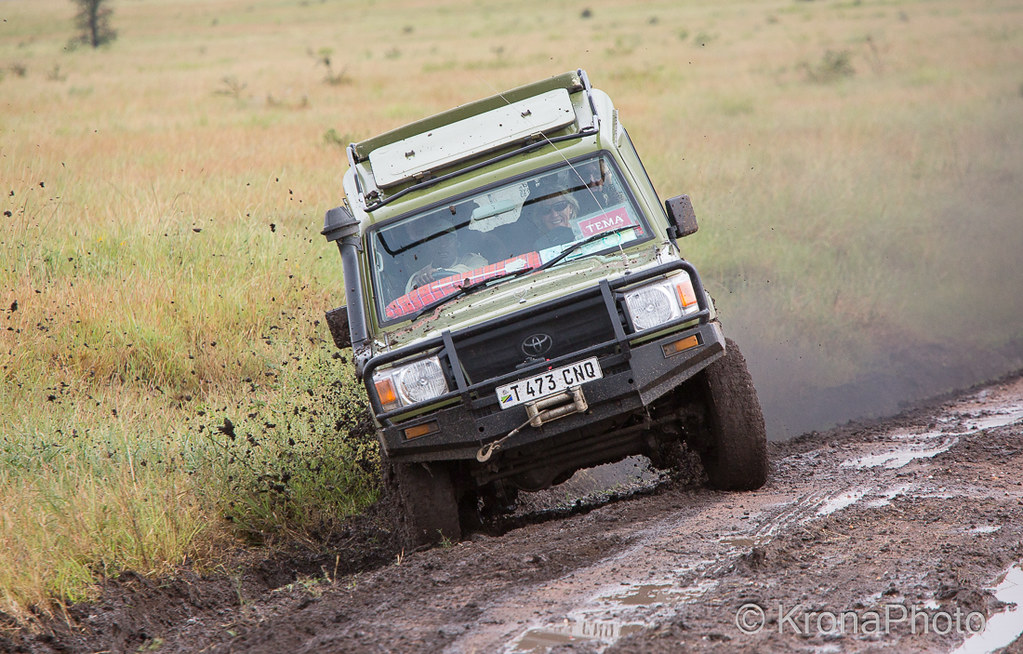
Many roads in Tanzania, especially inside national parks, require a proper 4×4 vehicle with high ground clearance. During the rainy season, some roads become muddy and slippery. During the dry season, washboard roads and rocky tracks can damage vehicles with low clearance.
Small SUVs or standard sedans may seem cheaper at first, but they are often unsuitable for safari conditions. Getting stuck, damaging the vehicle, or needing roadside assistance in a remote area will end up costing far more.
The ideal vehicle for a Tanzania self-drive safari is:
- A reliable 4×4
- High ground clearance
- Strong suspension
- Two spare tires
- Recovery equipment
- Working air conditioning
- Long-range fuel tank if possible
Land Cruisers, Prado models, and similar safari vehicles are the most common and reliable choices.
Common Vehicle Mistakes
- Renting a 2WD vehicle for national parks
- Not checking tire condition before departure
- Forgetting to ask about a spare tire and jack
- Not testing the 4WD system before leaving
- Ignoring insurance coverage details
How to Avoid This Mistake
Inspect the vehicle carefully before you leave. Take photos, test the brakes, lights, and four-wheel-drive system, and ask the rental company exactly what happens if you break down.
3. Relying Only on Google Maps
Google Maps works well in cities and towns, but it is not reliable enough for remote safari areas in Tanzania.
Inside many parks, roads are not accurately marked, and some tracks shown on Google Maps may not exist anymore. Mobile network coverage is also limited in remote regions such as western Serengeti, southern Serengeti, and parts of Ngorongoro.
Travelers who rely only on their phone often end up taking wrong turns, getting lost, or wasting fuel.
Better Navigation Options
To avoid navigation problems, use multiple tools:
- Download offline maps before your trip
- Use apps such as Maps.me or Gaia GPS
- Carry a printed map of each park
- Mark important locations in advance
- Save accommodation coordinates before leaving
Many park gates and lodges provide maps. These are often more accurate than online navigation.
Important Tip
Always know where the nearest gate, campsite, fuel station, and ranger post are located. If you get lost, these points become essential.
4. Driving After Dark
Driving after dark is one of the most dangerous mistakes you can make in Tanzania.
Outside the parks, roads are often poorly lit and may contain potholes, animals, bicycles, pedestrians, or parked trucks without lights. Inside the parks, driving after sunset is usually prohibited unless you are on an official night drive.
Wild animals are much more active at night. It becomes difficult to spot elephants, buffalo, antelope, or even lions crossing the road.
In addition, if you break down at night in a remote area, help may be difficult to find.
Why Travelers End Up Driving at Night
- Overpacked itineraries
- Leaving too late in the day
- Spending too much time on game drives
- Underestimating travel time between parks
How to Avoid This Mistake
Plan every day so you arrive at your lodge, campsite, or next destination before sunset. In Tanzania, sunset is usually around 6:30 pm throughout the year.
A good rule is to stop driving by 5:30 pm.
5. Not Understanding Park Entry Rules and Fees
Tanzania’s national parks have strict rules regarding entry times, payments, and permits.
Many travelers arrive at a gate only to discover that they do not have the correct paperwork, enough money, or the required permit.
Most park fees are valid for only 24 hours from the moment you enter. If you arrive late in the afternoon, you may lose most of that time.
For example, entering Serengeti at 4:00 pm means your entry expires the next afternoon, even though you only had a short game drive.
Common Mistakes
- Arriving late in the day
- Forgetting that park fees are time-limited
- Assuming cash is accepted everywhere
- Not carrying your passport or ID
- Missing vehicle permits
Many park gates prefer or require card payments.
How to Avoid This Mistake
Before your trip:
- Check all park entry fees
- Know gate opening and closing times
- Confirm accepted payment methods
- Carry identification and vehicle documents
- Pre-book permits where required
Being prepared saves time and avoids unnecessary stress at the entrance.
6. Failing to Fuel Up Properly
Fuel stations become much less common once you leave major towns.
Travelers often assume they will find fuel near the next park or village, only to discover that the nearest station is many kilometers away.
This is especially important in places like Serengeti, where there are only limited fuel options and some may not always have supply.
Running out of fuel in a remote area is more than inconvenient. It can leave you stranded for hours.
Where to Fill Up
Always fill your tank in major towns such as:
- Arusha
- Karatu
- Mto wa Mbu
- Moshi
- Babati
If you are heading into a remote park for several days, consider carrying extra fuel in approved jerry cans.
Fuel Planning Tips
- Never let your tank drop below half full
- Fill up whenever you have the chance
- Know how far the next fuel station is
- Carry cash or a card in case one payment method fails
7. Packing the Wrong Things
Many first-time self-drive travelers either overpack unnecessary items or forget essential equipment.
Too much luggage can reduce space and make the vehicle uncomfortable, especially on long drives. At the same time, forgetting important items such as water, recovery gear, or a first aid kit can create real problems.
Common Things People Forget
- Spare tire and tire tools
- Drinking water
- Snacks and food supplies
- Power bank
- Torch or headlamp
- Sunscreen
- Insect repellent
- First aid kit
- Camera batteries
- Rain jacket
What You Should Always Carry
A well-prepared self-drive safari vehicle should include:
- Two spare tires
- Tire inflator
- Jumper cables
- Tow rope
- First aid kit
- Plenty of water
- Emergency contact numbers
- Extra phone charger
- Basic toolkit
If you are camping, remember that nights can be cold, especially around Ngorongoro and highland areas.
8. Ignoring Wildlife Safety Rules
A safari is exciting because you are close to wild animals, but that also means you need to respect safety rules.
Some travelers get too close to animals for photos, leave their vehicle in dangerous areas, or attempt to feed wildlife.
These behaviors are not only dangerous but also illegal in many parks.
Animals in Tanzania are wild and unpredictable. Even animals that appear calm can become aggressive if they feel threatened.
Elephants, buffalo, hippos, and even giraffes can be dangerous at close range.
Major Wildlife Mistakes
- Getting out of the car outside designated areas
- Driving too close to elephants or lions
- Feeding monkeys or baboons
- Standing through the sunroof near predators
- Ignoring ranger instructions
How to Stay Safe
- Stay inside your vehicle unless you are in a marked picnic or rest area
- Keep a safe distance from all animals
- Never block an animal’s path
- Remain calm and quiet around wildlife
- Follow all park regulations
Respecting wildlife keeps both you and the animals safe.
9. Booking Accommodation Too Late
Accommodation in Tanzania’s popular safari areas often fills up months in advance.
This is especially true during peak season from June to October and during the Great Migration months in Serengeti.
Many self-drive travelers assume they can find a room or campsite at the last minute. Unfortunately, this often leads to long drives searching for available accommodation or paying much higher prices.
Areas That Fill Up Quickly
- Central Serengeti
- Northern Serengeti during migration season
- Ngorongoro Crater rim
- Tarangire during the dry season
How to Avoid This Mistake
Book your accommodation as early as possible, especially if you are traveling in peak season.
Keep copies of:
- Booking confirmations
- Contact numbers
- GPS coordinates
Knowing exactly where you are staying makes navigation much easier.
10. Not Knowing Basic Vehicle Maintenance
You do not need to be a mechanic to do a Tanzania self-drive safari, but you should know a few basic things.
Flat tires are common on rough roads. Dust can affect air filters, and long distances can put pressure on the engine.
If you know how to handle simple problems, you can save hours waiting for assistance.
Useful Skills to Learn Before Your Trip
- How to change a tire
- How to check oil and coolant
- How to use a jack
- How to connect jumper cables
- How to engage four-wheel drive
Ask the rental company to show you these things before you leave.
Also save their emergency number in your phone.
11. Traveling During the Wrong Season Without Preparation
Tanzania can be visited year-round, but weather conditions greatly affect self-drive travel.
The rainy seasons, usually from March to May and again around November, can make roads muddy and difficult. Some routes may become impassable.
At the same time, the dry season brings dust, higher demand, and more crowded parks.
Seasonal Self-Drive Challenges
During the rainy season:
- Roads may flood
- Mud can make driving difficult
- River crossings may be unsafe
During the dry season:
- Accommodation prices increase
- Parks are busier
- Dust reduces visibility
How to Avoid Seasonal Problems
Research road conditions before you travel and ask local authorities or your rental company for advice.
If you are visiting during the rainy season, a strong 4×4 becomes even more important.
12. Trying to See Too Much in Too Little Time
Many travelers try to visit every famous destination in one short trip.
They attempt to combine Tarangire, Lake Manyara, Ngorongoro, Serengeti, Arusha National Park, and even Zanzibar in only a few days.
The result is constant driving, exhaustion, and very little time to enjoy the experience.
A self-drive safari should not feel like a race.
Why Slower Travel Is Better
Spending two or three nights in one place allows you to:
- Enjoy sunrise and sunset game drives
- Explore different parts of the park
- Rest between long journeys
- Experience the destination more deeply
Instead of trying to visit everything, choose fewer destinations and spend more time in each.
For example, a one-week self-drive safari could focus only on:
- Tarangire
- Ngorongoro
- Serengeti
This creates a much more enjoyable trip than trying to add too many places.
Final Thoughts
A Tanzania self-drive safari is one of the best travel adventures in Africa, but it requires more preparation than many people expect. The most common mistakes—choosing the wrong vehicle, underestimating distances, driving after dark, ignoring park rules, or failing to prepare properly—can quickly turn an exciting trip into a frustrating one.
The good news is that these mistakes are easy to avoid with careful planning.
Choose the right vehicle, allow more time than you think you need, keep your itinerary realistic, and always respect the environment and wildlife around you.
The more prepared you are, the more freedom you will have to enjoy the incredible landscapes, wildlife, and unforgettable experiences that Tanzania offers.
A successful self-drive safari is not about covering the most distance. It is about traveling safely, comfortably, and slowly enough to appreciate every moment.
With the right preparation, your Tanzania self-drive journey can become the adventure of a lifetime.