
1-Day Serengeti Safari from Mwanza: The Ultimate Guide to Tanzania’s Most Accessible Wildlife Adventure
Introduction
For travelers based in Mwanza, one of the greatest advantages is the city’s proximity to the world-renowned Serengeti National Park. While many visitors travel from Arusha and spend several days exploring Tanzania’s famous northern safari circuit, residents and visitors in Mwanza have a unique opportunity to experience the Serengeti in just a single day.
A one-day Serengeti safari from Mwanza is one of the most exciting wildlife adventures available in Tanzania. Thanks to the relatively short distance between Mwanza and the western boundary of the Serengeti, travelers can leave early in the morning, spend an entire day searching for wildlife, and return to Mwanza the same evening.
Whether you are a business traveler with limited time, a tourist passing through Mwanza, a photographer looking for wildlife encounters, or simply someone wanting to experience Africa’s most famous national park, a day trip to the Serengeti can be an unforgettable experience.
This guide covers everything you need to know about planning a one-day Serengeti safari from Mwanza, including travel times, wildlife expectations, best seasons, costs, and practical tips.
This safari cannot be offered on self drive basis due to the tightness of the schedule
Why Visit the Serengeti from Mwanza?
The Serengeti National Park is one of the most celebrated wildlife destinations on Earth. Covering nearly 15,000 square kilometers, the park is home to some of Africa’s highest concentrations of wildlife and hosts the famous Great Migration.
For visitors staying in Mwanza, the Serengeti offers a safari experience without the need for long-distance domestic flights or multi-day travel arrangements. The western section of the park is particularly accessible from Mwanza, making day trips both practical and rewarding.
The route from Mwanza to the Ndabaka Gate, the western entrance of Serengeti National Park, is significantly shorter than journeys from other major Tanzanian cities. This accessibility makes Mwanza one of the best gateways for quick Serengeti adventures.
A day safari provides a chance to witness Tanzania’s incredible wildlife while maintaining a flexible schedule and budget.
The Journey from Mwanza to Serengeti National Park
The adventure begins before sunrise. We recommend departing Mwanza between 4:30 am and 5:00 am to maximize time inside the park.
The road from Mwanza passes through the scenic landscapes of northwestern Tanzania, including farming communities, acacia woodlands, and rolling countryside surrounding Lake Victoria.
As you travel closer to the park, the scenery gradually changes. The villages become less frequent, wildlife sightings along the roadside become more common, and the unmistakable atmosphere of the African wilderness begins to emerge.
The drive typically takes between two-and-a-half and three-and-a-half hours depending on road conditions, weather, and the exact destination within the western Serengeti.
Upon arrival at Ndabaka Gate, visitors complete park entry formalities before beginning their game drive.
Entering the Western Serengeti
Many first-time visitors are surprised by the richness of wildlife found in the western corridor of the Serengeti.
While the central Serengeti often receives most of the attention, the western section offers exceptional wildlife viewing opportunities and fewer vehicle crowds.
The western Serengeti features a combination of open grasslands, riverine forests, woodland habitats, and seasonal wetlands. This diversity supports a wide variety of animals throughout the year.
Game drives usually begin immediately after entering the park, and wildlife encounters can start within minutes.
Wildlife You Can Expect to See
One of the biggest attractions of a Serengeti day safari is the possibility of encountering Africa’s iconic animals in their natural environment.
Lions
The Serengeti is famous for its lion population, which is among the largest in Africa.
Visitors frequently encounter prides resting beneath acacia trees, walking across the plains, or watching prey from strategic vantage points.
During cooler morning hours, lions are often active, providing excellent photographic opportunities.

Elephants
African elephants are commonly sighted in the western Serengeti.
Large family groups can often be observed moving through woodland areas, feeding on vegetation, or crossing open plains.
Watching these magnificent giants interact with one another is one of the highlights of any safari.
Giraffes
Tanzania’s national animal is abundant throughout the Serengeti.
Giraffes move gracefully across the landscape, browsing on acacia leaves and often providing beautiful silhouettes against the African sky.
Their calm nature makes them particularly enjoyable to observe and photograph.
Buffalo
African buffalo are among the most commonly encountered animals during a day safari.
Large herds frequently roam the western corridor, sometimes numbering in the hundreds.
Despite their seemingly calm appearance, buffalo are considered among Africa’s most dangerous animals and should always be viewed from a safe distance.
Zebras and Wildebeest
Zebras and wildebeest form the backbone of the Serengeti ecosystem.
These grazing animals are often seen in mixed herds spread across the plains.
Depending on the season, visitors may witness thousands of animals moving through the western Serengeti as part of the Great Migration.
Hippos and Crocodiles
The rivers of the western Serengeti provide habitat for hippos and Nile crocodiles.
Hippo pools are popular safari stops where visitors can watch these massive animals resting in the water while occasionally emerging to graze.
Large crocodiles can often be seen basking on riverbanks.
Leopards and Cheetahs
While more elusive than lions, both leopards and cheetahs inhabit the Serengeti.
Leopards are frequently found in wooded areas and along river systems, whereas cheetahs prefer open grasslands where they can hunt effectively.
A sighting of either species is considered a special safari experience.
The Great Migration and Day Trips from Mwanza
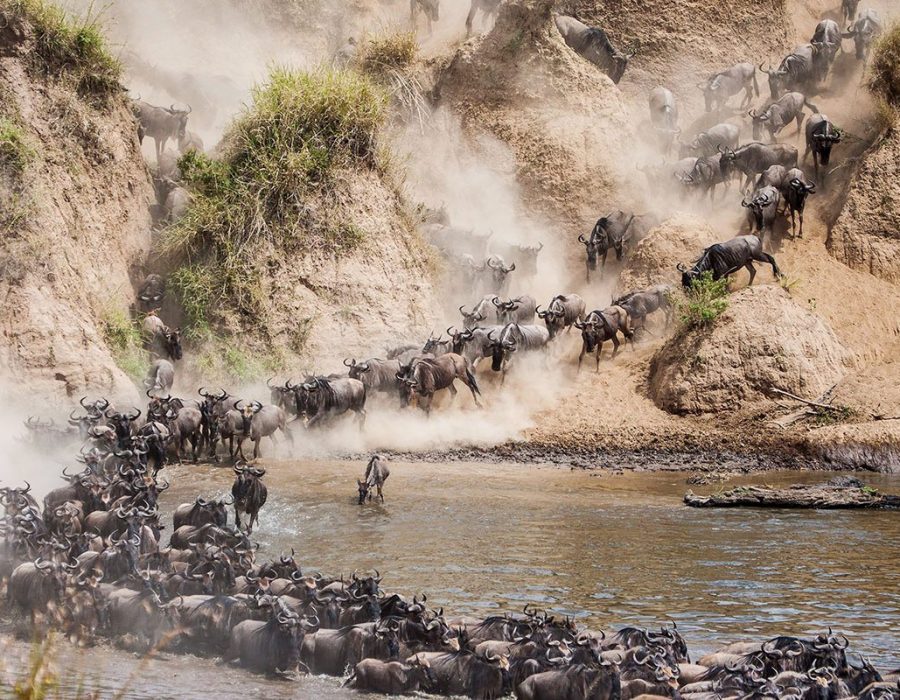
The Serengeti’s most famous event is undoubtedly the Great Migration.
Each year, more than two million wildebeest, zebras, and gazelles move through the Serengeti ecosystem in search of fresh grazing and water.
The migration is not a single event but a continuous cycle influenced by rainfall patterns and pasture conditions.
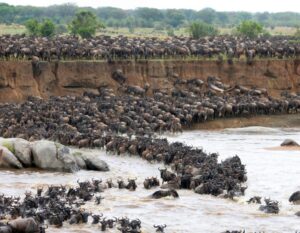
Between May and July, large numbers of migrating animals often pass through the western corridor, making this one of the most exciting periods for a day safari from Mwanza.
During these months, visitors may witness massive herds stretching across the horizon, creating one of the greatest wildlife spectacles on Earth.
Photography Opportunities
A one-day Serengeti safari offers exceptional opportunities for wildlife photography.
The early morning and late afternoon provide ideal lighting conditions, often referred to as the “golden hours.”
Photographers can capture dramatic images of:
- Lions resting in golden grass
- Elephants walking through dust clouds
- Giraffes silhouetted against sunrise skies
- Massive herds of wildebeest and zebras
- Birds of prey scanning the landscape
Even smartphone photographers can return with impressive images thanks to the abundance of wildlife and stunning scenery.
Birdwatching in the Serengeti
While the Serengeti is famous for its mammals, bird enthusiasts will find plenty to enjoy.
More than 500 bird species have been recorded in the ecosystem.
Common sightings include:
- Secretary birds
- Ostriches
- Vultures
- Eagles
- Hornbills
- Bee-eaters
- Kingfishers
- Storks
- Herons
The variety of habitats found in the western Serengeti supports an impressive diversity of birdlife throughout the year.
Typical Day Safari Itinerary
04:30 – Departure from Mwanza
Begin the journey before sunrise to maximize time inside the park.
08:00 – Arrival at Ndabaka Gate
Complete registration and park entry procedures.
08:30 – Morning Game Drive
Explore wildlife-rich areas while animals are most active.
12:30 – Picnic Lunch
Enjoy lunch at a designated picnic site within the park.
13:30 – Afternoon Game Drive
Continue searching for predators, elephants, and other wildlife.
16:00 – Begin Return Journey
Exit the park and start driving back to Mwanza.
19:00 – Arrival in Mwanza
Return after a full day of adventure and wildlife viewing.
Best Time for a Day Safari from Mwanza
June to October
This is generally considered the best safari season.
The dry weather improves road conditions, and wildlife is easier to locate because animals concentrate around water sources.
November to December
The landscape becomes greener and more scenic.
Birdlife is particularly active during this period.
January to March
Excellent for photography due to lush vegetation and dramatic skies.
May to July
One of the best periods for viewing sections of the Great Migration in the western Serengeti.
What to Pack
Even for a one-day safari, proper preparation is important.
Essential items include:
- Passport or identification
- Park permits if applicable
- Sunscreen
- Sunglasses
- Wide-brimmed hat
- Camera
- Binoculars
- Power bank
- Drinking water
- Light jacket for early morning temperatures
Neutral-colored clothing is recommended to blend into the natural environment.
Self-Drive vs Guided Safari
Travelers from Mwanza can choose between a self-drive safari and a guided safari.
Guided Safari
Advantages include:
- Professional wildlife tracking
- Local knowledge
- Greater chances of spotting elusive animals
- Reduced stress
- Park logistics handled by experts
Self-Drive Safari
Advantages include:
- Flexibility
- Privacy
- Personalized schedule
- Freedom to explore at your own pace
Drivers should ensure they have a suitable 4×4 vehicle and are familiar with park regulations.
Is One Day Enough?
Many travelers ask whether a single day is sufficient to experience the Serengeti.
While a longer safari undoubtedly provides more opportunities for wildlife viewing, a one-day safari from Mwanza can still be extremely rewarding.
The western Serengeti is rich in wildlife, and visitors regularly encounter multiple iconic species during a single day.
For travelers with limited time, a day trip provides an excellent introduction to the Serengeti and often inspires future longer safaris.
Conservation and Responsible Tourism
Visitors play an important role in preserving the Serengeti ecosystem.
Responsible safari practices include:
- Staying on designated roads
- Maintaining safe distances from wildlife
- Avoiding littering
- Respecting park regulations
- Supporting local conservation efforts
The Serengeti remains one of Africa’s most important conservation success stories, and sustainable tourism contributes directly to its protection.
Final Thoughts
A one-day Serengeti safari from Mwanza is one of Tanzania’s most accessible and rewarding wildlife adventures. The short travel distance, remarkable wildlife density, and breathtaking scenery combine to create an unforgettable experience that can be enjoyed even by travelers with limited time.
From lions and elephants to giraffes, zebras, buffalo, and the possibility of witnessing the Great Migration, the Serengeti offers an extraordinary glimpse into Africa’s natural heritage. Whether you choose a guided safari or a self-drive adventure, the journey from Mwanza to the Serengeti promises memories that will last a lifetime.
For anyone visiting Mwanza, spending a day exploring the Serengeti is not simply an excursion—it is an opportunity to experience one of the greatest wildlife destinations on Earth.