
Nyerere National Park Travel Guide: Discover Tanzania’s Last Great Wilderness
Introduction
The day begins long before the sun rises over southern Tanzania. The African bush is wrapped in darkness, broken only by the rhythmic chorus of insects and the occasional splash of a hippo somewhere out on the Rufiji River. Slowly, the horizon begins to glow with soft shades of orange and gold, revealing a landscape that has remained remarkably unchanged for centuries. A fish eagle announces the arrival of a new day, its unmistakable call echoing across the water as a herd of elephants quietly emerges from the riverbank, their enormous silhouettes reflected in the still morning surface.
This is not a scene carefully staged for tourists. It is simply another morning in Nyerere National Park, one of Africa’s last truly wild places.
Unlike many of the continent’s famous safari destinations where dozens of vehicles gather around every lion sighting, Nyerere offers something increasingly rare—space. Space to explore, space to breathe, and space to experience wildlife exactly as nature intended. Here, the excitement comes not from knowing what you’ll see around the next corner, but from not knowing at all. Every game drive feels like a genuine expedition, every river bend hides another surprise, and every sunset reminds visitors why Africa continues to capture the imagination of travelers around the world.
Covering more than 30,000 square kilometers, Nyerere National Park is Tanzania’s largest national park and one of the largest protected wilderness areas anywhere on Earth. Once forming the northern section of the legendary Selous Game Reserve, the park was officially established in 2019 and named in honor of Tanzania’s founding president, Julius Nyerere, whose vision for conservation helped preserve vast stretches of the country’s natural heritage.
For travelers seeking more than just another safari, Nyerere offers an unforgettable journey into the heart of untamed Africa. Whether you choose to explore by 4×4, drift silently along the Rufiji River on a boat safari, or walk through the bush alongside experienced armed rangers, every experience feels deeply personal. It is a place where nature still sets the pace, where wildlife outnumbers visitors, and where every moment tells a story worth remembering.
This guide will take you through everything you need to know before visiting Nyerere National Park—from its fascinating history and extraordinary wildlife to practical travel tips, the best time to visit, and how to make the most of your safari adventure.
Why Visit Nyerere National Park?
Ask ten experienced safari travelers about their favorite destination in Tanzania, and you may be surprised by how many quietly mention Nyerere National Park.
It isn’t because the park has the highest concentration of wildlife or the most luxurious lodges—although it certainly has impressive wildlife and excellent accommodations. Instead, people fall in love with Nyerere because it offers something that has become increasingly difficult to find in modern tourism: authenticity.
Imagine driving for an entire morning without encountering another safari vehicle. Instead of competing for the best view of a pride of lions, you find yourself alone, listening to birdsong while watching elephants calmly feed beneath towering baobab trees. There are no crowds, no rush to move on to the next sighting, and no pressure to follow a schedule. Time slows down, allowing you to appreciate the subtle beauty of the African wilderness.
One of the park’s greatest treasures is the mighty Rufiji River, the lifeblood of this extraordinary ecosystem. Unlike most safari destinations in East Africa, where wildlife viewing is limited to game drives, Nyerere invites visitors onto the water. A boat safari along the Rufiji offers an entirely different perspective of the bush. Crocodiles bask lazily on sandbanks while hippos grunt from hidden pools. Elephants wade into the shallows to drink, buffalo gather along the riverbanks, and colorful kingfishers dart between overhanging branches.
As the sun begins to set, the river transforms into a canvas of brilliant oranges, reds, and deep purples. It is often at this magical hour that visitors realize they have discovered something truly special.
Nyerere is also one of the few national parks in Tanzania where guided walking safaris are a major highlight. Stepping out of the vehicle changes everything. Suddenly, the tracks in the sand become fascinating stories, every broken branch reveals the recent passage of wildlife, and the smallest details of the ecosystem come alive under the guidance of experienced rangers.
For photographers, birdwatchers, self-drive adventurers, honeymooners, and seasoned safari enthusiasts alike, Nyerere offers experiences that simply cannot be replicated elsewhere.
Perhaps the greatest luxury here is solitude. In a world where popular destinations often become overcrowded, Nyerere remains refreshingly wild. It reminds us that a safari isn’t measured by the number of animals you tick off a checklist, but by the feeling of standing in a landscape where nature still reigns supreme.
Where Is Nyerere National Park?
One of the reasons Nyerere National Park feels so untouched is its location.
Situated in southern Tanzania, far from the busy northern safari circuit, the park lies within the vast Selous ecosystem, an immense wilderness that stretches across forests, rivers, wetlands, open grasslands, and miombo woodlands. This diversity of habitats supports an extraordinary variety of wildlife while creating landscapes that constantly change as you travel through them.
Most visitors begin their journey in Dar es Salaam, Tanzania’s bustling commercial capital. Leaving the city behind, the scenery gradually transforms. Urban neighborhoods give way to coconut plantations, small villages, and endless stretches of countryside where local life unfolds at an unhurried pace. Markets line the roadside with piles of fresh fruit, bicycles weave between pedestrians, and children wave enthusiastically at passing vehicles.
As the hours pass, the signs of civilization slowly fade. The roads narrow, forests become denser, and anticipation grows with every kilometer. Long before reaching the park gates, travelers often begin spotting baboons beside the road, colorful birds overhead, and occasionally even elephants wandering through nearby woodlands.
The heart of the park is dominated by the spectacular Rufiji River, one of East Africa’s largest river systems. Fed by numerous tributaries, the river winds its way through the wilderness, creating countless lakes, channels, lagoons, and floodplains that sustain wildlife throughout the year.
Unlike the endless open plains of the Serengeti, Nyerere’s scenery constantly evolves. Dense riverine forests suddenly open into vast grasslands before giving way to acacia woodland, palm groves, and shimmering wetlands alive with birds. Every turn reveals a different landscape, making each game drive feel like a new adventure.
The sheer size of the park is difficult to comprehend. Covering more than 30,000 square kilometers, Nyerere is larger than many countries. Distances between wildlife sightings can be greater than in smaller parks, but the reward is an authentic wilderness experience where animals behave naturally, undisturbed by large numbers of visitors.
It is this remarkable combination of isolation, diversity, and untouched beauty that makes Nyerere National Park one of Tanzania’s greatest hidden treasures.
History
Every great wilderness has a story, and the story of Nyerere National Park is deeply intertwined with Tanzania’s commitment to conservation.
Long before safari vehicles crossed its dusty tracks, these lands were home to thriving ecosystems shaped by the seasonal rhythms of the Rufiji River. Wildlife migrated freely through vast forests and floodplains, following ancient routes that remain largely unchanged today.
Recognizing the ecological importance of this remarkable landscape, colonial authorities established the Selous Game Reserve in 1922. Named after the British explorer and conservationist Frederick Courteney Selous, the reserve quickly became one of Africa’s largest protected wildlife areas. Over the decades, its reputation grew among conservationists for its incredible biodiversity and immense populations of elephants, buffalo, lions, crocodiles, and the endangered African wild dog.
For many years, the Selous Game Reserve encompassed a vast area managed under different conservation models. While the southern sections continued to operate under controlled hunting concessions, the northern tourism zone evolved into a destination focused entirely on photographic safaris.
In 2019, an important milestone was reached when the northern section of the reserve was officially designated as Nyerere National Park. The park was named in honor of Mwalimu Julius Nyerere, Tanzania’s founding president, whose belief in protecting the nation’s natural heritage continues to influence conservation policies today.
The creation of the national park marked more than a change in name. It reinforced Tanzania’s commitment to preserving one of Africa’s last great wildernesses for future generations while expanding opportunities for sustainable tourism and local community development.
Today, visitors who explore Nyerere are not simply enjoying a safari—they are becoming part of a conservation story that spans more than a century. Every park fee contributes to protecting wildlife, maintaining vital ecosystems, supporting ranger patrols, and ensuring that this extraordinary landscape remains wild for generations yet to come.
How to Get There
Every unforgettable safari begins with a journey, and the road to Nyerere National Park is part of the adventure itself. Unlike destinations that can be reached in a matter of hours from busy tourism hubs, getting to Nyerere creates a gradual transition from the modern world into one of Africa’s last untouched wildernesses. The anticipation builds with every kilometer, and by the time you arrive at the park gates, you’ll already feel that you’ve left everyday life far behind.
Whether you choose to drive through southern Tanzania or take a scenic bush flight over forests and rivers, reaching Nyerere is an experience that sets the tone for everything that follows.
By Road from Dar es Salaam
For many visitors, the journey begins in Dar es Salaam, Tanzania’s largest city and the country’s main international gateway. As the morning traffic slowly fades behind you, the landscape begins to change. Towering buildings give way to coconut plantations, roadside fruit markets, and small villages where life moves at a gentle pace.
The route passes through Kibiti before continuing toward Mloka Village and the Mtemere Gate, one of the park’s primary entrances. Although much of the road is paved, the final stretch becomes gravel, offering your first taste of safari driving. Dust rises behind the vehicle, birds dart across the road, and baboons occasionally sit by the roadside as if welcoming travelers into their territory.
The drive typically takes between five and six hours, depending on road conditions and stops along the way. During the dry season, the journey is relatively straightforward, while the rainy season can make sections of the road more challenging. A reliable 4WD vehicle is strongly recommended, particularly for travelers planning to explore the park independently.
Rather than rushing to arrive, many visitors discover that slowing down is part of the experience. Small roadside cafés serve freshly grilled nyama choma, tropical fruit vendors offer sweet mangoes and pineapples, and friendly conversations with local residents provide a glimpse into rural Tanzanian life.
By Road from Morogoro
Travelers coming from central Tanzania often enter the park through Matambwe Gate. This route passes through Kisaki before winding toward the northern tourism zone of Nyerere National Park.
The drive is slightly shorter than the Dar es Salaam route, generally taking around four to five hours. Along the way, the scenery becomes increasingly dramatic as dense forests replace farmland and wildlife sightings become more common.
It’s not unusual to spot giraffes browsing in the distance or colorful hornbills gliding between tall trees even before reaching the protected area.
By Air
For those seeking a quicker and more scenic arrival, bush flights provide one of Africa’s most memorable travel experiences.
From the moment the small aircraft lifts off, Tanzania reveals itself from an entirely new perspective. Rivers snake across endless forests, isolated villages appear as tiny clearings among the trees, and the sheer scale of the southern wilderness becomes immediately apparent.
Flights depart daily from Dar es Salaam, Zanzibar, and Arusha during the safari season, landing at several airstrips within the park, including Mtemere, Siwandu, Beho Beho, and Kiba.
The flight from Dar es Salaam takes approximately one hour, but the memories often last much longer. Looking down over the winding Rufiji River and the vast wilderness below, many travelers realize for the first time just how enormous and untouched Nyerere National Park truly is.
Whether you arrive by road or by air, one thing becomes immediately clear: this is not simply another destination on a map. It is the beginning of an unforgettable adventure into one of Africa’s last great wildernesses.
Best Time to Visit
Nature tells a different story in Nyerere National Park every season. There is no single “perfect” time to visit because each part of the year reveals a different side of this remarkable ecosystem. Understanding these seasonal changes allows travelers to choose the safari experience that best matches their interests.
June to October – The Classic Safari Season
As the long rains disappear and the African sun returns, the landscape begins to change. Tall grasses gradually dry into shades of gold, seasonal pools shrink, and wildlife starts gathering around permanent water sources such as the Rufiji River.
This is when Nyerere truly comes alive for safari enthusiasts.
Early mornings are cool and refreshing, making game drives especially comfortable. Dust trails follow safari vehicles through the bush while the crisp air carries the distant calls of fish eagles and the occasional roar of a lion greeting the dawn.
Because vegetation becomes thinner during these months, animals are easier to spot. Elephants move in large family groups toward the river, buffalo gather in impressive herds, and predators take advantage of the improved visibility to hunt across open floodplains.
Photographers particularly appreciate the soft golden light of the dry season, which creates breathtaking landscapes during both sunrise and sunset.
Road conditions are also at their best, making this the ideal period for self-drive safaris and extended explorations of the park.
November to March – The Green Season
When the first rains arrive, the transformation is astonishing.
Within just a few weeks, the dusty plains become vibrant carpets of green. Fresh grass covers the landscape, trees burst into leaf, and colorful wildflowers appear where only dry earth existed a month earlier.
The park takes on an entirely different personality.
Although wildlife becomes more widely dispersed because water is abundant everywhere, the scenery is arguably at its most beautiful. Birds fill the forests with song, butterflies flutter across the roads, and the air feels fresh after afternoon showers.
For birdwatchers, this is paradise.
More than 440 bird species have been recorded in the park, and migratory birds from Europe and Asia arrive to join resident species. Brilliant bee-eaters, kingfishers, fish eagles, storks, herons, and countless other birds create an extraordinary spectacle around the wetlands.
Photographers often prefer the Green Season because dramatic storm clouds, lush vegetation, and vibrant colors produce striking images rarely seen during the drier months.
Visitor numbers are also much lower, meaning you may have entire sections of the park almost completely to yourself.
April and May – The Long Rains
April and May bring the heaviest rainfall of the year.
Roads may become muddy and difficult to navigate, rivers can rise significantly, and some lodges temporarily close for annual maintenance.
While this period is generally less suitable for self-drive safaris, it remains an important season for the ecosystem. The rains replenish rivers, nourish vegetation, and prepare the landscape for another cycle of life.
For travelers willing to embrace unpredictable weather, the rewards include dramatic skies, exceptional photography opportunities, and an even greater sense of wilderness.
Regardless of when you visit, Nyerere National Park never feels the same twice. Each season writes a different chapter in the park’s story, ensuring that no two safaris are ever identical.
Wildlife
The first wildlife encounter in Nyerere often happens when you least expect it.
Perhaps it’s a graceful giraffe standing motionless beneath an acacia tree, watching your vehicle with curious eyes. Maybe it’s a family of elephants quietly emerging from thick woodland, their enormous feet barely making a sound despite their size. Or perhaps it’s the unmistakable splash of a hippo disappearing beneath the surface of the Rufiji River as your boat drifts silently past.
This unpredictability is what makes every safari in Nyerere so exhilarating.
Unlike parks where wildlife is concentrated in relatively small areas, Nyerere’s immense size allows animals to roam naturally across forests, rivers, floodplains, and open savannah. Every game drive feels like a genuine expedition, where patience is rewarded with unforgettable encounters.
Giants of the Wilderness
Few experiences compare with meeting an African elephant in complete silence.
Standing beside the road, gently stripping bark from a tree or leading its family toward the river, an elephant commands respect in a way few other animals can. Nyerere supports one of Tanzania’s most significant elephant populations, and sightings are frequent throughout the year.
Buffalo roam the floodplains in impressive herds numbering hundreds of animals, while graceful giraffes browse peacefully among the acacia woodlands. Zebras, impalas, waterbucks, elands, hartebeests, bushbucks, and warthogs all contribute to the park’s extraordinary diversity.
Every habitat offers new possibilities, ensuring that even experienced safari travelers continue to discover something unexpected around each corner.
Predators of Nyerere
As exciting as the herbivores are, many visitors secretly hope for encounters with the park’s legendary predators.
Lions patrol the floodplains and woodland edges, often resting beneath shady trees during the hottest hours of the day before becoming active again in the cool of the evening.
Leopards, masters of camouflage, are more elusive. Their spotted coats blend perfectly into the surrounding vegetation, rewarding only the most patient and observant safari-goers.
Spotted hyenas frequently appear during early morning and late afternoon game drives, while crocodiles lie almost motionless along the banks of the Rufiji River, waiting for unsuspecting prey.
But perhaps the park’s greatest conservation success story belongs to one remarkable predator.
The African Wild Dog
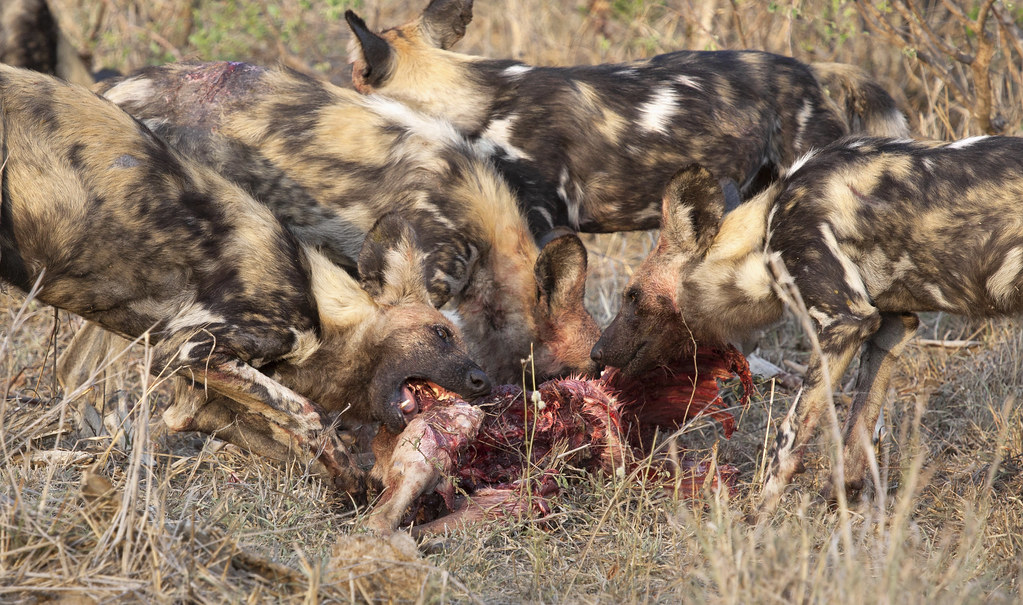
Among wildlife enthusiasts, Nyerere National Park has earned international recognition for one very special resident—the endangered African wild dog.

Unlike lions, wild dogs depend on teamwork rather than strength. Their hunts are remarkably coordinated, with every member of the pack playing a role. Watching them move through the bush with endless energy and intelligence is considered one of Africa’s greatest wildlife experiences.
Because wild dog populations have disappeared from many parts of the continent, seeing them in Nyerere is a privilege that few safari destinations can consistently offer.
For many visitors, a single encounter with these extraordinary animals becomes the highlight of an entire African journey.
Birdlife
While many visitors arrive in Nyerere National Park hoping to see lions, elephants, or perhaps the elusive African wild dog, they often leave talking about something entirely unexpected—the birds.
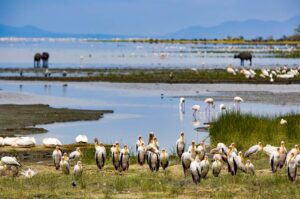
As dawn breaks over the Rufiji River, the wilderness awakens in layers of sound. The haunting cry of an African fish eagle echoes across the water, followed by the cheerful chatter of weavers busily repairing their nests. Bright flashes of blue announce the arrival of kingfishers diving effortlessly into the river, while elegant saddle-billed storks stride gracefully through the shallow wetlands.
For bird lovers, Nyerere is nothing short of paradise.
With more than 440 recorded bird species, the park is one of Tanzania’s premier birdwatching destinations. Its remarkable diversity of habitats—from riverine forests and oxbow lakes to floodplains, palm groves, and miombo woodlands—creates ideal conditions for both resident and migratory birds.
During the Green Season, the landscape becomes even more vibrant as migratory birds arrive from Europe and Asia. Suddenly, every tree seems alive with color and movement. Carmine bee-eaters gather in dazzling colonies, pelicans glide across the river, while herons patiently stalk fish along quiet lagoons.
Even visitors with little prior interest in birdwatching often find themselves reaching for binoculars after witnessing the incredible spectacle of life along the Rufiji River.
One unforgettable moment might involve watching an African fish eagle swoop from a towering tree, its powerful talons breaking the water’s surface before lifting a struggling fish into the morning sky. Another may come during a sunset boat safari, when hundreds of birds return to their roosts, filling the air with movement as the fading light paints the river gold.
In Nyerere, birdlife is never simply background scenery—it is part of the soundtrack that defines the wilderness.
Boat Safaris
If there is one experience that truly distinguishes Nyerere National Park from almost every other safari destination in East Africa, it is the opportunity to explore the wilderness by boat.
Long before the engine starts, there is already a sense that this safari will be different.
Instead of climbing into a 4×4, you step aboard a small, open safari boat. The river lies calm before you, reflecting the surrounding forests like polished glass. As the boat gently pushes away from the shore, the sounds of the vehicle disappear, replaced by the soothing rhythm of water lapping against the hull.
The Rufiji River is the lifeblood of Nyerere National Park. It nourishes countless lakes, channels, and floodplains, attracting wildlife throughout the year. From the water, visitors gain a completely different perspective of the African bush.
Elephants often emerge from dense vegetation to drink, crossing the shallows with astonishing grace despite their immense size. Buffalo gather along muddy banks while crocodiles lie perfectly still, appearing more like ancient logs than living predators.
Occasionally, a pod of hippos surfaces only a few meters away. Their enormous heads rise silently above the water before disappearing once again beneath the surface with a deep, unmistakable splash.
The beauty of a boat safari lies not only in the wildlife but also in the pace. There is no hurry. The boat drifts quietly past islands covered with palm trees, beneath overhanging branches alive with kingfishers, bee-eaters, and fish eagles.
Late afternoon departures are particularly magical.
As the African sun slowly sinks toward the horizon, the river transforms into a mirror of gold, crimson, and deep orange. Shadows stretch across the floodplains while elephants take their final drink before nightfall. Crocodiles slide silently into the water, birds settle into riverside trees, and the bush gradually prepares for another night.
Many visitors describe the boat safari as the most peaceful experience of their entire trip—a chance to witness Africa not through the window of a vehicle, but from the heart of one of its greatest rivers.
Walking Safaris
There comes a moment on every walking safari when visitors instinctively lower their voices.
Not because anyone has asked them to.
But because suddenly, they realize they are no longer observing nature from the safety of a vehicle—they are part of it.
Walking through Nyerere National Park is an experience unlike any other. Accompanied by highly trained armed rangers and experienced guides, small groups leave the safari vehicles behind and step into the wilderness on foot.
The first few minutes often feel unfamiliar. Every sound seems louder. Every rustle in the grass captures your attention.
Then something remarkable happens.
Your senses begin to adjust.
Instead of searching only for large animals, you notice the details that are often missed during a game drive. Tiny tracks crossing the sandy path reveal the movements of a porcupine during the previous night. Fresh elephant footprints indicate that a herd passed only hours earlier. A broken branch tells the story of a giraffe feeding nearby.
Your guide pauses frequently—not only to explain wildlife behavior but also to introduce the smaller wonders of the ecosystem. Medicinal plants, insects, birds, fungi, and even termite mounds become fascinating pieces of a much larger ecological puzzle.
Every step becomes a lesson.
Walking safaris are not designed to chase wildlife. Instead, they offer something far more meaningful: an understanding of how every creature, from the largest elephant to the smallest ant, contributes to the health of the wilderness.
Of course, the excitement never disappears.
Seeing a giraffe from ground level or quietly watching elephants feeding at a respectful distance creates memories that remain long after the safari ends.
For many travelers, the walking safari transforms the way they see Africa forever.
Self-Drive Safaris
For adventurous travelers, few experiences match the freedom of exploring Nyerere National Park behind the wheel of your own 4×4.
There are no tour buses dictating your schedule.
No convoy of safari vehicles determining where you stop.
Only you, your vehicle, and thousands of square kilometers of untamed wilderness waiting to be explored.
As the park gate disappears behind you, an incredible sense of independence takes over. Every junction presents a decision. Do you follow the river in search of elephants? Explore woodland tracks where wild dogs have recently been seen? Or head toward the open floodplains before sunrise?
Every route offers the possibility of discovery.
Self-drive safaris reward patience.
Some mornings may begin quietly before suddenly revealing an unforgettable wildlife encounter. A pride of lions resting beneath a sausage tree, a family of giraffes crossing the road ahead, or perhaps an elephant calmly feeding just meters away.
Preparation, however, is essential.
Nyerere is a true wilderness, and unlike heavily visited parks, assistance may not always be nearby. Travelers should use a reliable four-wheel-drive vehicle, carry at least two spare tires, plenty of drinking water, recovery equipment, offline GPS navigation, and sufficient fuel.
Driving should always be unhurried.
Animals have the right of way.
Road conditions vary depending on the season, and some tracks become challenging after heavy rainfall. During the dry months, however, most primary routes are easily accessible for experienced self-drive travelers using a capable 4WD.
For many visitors, this freedom becomes the highlight of the journey. There is something deeply satisfying about discovering a quiet waterhole filled with elephants without another vehicle in sight, knowing that the moment belongs entirely to you.
Popular Safari Areas
One of the joys of exploring Nyerere National Park is that every area offers something unique.
Rather than concentrating wildlife into a single location, the park invites visitors to explore a variety of landscapes, each with its own character and surprises.
Rufiji River
The Rufiji River is undoubtedly the heart of the park.
Almost every safari eventually returns to its banks, where life revolves around water. Elephants, buffalo, hippos, crocodiles, and countless bird species gather here throughout the year, making it one of the most productive wildlife-viewing areas in Nyerere.
Morning light creates breathtaking reflections across the calm water, while sunsets transform the river into one of Africa’s most spectacular natural stages.
Lake Tagalala
Hidden among the river channels, Lake Tagalala is famous for its concentrations of hippos and water birds.
During the dry season, wildlife arrives throughout the day to drink, creating excellent opportunities for photography and quiet wildlife observation.
Lake Siwandu
Lake Siwandu offers a more intimate safari experience.
Surrounded by woodlands and wetlands, the area attracts elephants, giraffes, antelope, and numerous bird species. Early morning drives here often reward patient visitors with predator sightings before temperatures begin to rise.
Floodplains
The park’s extensive floodplains provide ideal grazing areas for buffalo, zebra, wildebeest, and impala.
Predators naturally follow these herds, making the open plains excellent locations for observing lions, hyenas, and occasionally the elusive African wild dog.
Palm Forests and Miombo Woodlands
Away from the river, Nyerere reveals yet another personality.
Towering palms and endless miombo forests create peaceful landscapes where sable antelope, kudu, bushbuck, and elephants move quietly between the trees.
These less-visited habitats remind travelers just how diverse the park truly is.
Accommodation
One of the most pleasant surprises for first-time visitors is the quality and variety of accommodation available within and around Nyerere National Park.
Whether you dream of sleeping beneath canvas while listening to lions roar in the distance or relaxing in a luxurious riverside suite overlooking the Rufiji River, the park offers options for every style of traveler.
Luxury lodges blend seamlessly into the surrounding wilderness. Spacious rooms, private decks, swimming pools, and exceptional cuisine allow guests to enjoy comfort without losing the feeling of being immersed in nature. Evenings are often spent around campfires, sharing stories beneath brilliant African stars while the sounds of the bush continue all around.
Mid-range tented camps offer an equally authentic safari atmosphere. Comfortable beds, en-suite facilities, and welcoming hospitality provide everything needed after a rewarding day exploring the park.
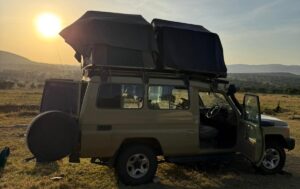
For self-drive adventurers and overlanders, public and private campsites deliver one of the most memorable ways to experience Nyerere. Falling asleep to the distant roar of lions, the laughter of hyenas, and the deep grunts of nearby hippos creates memories that no hotel can replicate.
Regardless of where you stay, mornings usually begin the same way—with birdsong, fresh coffee, and the excitement of another day waiting to unfold in one of Africa’s last truly wild places.
Park Fees
One of the questions travelers ask most often while planning a safari is, “How much does it cost to visit Nyerere National Park?”
The answer is about far more than simply paying an entrance fee.
Every park fee is an investment in the future of one of Africa’s greatest wildernesses. It helps maintain roads through remote landscapes, supports anti-poaching patrols, funds conservation programs, protects endangered wildlife, and contributes to the management of an ecosystem that stretches across thousands of square kilometers.
As you drive through the park and admire healthy elephant herds, thriving populations of African wild dogs, and countless other species, it becomes easy to appreciate the importance of these conservation efforts. The wilderness you experience today exists because generations before us chose to protect it.
Visitors should budget for several standard charges depending on their style of travel. These typically include park entrance fees, vehicle entry fees, camping fees where applicable, and charges for optional activities such as guided walking safaris or boat safaris. International visitors, East African residents, and Tanzanian citizens pay different rates, and fees are updated periodically by the Tanzania National Parks Authority (TANAPA).
If you are planning a self-drive safari, it is wise to confirm the latest fees before your departure and ensure that payments are made through the official systems accepted by the park. This helps avoid unnecessary delays at the entrance gates and allows you to begin your adventure without interruption.
While park fees may initially appear to be another travel expense, many visitors leave feeling that they have contributed to something much greater—the long-term protection of one of the world’s most remarkable natural landscapes.
What to Pack
Packing for Nyerere National Park is not about bringing as much as possible; it is about bringing the right things.
Life in the bush follows a simple rhythm. Mornings can be surprisingly cool, afternoons are warm under the African sun, and evenings often become pleasantly comfortable once the heat fades. Dressing in layers allows you to adapt easily throughout the day.
Neutral-colored clothing is always the best choice. Shades of khaki, olive green, beige, and light brown blend naturally into the environment, making wildlife encounters more relaxed while also helping to avoid attracting insects.
A wide-brimmed hat quickly becomes one of your most valuable companions during long game drives, offering protection from the tropical sun. Comfortable walking shoes are equally important, particularly if you plan to join a guided walking safari.
Binoculars deserve a place near the top of every packing list. Some of the park’s most memorable moments happen far from the road—a leopard resting in a distant tree, a fish eagle perched high above the Rufiji River, or a herd of elephants crossing an open floodplain. A good pair of binoculars brings these moments wonderfully close.
Photography enthusiasts should remember extra memory cards, spare batteries, and charging equipment. The opportunities for wildlife photography are endless, and running out of storage space halfway through the safari can be surprisingly frustrating.
Other useful items include sunscreen, insect repellent, reusable water bottles, lightweight rain jackets during the Green Season, personal medications, a power bank, and a flashlight or headlamp for evenings around camp.
Above all, pack a sense of curiosity. It is the one item that every unforgettable safari requires.
Photography Tips
Every photographer dreams of capturing Africa at its finest.
In Nyerere National Park, those opportunities arrive almost effortlessly.
The secret is understanding light.
The first hour after sunrise and the final hour before sunset are often called the “golden hours,” and nowhere is that description more fitting than along the Rufiji River. As sunlight filters gently through the trees, the landscape glows with warm tones that transform even ordinary scenes into extraordinary photographs.
A herd of elephants walking through morning mist becomes a masterpiece.
A lion resting beneath a baobab tree is framed by soft golden light.
Even a solitary giraffe silhouetted against an orange sunset can become one of the defining images of your journey.
Patience is perhaps the most important photographic skill on safari.
Instead of rushing from one sighting to another, take time to observe animal behavior. A crocodile may remain motionless for several minutes before suddenly lunging into the water. A fish eagle may sit quietly before launching into a dramatic dive. The more time you spend watching, the greater your chances of capturing something truly special.
Boat safaris also provide unique photographic opportunities unavailable elsewhere in Tanzania. Reflections on calm water, close encounters with hippos, and low-angle views of wildlife create compositions that are impossible from a vehicle.
Remember, however, that not every beautiful moment needs to be photographed.
Sometimes the most meaningful memories are the ones experienced with the camera resting quietly beside you.
Safety
One of the greatest privileges of visiting Nyerere National Park is witnessing wildlife in its natural environment.
With that privilege comes responsibility.
The animals you encounter are wild, free, and unpredictable. Respecting their space ensures both your safety and theirs.
During game drives, remain inside your vehicle unless your guide or a park ranger specifically advises otherwise. Even animals that appear calm can react unexpectedly if they feel threatened or surprised.
Maintain a respectful distance from elephants, buffalo, and predators. These magnificent creatures should never be approached too closely, no matter how tempting the photograph may seem.
When camping, follow all instructions provided by park authorities and camp managers. Food should be stored securely, and walking around camp after dark should only be done where permitted.
Driving within the park requires patience rather than speed. Wildlife frequently crosses roads without warning, particularly during early morning and evening. Slower driving not only improves safety but also increases your chances of spotting animals hidden among the vegetation.
Above all, listen to your guides.
Years of experience have taught them how to read animal behavior, interpret changing conditions, and ensure that every safari remains both exciting and safe.
Suggested 4-Day Itinerary
Some journeys are remembered not because of the distance traveled, but because of the moments experienced along the way.
A four-day safari in Nyerere National Park offers the perfect introduction to this extraordinary wilderness.
Day One – Leaving the City Behind
Your adventure begins early as you depart Dar es Salaam and travel toward southern Tanzania. The city gradually fades into the distance, replaced by villages, forests, and endless countryside.
By afternoon, you arrive at the park, where your first game drive introduces you to the rhythms of the African bush.
As evening approaches, you board a safari boat on the Rufiji River. The setting sun paints the sky in brilliant shades of orange while hippos surface nearby and elephants gather along the riverbank for their evening drink.
The sounds of the wilderness accompany you throughout your first unforgettable night.
Day Two – Into the Heart of the Wilderness
The day begins before sunrise.
Fresh coffee, cool morning air, and the anticipation of another adventure set the tone for a full-day game drive through the park’s diverse landscapes.
Lions patrol the floodplains, giraffes browse peacefully beneath acacia trees, and buffalo move in impressive herds across open grasslands.
Each corner of the road promises another surprise.
Lunch is enjoyed beneath the shade of towering trees before the afternoon continues with more wildlife encounters and breathtaking scenery.
As darkness falls, stories of the day’s adventures are shared around the campfire beneath one of Africa’s most spectacular night skies.
Day Three – Walking with Nature
Today, you leave the vehicle behind.
Accompanied by experienced armed rangers, you step quietly into the bush on a guided walking safari.
Every footprint tells a story.
Every broken branch reveals recent wildlife activity.
You begin to appreciate that Africa’s greatest wonders are often found in its smallest details.
The afternoon offers another game drive, perhaps leading to unforgettable encounters with elephants, leopards, or even the elusive African wild dog.
Day Four – Farewell to the Rufiji
The final morning arrives far too quickly.
As the sun rises over the river one last time, you enjoy a leisurely breakfast while reflecting on the remarkable experiences of the past few days.
A short morning game drive provides one final opportunity to say goodbye to the wilderness before beginning the journey back to Dar es Salaam.
Although the safari ends, the memories remain long after the dust has settled behind your vehicle.
Responsible Tourism
Every visitor who enters Nyerere National Park becomes a temporary guardian of this extraordinary wilderness.
Responsible tourism begins with simple choices.
Stay on designated roads to protect fragile habitats.
Never feed wildlife or attempt to attract animals for photographs.
Take all litter with you and reduce unnecessary plastic waste whenever possible.
Support lodges and safari operators committed to sustainable tourism and local community development.
Respect park regulations, not because they are rules, but because they exist to preserve the very wilderness that visitors travel so far to experience.
When tourism is managed responsibly, everyone benefits—wildlife, local communities, conservation organizations, and future generations of travelers who will one day experience the same unforgettable landscapes.
Frequently Asked Questions
Is Nyerere National Park worth visiting?
Without question. If you are looking for an authentic safari away from large crowds, Nyerere offers one of Tanzania’s finest wildlife experiences, combining classic game drives with unique activities such as boat safaris and guided walking safaris.
How many days should I spend in Nyerere?
Three to four days provide an excellent introduction to the park, allowing enough time for multiple game drives, a boat safari, and a walking safari. Travelers with more time will find that five or six days reveal even more of the park’s incredible diversity.
Can I visit Nyerere on a self-drive safari?
Absolutely. Nyerere is one of Tanzania’s best destinations for self-drive adventures. A reliable four-wheel-drive vehicle, careful planning, and respect for park regulations are essential for a safe and enjoyable experience.
What makes Nyerere different from Serengeti National Park?
While the Serengeti is famous for its vast plains and the Great Migration, Nyerere offers a more intimate wilderness experience. Visitors enjoy fewer crowds, spectacular river landscapes, boat safaris, walking safaris, and the chance to explore one of Africa’s largest protected ecosystems.
Is Nyerere suitable for families?
Yes. Families with older children who enjoy wildlife and adventure often find Nyerere to be an unforgettable destination. Some activities, such as walking safaris, have minimum age requirements for safety reasons.
Final Thoughts: Where the Wild Still Belongs to Nature
There are places you visit.
There are places you remember.
And then there are places that quietly become part of you.
Nyerere National Park belongs to the last category.
Long after the journey home, memories of the Rufiji River will return unexpectedly. You may remember the deep rumble of elephants moving through the forest before dawn, the silent stare of a crocodile basking on a riverbank, or the unmistakable call of a fish eagle echoing across the water as the sun disappeared beyond the horizon.
Perhaps you will remember the stillness most of all.
In a world where so many destinations have become crowded and hurried, Nyerere remains refreshingly untouched. It is a place where wildlife still follows ancient paths, where rivers continue to shape the landscape as they have for thousands of years, and where every safari feels like a genuine exploration rather than a scheduled excursion.
Whether you arrive seeking adventure, photography, solitude, or simply a deeper connection with nature, Nyerere has a remarkable way of exceeding expectations. It reminds us that the greatest luxury in travel is not found in extravagant accommodations or crowded attractions—it is found in silence, space, and the privilege of witnessing nature exactly as it was meant to be.
As your vehicle finally leaves the park and the wilderness slowly disappears in the rearview mirror, one thought often remains:
This is not goodbye.
It is simply the beginning of your desire to return.