
Best 4×4 Car for a Serengeti Road Trip: The Ultimate Tanzania Safari Vehicle Guide
A Serengeti road trip is one of the greatest safari adventures in Africa. Endless plains filled with wildlife, dramatic sunsets, remote camping areas, river crossings, dusty tracks, and the freedom to explore Tanzania at your own pace make self-drive travel in the Serengeti an unforgettable experience.
However, one thing can completely make or break your safari adventure: choosing the right 4×4 vehicle.
The roads leading into Serengeti National Park are often rough, corrugated, dusty, muddy during the rainy season, and sometimes challenging even for experienced drivers. A normal sedan or city SUV simply cannot handle the conditions comfortably or safely.
That is why serious safari travelers, tour operators, photographers, and overland adventurers rely on proper 4×4 safari vehicles.
In this complete guide, we will explore:
- The best 4×4 vehicles for Serengeti road trips
- Which safari car is best for different travel styles
- Self-drive vs guided safari vehicle options
- Road conditions inside Serengeti
- What features your vehicle must have
- Rooftop tent and camping setups
- Fuel, maintenance, and recovery considerations
- Budget vs luxury safari vehicles
- Dry season vs wet season vehicle recommendations
If you are planning a Tanzania safari adventure, this guide will help you choose the best 4×4 for your Serengeti road trip.
Why You Need a Proper 4×4 for Serengeti
Many first-time travelers underestimate the driving conditions in northern Tanzania. While some roads near major towns are paved, most safari routes involve long stretches of rough gravel, dirt tracks, washboards, rocks, sand, and mud.
The route from Arusha to Serengeti typically passes through:
- Arusha
- Mto wa Mbu
- Karatu
- Ngorongoro Conservation Area
- Naabi Hill Gate
- Central Serengeti
Once you leave the tarmac roads behind, conditions can become demanding.
Common Road Conditions in Serengeti
Corrugated Roads
The most common challenge is severe corrugation. These repetitive ridges on gravel roads can make driving uncomfortable and can damage weak suspension systems.
Mud During Rainy Season
Between March–May and sometimes November, roads may become muddy and slippery. Vehicles without proper traction can easily get stuck.
Deep Dust
During the dry season, fine dust covers roads throughout the park. Air filtration and vehicle sealing become extremely important.
Rocky Sections
Some tracks near remote camps and river crossings contain sharp rocks that can damage tires.
Long Distances Without Services
Fuel stations, mechanics, and recovery services are limited inside the park. Reliability matters.
Because of these conditions, a true safari-ready 4×4 is essential.
What Makes a Good Serengeti Safari Vehicle?
Not every 4×4 is suitable for the Serengeti. The best safari vehicles combine durability, off-road capability, comfort, and reliability.
Essential Features
High Ground Clearance
A vehicle with high clearance handles rocks, ruts, and uneven terrain more safely.
Low-Range 4WD
Low-range gearing is critical for mud, steep climbs, river crossings, and difficult tracks.
Strong Suspension
Corrugated roads put enormous stress on suspension systems. Heavy-duty suspension improves comfort and durability.
Reliable Diesel Engine
Diesel engines are preferred for long-distance safaris because of fuel efficiency and torque.
Two Spare Tires
Flat tires are common on safari roads. Two spares are highly recommended.
Rooftop Tent Compatibility
For camping safaris, the vehicle should support a rooftop tent setup.
Long-Range Fuel Capacity
Fuel stations are limited inside Serengeti, especially on remote routes.
Recovery Equipment
A proper safari vehicle should include:
- Recovery straps
- High-lift jack
- Air compressor
- Shovel
- Tire repair kit
Best 4×4 Cars for Serengeti Road Trips
1. Toyota Land Cruiser 76 Series – Best Overall Safari Vehicle
The Toyota Land Cruiser 76 Series is widely considered the best overall vehicle for Serengeti self-drive safaris.
This vehicle is the backbone of safari operations across East Africa. Tour companies, conservation organizations, overland travelers, and photographers rely on the 76 Series because it is incredibly reliable and capable.
Why the Land Cruiser 76 Is Perfect for Serengeti
Exceptional Durability
The 76 Series is built for harsh African conditions. It handles corrugations, mud, rocks, and rough tracks with ease.
Easy Repairs
Mechanics throughout Tanzania are familiar with Land Cruisers, and spare parts are widely available.
Excellent Off-Road Performance
Its solid axles, high clearance, and low-range gearbox make it ideal for difficult terrain.
Safari Camping Friendly
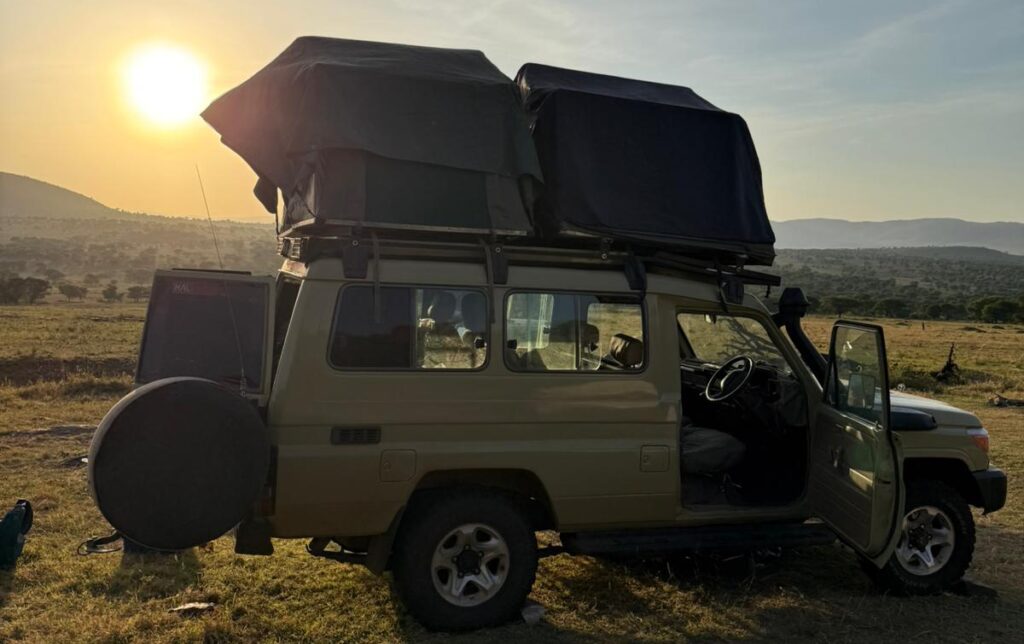
Most rooftop tent setups are mounted on Land Cruiser 76 or 78 models.
Proven Reliability
These vehicles are designed for remote expedition travel.
Best For
- Self-drive safaris
- Long overland trips
- Camping safaris
- Wet season travel
- Remote Tanzania routes
- Serious safari enthusiasts
Advantages
- Extremely rugged
- Excellent resale value
- Reliable in remote areas
- Strong suspension
- Excellent visibility
Disadvantages
- More expensive to rent
- Can feel less refined on highways
- Heavier fuel consumption
2. Toyota Land Cruiser 78 Series – Best for Rooftop Tent Camping
The Land Cruiser 78 Series is a favorite among overlanders and camping travelers.
Known as the “Troopy,” this extended-body Land Cruiser offers extra space for camping gear, refrigerators, water tanks, and rooftop tents.
Why Travelers Love the 78 Series
Huge Interior Space
Perfect for carrying safari equipment and camping supplies.
Expedition Ready
The vehicle is designed for long-distance travel in remote regions.
Excellent Weight Carrying
Handles rooftop tents and heavy gear well.
Strong Reliability
Like the 76 Series, it is built for tough African conditions.
Best For
- Camping safaris
- Families
- Long Tanzania road trips
- Overlanding
- Photographers
Advantages
- Massive storage capacity
- Very reliable
- Excellent for rooftop tents
- Ideal for extended travel
Disadvantages
- Large size can feel bulky
- More expensive
- Slower than smaller SUVs
3. Toyota Hilux – Best Budget 4×4 for Serengeti
The Toyota Hilux is one of the most popular budget-friendly safari vehicles in Tanzania.
While it may not be as legendary as the Land Cruiser, the Hilux is highly capable and more affordable.
Why the Hilux Is Popular
Affordable Rental Costs
Hilux rentals are often cheaper than Land Cruisers.
Strong Reliability
Toyota reliability makes it a dependable safari option.
Good Fuel Economy
Lower fuel consumption helps reduce travel costs.
Comfortable Driving Experience
Modern Hilux models offer better comfort on highways.
Best For
- Budget travelers
- Couples
- Dry season safaris
- Shorter road trips
- Mixed city and safari travel
Advantages
- Affordable
- Fuel efficient
- Comfortable
- Good off-road ability
Disadvantages
- Less rugged than Land Cruiser
- Limited interior space
- Can struggle in extreme mud
4. Toyota Prado TX – Best Comfort Option
The Toyota Prado TX combines safari capability with modern comfort.
This is an excellent choice for travelers who want a smoother driving experience between cities while still exploring national parks.
Why the Prado Is Attractive
Comfortable Interior
The Prado offers better seats, quieter cabins, and improved highway handling.
Good Fuel Economy
More economical than larger Land Cruisers.
Modern Features
Air conditioning, infotainment systems, and smoother suspension improve long-distance comfort.
Best For
- Families
- Luxury self-drive travelers
- Mixed city and safari itineraries
- Couples
Advantages
- Comfortable
- Smooth highway driving
- Good fuel economy
- Modern interior
Disadvantages
- Less rugged than Land Cruiser 70 Series
- Lower clearance
- Not ideal for extreme mud
5. Land Cruiser Hardtop – Best for Extreme Safari Conditions
The Land Cruiser Hardtop is a serious expedition vehicle.
These vehicles are widely used by tour operators because they can survive extremely rough safari conditions.
Why It Excels
Heavy-Duty Construction
Built specifically for rugged off-road environments.
Excellent Reliability
Handles remote conditions better than most SUVs.
Great Safari Visibility
Many hardtops feature pop-up roofs for game viewing.
Best For
- Wet season safaris
- Remote expeditions
- Professional guides
- Harsh road conditions
Advantages
- Extremely durable
- Excellent off-road ability
- Proven safari performance
- Great for wildlife viewing
Disadvantages
- Less comfortable
- Noisy on highways
- Basic interior
Comparing the Best Serengeti Safari Vehicles
| Vehicle | Best For | Comfort | Off-Road Ability | Fuel Economy | Camping Setup |
|---|---|---|---|---|---|
| Land Cruiser 76 | All-around safari | Good | Excellent | Moderate | Excellent |
| Land Cruiser 78 | Camping safaris | Good | Excellent | Moderate | Excellent |
| Toyota Hilux | Budget travel | Good | Very Good | Good | Very Good |
| Toyota Prado TX | Comfort travel | Excellent | Good | Good | Moderate |
| Land Cruiser Hardtop | Expedition travel | Moderate | Excellent | Moderate | Excellent |
Best 4×4 by Travel Style
Best Vehicle for Self-Drive Safari
The Land Cruiser 76 Series is the best overall self-drive safari vehicle.
Best Vehicle for Camping
The Land Cruiser 78 Series is ideal for rooftop tent camping safaris.
Best Budget Vehicle
The Toyota Hilux offers the best balance between price and capability.
Best Luxury Option
The Toyota Prado TX provides superior comfort.
Best for Rainy Season
Land Cruiser 76 and Hardtop models perform best in mud.
Dry Season vs Wet Season Vehicle Recommendations
Dry Season Safaris
The dry season runs roughly from June to October.
Road conditions are generally easier, though roads become dusty and heavily corrugated.
Recommended Vehicles
- Toyota Hilux
- Land Cruiser 76
- Toyota Prado TX
Challenges
- Dust
- Corrugations
- Long driving hours
Wet Season Safaris
The wet season usually occurs between March–May and sometimes November.
Roads can become slippery, muddy, and difficult.
Recommended Vehicles
- Land Cruiser 76
- Land Cruiser 78
- Land Cruiser Hardtop
Challenges
- Mud
- Flooded tracks
- Slippery climbs
- Recovery situations
Rooftop Tent vs Lodge Safari Vehicles
Rooftop Tent Safaris
Many self-drive travelers choose rooftop tent camping because it offers:
- Freedom
- Flexibility
- Lower accommodation costs
- Closer connection to nature
Best Vehicles for Rooftop Tents
- Land Cruiser 78
- Land Cruiser 76
- Toyota Hilux
Lodge-Based Safaris
Travelers staying in lodges may prioritize comfort.
Best Vehicles for Lodge Safaris
- Toyota Prado TX
- Land Cruiser V8
Fuel Planning for Serengeti Road Trips
Fuel planning is extremely important.
Fuel stations are available in:
- Arusha
- Karatu
- Seronera
However, remote regions may have limited availability.
Fuel Tips
- Always refill before entering Serengeti
- Carry extra diesel if possible
- Monitor consumption carefully
- Avoid unnecessary idling
Tire and Recovery Considerations
Flat tires are common during Tanzania road trips.
Carry Essential Equipment
- Two spare tires
- Tire inflator
- Tire pressure gauge
- Recovery strap
- Shovel
- Air compressor
Driving Tips
- Reduce speed on corrugations
- Avoid sharp rocks
- Deflate slightly for sand driving
- Engage 4WD early in mud
Automatic vs Manual Transmission for Safari
Manual Transmission
Advantages:
- Better control off-road
- Lower rental prices
- Better fuel efficiency
Disadvantages:
- More tiring in traffic
- Requires off-road driving skill
Automatic Transmission
Advantages:
- Easier driving
- More comfortable
- Better for beginners
Disadvantages:
- Usually more expensive
- Slightly higher fuel consumption
Guided Safari vs Self-Drive Safari
Guided Safari
Advantages:
- Professional wildlife spotting
- No navigation stress
- Local knowledge
- Safer for beginners
Disadvantages:
- Less flexibility
- Higher costs
- Less adventure
Self-Drive Safari
Advantages:
- Freedom to explore
- Flexible schedule
- More adventure
- Budget friendly for groups
Disadvantages:
- Navigation challenges
- Recovery responsibility
- Requires confidence driving off-road
Best Safari Routes for a Serengeti Road Trip
Classic Northern Circuit
- Arusha
- Tarangire National Park
- Lake Manyara
- Ngorongoro Crater
- Serengeti National Park
This is Tanzania’s most famous safari route.
Extended Safari Route
- Arusha
- Tarangire
- Lake Natron
- Serengeti
- Ngorongoro
This route includes more remote driving.
Southern Serengeti Migration Route
Best during calving season.
Western Corridor Route
Excellent for adventure travelers seeking quieter regions.
Common Mistakes When Choosing a Safari Vehicle
Choosing a 2WD Vehicle
Never attempt a Serengeti road trip with a standard sedan or 2WD SUV.
Ignoring Tire Quality
Old tires are dangerous on rough safari roads.
Underestimating Fuel Needs
Distances inside the park are enormous.
Choosing Comfort Over Capability
A comfortable city SUV may struggle badly off-road.
Skipping Recovery Gear
Even experienced drivers get stuck occasionally.
Renting a 4×4 in Tanzania
Most travelers rent safari vehicles in:
- Arusha
- Kilimanjaro Airport
- Dar es Salaam
What to Check Before Renting
- Insurance coverage
- Tire condition
- Spare tires
- Jack and tools
- Rooftop tent quality
- Air conditioning
- Fridge functionality
- Mileage policy
Questions to Ask
- Is recovery support included?
- Is unlimited mileage available?
- What happens in case of breakdown?
- Are park permits included?
How Much Does a Serengeti 4×4 Rental Cost?
Prices vary depending on season, vehicle type, and camping equipment.
Typical Daily Rates
Toyota Hilux
Approximately $120–$180 per day.
Land Cruiser 76
Approximately $180–$280 per day.
Land Cruiser 78
Approximately $220–$350 per day.
Prado TX
Approximately $150–$250 per day.
Additional costs may include:
- Camping gear
- Park fees
- Fuel
- Driver fees
- Insurance
Is a Serengeti Self-Drive Safari Worth It?
Absolutely.
A self-drive safari gives you a unique sense of freedom and adventure that is difficult to match.
You can:
- Stop whenever you want
- Spend longer at wildlife sightings
- Explore remote regions
- Travel at your own pace
- Experience Tanzania more independently
For travelers who love adventure, photography, road trips, and camping, a Serengeti self-drive safari can become the trip of a lifetime.
Final Verdict: What Is the Best 4×4 for Serengeti?
If you want the best all-around vehicle for a Serengeti road trip, the Toyota Land Cruiser 76 Series remains the top choice.
It combines:
- Reliability
- Off-road capability
- Easy maintenance
- Rooftop tent compatibility
- Proven safari durability
However, the best vehicle ultimately depends on your travel style.
Best Overall
Toyota Land Cruiser 76 Series
Best for Camping
Toyota Land Cruiser 78 Series
Best Budget Option
Toyota Hilux
Best Comfort Option
Toyota Prado TX
Best for Harsh Conditions
Land Cruiser Hardtop
Choosing the right safari vehicle can completely transform your Tanzania adventure.
Whether you are planning a luxury safari, a rugged overland expedition, or an unforgettable self-drive camping trip, investing in the right 4×4 will help you explore Serengeti safely, comfortably, and confidently.
Frequently Asked Questions
Can I drive through Serengeti with a normal SUV?
A standard SUV is not recommended. Roads inside Serengeti can become rough, muddy, and difficult, especially during rainy seasons.
Is a Toyota Hilux good enough for Serengeti?
Yes. A properly prepared Toyota Hilux is a capable and popular option for Serengeti self-drive safaris.
What is the best vehicle for rooftop tent camping?
The Toyota Land Cruiser 78 Series is one of the best rooftop tent safari vehicles.
Is self-driving in Serengeti safe?
Yes, if you are prepared, use a proper 4×4 vehicle, and follow park rules.
Do I need a guide for Serengeti?
Not necessarily. Many travelers successfully self-drive in Serengeti, though guides provide excellent wildlife knowledge.
What is the best season for a Serengeti road trip?
The dry season from June to October is generally easiest for driving and wildlife viewing.
Plan Your Serengeti 4×4 Adventure
Looking for the perfect safari vehicle for Tanzania?
Whether you need:
- A fully equipped Land Cruiser
- A rooftop tent camping setup
- A budget Toyota Hilux
- A luxury Prado safari vehicle
- A self-drive Tanzania itinerary
Our safari and car rental team can help you plan the perfect Serengeti road trip.
Contact us today to start your Tanzania self-drive safari adventure.