
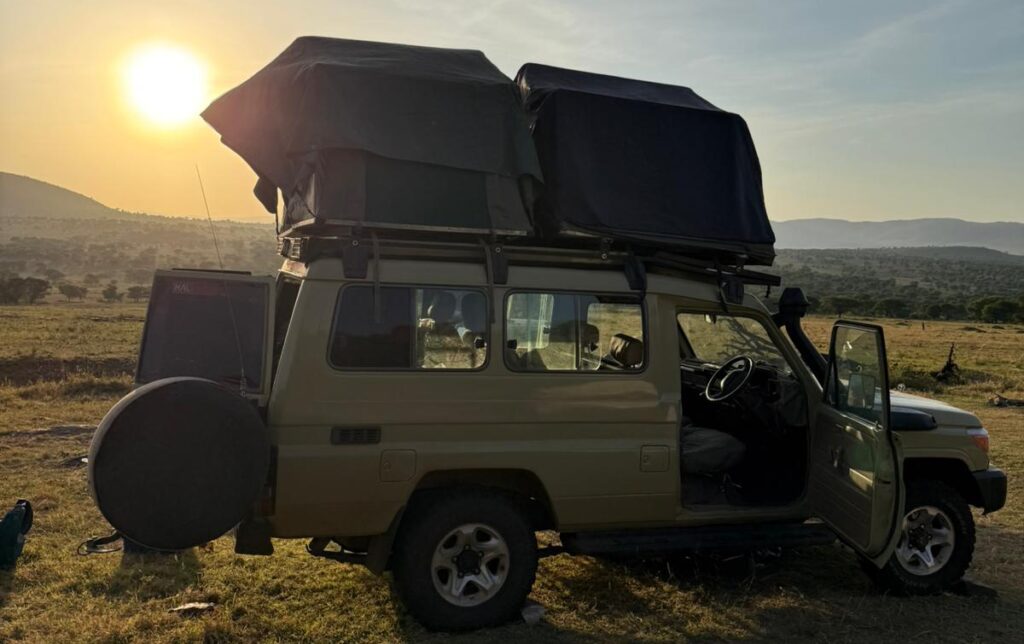
4×4 Tanzania with Rooftop Tent – Self-Drive Tanzania Safari
Tanzania is one of Africa’s most exciting destinations for travellers who want the freedom of a self-drive safari. From the legendary plains of the Serengeti and the wildlife-rich Ngorongoro area to Tarangire, Lake Manyara, Ruaha, Nyerere and the remote landscapes of western Tanzania, the country offers extraordinary opportunities for an independent 4×4 adventure.
For travellers who want to experience Tanzania beyond conventional lodge-based safaris, renting a 4×4 Tanzania vehicle with a rooftop tent provides an exciting combination of transport, camping and adventure.
A rooftop-tent 4×4 gives you the freedom to travel at your own pace, spend nights at designated campsites and build an itinerary around the places and wildlife experiences that interest you most.
Whether you are planning a northern Tanzania safari, a southern Tanzania expedition, a long road trip from Arusha to Dar es Salaam or a wider East African adventure, a properly equipped 4×4 can make your journey considerably more flexible.
What Is a Rooftop Tent 4×4 Safari in Tanzania?
A rooftop-tent safari combines a four-wheel-drive vehicle with a tent mounted on the roof.
At the end of the day’s journey, the tent can be unfolded at an approved campsite, providing a comfortable sleeping area above the ground.
Depending on the rental package, a Tanzania 4×4 rental with rooftop tent may include:
- Toyota Land Cruiser or similar 4×4
- Rooftop tent
- Camping mattress
- Sleeping bags or bedding
- Camping table
- Camping chairs
- Cooking equipment
- Gas stove
- Plates, cups and utensils
- Refrigerator or cooler
- Water containers
- Recovery equipment
- Spare tyre
- Basic vehicle tools
The exact equipment differs between rental companies, so travellers should request a detailed equipment list before confirming their booking.
Why Choose Self-Drive Tanzania?
Tanzania is particularly attractive for adventurous travellers because of the huge variety of landscapes and destinations available by road.
A self-drive safari gives you the freedom to decide how long to stay in each location rather than following a fixed guided itinerary.
You can spend extra time around Tarangire, explore the roads around Lake Manyara, continue into the Serengeti or take a longer journey towards the southern and western parts of the country.
A self-drive trip can also combine wildlife with beaches, mountains, culture and rural Tanzania.
Possible journeys include:
Arusha → Tarangire → Lake Manyara → Ngorongoro → Serengeti
or:
Arusha → Manyara → Ngorongoro → Serengeti → Mwanza
For a southern Tanzania adventure:
Dar es Salaam → Mikumi → Udzungwa → Ruaha → Nyerere → Dar es Salaam
Why Rent a 4×4 for Tanzania?
Although Tanzania has many paved highways, a capable 4×4 is particularly valuable for safari travel.
National parks and wildlife areas often involve gravel roads, tracks, uneven surfaces, muddy sections and changing road conditions.
A 4×4 provides:
- Higher ground clearance
- Four-wheel-drive capability
- Better performance on rough roads
- Greater flexibility for camping
- Additional equipment capacity
- Greater suitability for remote areas
- Better capability during challenging weather conditions
For travellers planning to visit several national parks with camping equipment, a properly equipped 4×4 is a practical choice.
Best Tanzania Self-Drive Safari Destinations
Tanzania offers a remarkable range of destinations for independent travellers.
Serengeti National Park
The Serengeti is one of Tanzania’s most famous safari destinations.
Its enormous plains support large populations of wildlife and form an important part of the Great Migration ecosystem.
A self-drive journey through the Serengeti can provide opportunities to see:
- Lions
- Elephants
- Buffalo
- Giraffes
- Zebras
- Wildebeest
- Cheetahs
- Leopards
- Hippos
- Numerous bird species
A rooftop-tent 4×4 allows travellers to spend multiple nights exploring the park and surrounding areas.
Because the Serengeti is extensive, careful planning of fuel, camping, park access and driving distances is important.
Ngorongoro Conservation Area
The Ngorongoro area is one of the most spectacular landscapes in northern Tanzania.
The Ngorongoro Crater provides exceptional wildlife viewing, while the wider conservation area contains highlands, grasslands, Maasai communities and important archaeological sites.
A rooftop-tent safari can incorporate the Ngorongoro area into a wider northern circuit.
A typical route could be:
Arusha → Tarangire → Lake Manyara → Ngorongoro → Serengeti → Arusha
Travellers should check the latest conservation-area fees, camping arrangements and vehicle regulations before travelling because charges and procedures can change.
Tarangire National Park
Tarangire is an excellent destination for a Tanzania self-drive safari.
The park is famous for its large elephant populations, baobab trees and seasonal wildlife concentrations.
It is also conveniently located close to Arusha and can easily be incorporated into a northern Tanzania road trip.
A rooftop-tent itinerary could begin:
Arusha → Tarangire → Manyara → Ngorongoro → Serengeti
For travellers with limited time, Tarangire can also work as a shorter safari destination.
Lake Manyara
Lake Manyara provides another excellent stop on the northern Tanzania circuit.
The area offers a mixture of woodland, lake environments and open landscapes.
Its proximity to Tarangire and Ngorongoro makes it easy to combine with other destinations.
Travellers using a rooftop tent can create a flexible route through the region rather than returning to the same base every night.
Nyerere National Park
Nyerere National Park is one of Tanzania’s major destinations in the south.
Its large wilderness areas make it attractive to travellers who want to experience a less crowded safari environment.
The park can be reached from Dar es Salaam and is therefore an interesting option for travellers arriving through the Tanzanian coast.
A possible self-drive journey is:
Dar es Salaam → Nyerere → Mikumi → Udzungwa → Dar es Salaam
or:
Dar es Salaam → Mikumi → Ruaha → Iringa → Dar es Salaam
Ruaha National Park
Ruaha is an excellent destination for travellers looking for a more remote Tanzania safari experience.
The park is known for elephants, lions, buffaloes and large numbers of other wildlife species.
Its location in central Tanzania makes it particularly attractive for longer 4×4 road trips.
A rooftop-tent adventure can combine Ruaha with:
- Iringa
- Udzungwa
- Mikumi
- Nyerere
- Mbeya
- Southern Tanzania
This makes the region particularly suitable for experienced road-trippers.
Mikumi National Park
Mikumi is one of the more accessible national parks for travellers starting from Dar es Salaam.
Its location along the southern Tanzania road network makes it convenient for travellers heading towards Morogoro, Iringa and Ruaha.
For travellers with limited time, Mikumi can be incorporated into a short self-drive safari from Dar es Salaam.
Udzungwa Mountains
Udzungwa provides a completely different experience from the open savannah parks.
The area is known for forest landscapes, mountains, hiking and biodiversity.
A self-drive itinerary combining Mikumi and Udzungwa can provide a good balance between wildlife and outdoor adventure.
Katavi National Park
For travellers looking for a more remote Tanzania experience, Katavi offers a very different type of safari.
The park is located in western Tanzania and requires considerably more planning than the northern safari circuit.
A properly equipped 4×4 is particularly useful for travellers heading into remote western Tanzania.
A longer route could connect:
Arusha → Dodoma → Iringa → Ruaha → Katavi
or incorporate Lake Tanganyika and other western destinations.
Lake Tanganyika and Western Tanzania
Western Tanzania is ideal for travellers who want to move beyond the country’s best-known safari circuit.
The region offers opportunities to combine:
- Katavi
- Lake Tanganyika
- Kigoma
- Mwanza
- Lake Victoria
- Cultural experiences
- Remote road trips
These journeys require careful preparation for fuel, supplies, communications and vehicle recovery.
Tanzania Self-Drive Safari Routes
Northern Tanzania Self-Drive Circuit
One of the most popular routes is:
Arusha → Tarangire → Lake Manyara → Ngorongoro → Serengeti → Arusha
This route is ideal for travellers who want to experience several of Tanzania’s most famous wildlife destinations.
Arusha to Serengeti Self-Drive
A typical journey is:
Arusha → Tarangire → Ngorongoro → Serengeti
Travellers can then return through the same general region or continue towards western Tanzania depending on their itinerary.
Arusha to Dar es Salaam
For a longer road trip:
Arusha → Dodoma → Iringa → Mikumi → Morogoro → Dar es Salaam
This journey combines Tanzania’s northern highlands, central landscapes and southern safari areas.
Southern Tanzania Self-Drive Circuit
A dedicated southern safari route could include:
Dar es Salaam → Nyerere → Mikumi → Udzungwa → Ruaha → Iringa → Dar es Salaam
This is particularly attractive for travellers who want a road trip beyond the classic northern circuit.
Tanzania to Kenya Self-Drive
A longer East African adventure can connect Tanzania with Kenya.
Possible routes include:
Arusha → Amboseli → Nairobi → Maasai Mara
or:
Maasai Mara → Serengeti → Ngorongoro → Arusha
Cross-border travel must be arranged with the rental company before departure.
Camping with a Rooftop Tent in Tanzania
Rooftop-tent camping is one of the most exciting ways to explore Tanzania independently.
Instead of moving from lodge to lodge, you carry your accommodation with you and stay at designated campsites.
Camping also allows travellers to spend more time in remote areas and can make longer road trips more flexible.
Before booking your vehicle, confirm whether the package includes:
- Rooftop tent
- Mattress
- Sleeping bags
- Bedding
- Camping chairs
- Camping table
- Cooking stove
- Cooking utensils
- Refrigerator
- Water containers
- Recovery equipment
- Lighting
Some rental companies offer a complete camping package, while others charge separately for individual equipment.
Tanzania Camping Equipment Checklist
A well-equipped camping safari should include more than just a tent.
Sleeping Equipment
- Rooftop tent
- Mattress
- Sleeping bags
- Pillows
- Blankets for cooler nights
Cooking Equipment
- Gas stove
- Cooking pots
- Frying pan
- Plates
- Cups
- Cutlery
- Cooking utensils
- Food storage containers
Outdoor Equipment
- Camping table
- Camping chairs
- Headlamps
- Torch
- Water containers
- Refrigerator or cooler
Vehicle Equipment
- Spare tyre
- Jack
- Wheel spanner
- Recovery straps
- Compressor
- Basic tools
- Emergency equipment
The equipment provided depends on the rental package, so always confirm the inventory before departure.
Driving in Tanzania’s National Parks
Driving in a national park requires more care than driving on ordinary public roads.
Wild animals have priority, and visitors should follow park regulations and remain on authorised roads and tracks.
Avoid approaching animals too closely, never harass wildlife and do not leave the vehicle except in designated areas or where specifically permitted.
Drivers should also avoid unnecessary speeding and allow plenty of time for navigating safari tracks.
A good self-drive safari is not about covering the greatest distance. It is about enjoying the landscape and wildlife while travelling responsibly.
Is Tanzania Suitable for First-Time Self-Drive Travellers?
Tanzania can be suitable for independent travellers who are comfortable driving long distances and navigating changing road conditions.
However, safari driving is different from ordinary road travel.
Before leaving the rental office, make sure you understand:
- How to operate the 4×4 system
- How to change a tyre
- Where the spare tyre is located
- How to use the jack
- How to use recovery equipment
- How to operate the rooftop tent
- How to operate the refrigerator
- How to use the camping stove
- What to do in case of a breakdown
Travellers should also understand their rental company’s emergency support procedures.
Tanzania Self-Drive for Couples
A rooftop-tent 4×4 is an excellent option for couples who want an independent safari.
Two travellers can travel relatively light and create a flexible itinerary.
A couple might choose:
Arusha → Tarangire → Ngorongoro → Serengeti → Arusha
or take a longer southern adventure:
Dar es Salaam → Nyerere → Mikumi → Udzungwa → Ruaha
The ideal route depends on available time and the traveller’s interests.
Tanzania Self-Drive for Families
Families can enjoy a rooftop-tent safari, although vehicle size and camping arrangements should be carefully considered.
Before booking, check:
- Number of sleeping spaces
- Rooftop tent capacity
- Vehicle seating
- Luggage capacity
- Camping equipment
- Refrigerator capacity
- Cooking equipment
- Child-friendly camping arrangements
A larger 4×4 may be more comfortable for families travelling with substantial camping equipment.
Tanzania Self-Drive and the Great Migration
The Great Migration is one of Tanzania’s most famous wildlife experiences.
The movement of wildebeest, zebra and other animals through the Serengeti ecosystem varies according to seasonal conditions.
Travellers planning a self-drive safari around the migration should avoid assuming that wildlife will be in exactly the same location on a specific date.
A flexible itinerary can be useful.
A rooftop-tent vehicle gives travellers the ability to spend several nights in the Serengeti region while following current conditions and available camping arrangements.
Tanzania Gorilla and Primate Extensions
Tanzania is primarily known for its wildlife and safari experiences, but travellers interested in primates can extend their journey into neighbouring East African countries.
A longer road trip can potentially connect Tanzania with:
- Rwanda
- Uganda
- Kenya
Cross-border rental requirements vary, so permission must be obtained from the vehicle rental company before booking the trip.
Tanzania and Kenya Self-Drive
Kenya and Tanzania are natural partners for an East African road trip.
A combined journey can include:
Nairobi → Maasai Mara → Serengeti → Ngorongoro → Tarangire → Arusha
Another route can include:
Arusha → Amboseli → Nairobi → Maasai Mara
A cross-border vehicle requires appropriate documentation and authorisation.
Travellers should confirm border procedures, insurance and vehicle permissions before departure.
Tanzania, Kenya, Uganda and Rwanda Road Trip
Experienced travellers may want to undertake a longer East African expedition.
A possible journey is:
Tanzania → Kenya → Uganda → Rwanda
This can provide an extraordinary combination of:
- Serengeti wildlife
- Maasai Mara
- Mount Kenya region
- Uganda’s national parks
- Rwanda’s mountain landscapes
- Gorilla trekking
- Lake Victoria
- East African cultures
Such a journey requires careful planning because rental restrictions, border requirements and insurance conditions vary between countries.
When Is the Best Time for a Tanzania Rooftop-Tent Safari?
Tanzania can be visited throughout the year, but weather and seasonal wildlife patterns should influence your itinerary.
For camping, travellers should consider rainfall, road conditions and temperatures.
The northern safari circuit, southern Tanzania and western Tanzania can also experience different seasonal conditions.
If your priority is the Great Migration, wildlife, camping or a combination of activities, your travel dates should be selected according to your intended route rather than relying on one general “best” season.
Before departure, check current weather conditions and road information for the destinations you plan to visit.
How Much Does a Tanzania 4×4 Rooftop Tent Rental Cost?
The price of a rooftop-tent 4×4 rental depends on:
- Vehicle model
- Rental duration
- Season
- Camping equipment
- Insurance
- Mileage policy
- Pickup location
- Drop-off location
- Cross-border travel
- Additional drivers
- One-way fees
A quotation may look like this:
| Rental Component | What to Check |
|---|---|
| 4×4 vehicle | Model and transmission |
| Rooftop tent | Capacity and mattress |
| Camping kit | Sleeping and cooking equipment |
| Refrigerator | Included or optional |
| Insurance | Cover and excess |
| Mileage | Unlimited or restricted |
| Additional driver | Included or extra |
| Park use | Permitted destinations |
| Cross-border | Permission and fees |
| One-way rental | Drop-off charge |
| Park fees | Normally separate |
| Camping fees | Normally separate |
| Fuel | Normally paid by traveller |
Always request a complete quotation before paying a deposit.
What Makes a Good Tanzania 4×4 Rental?
A good self-drive rental vehicle should be properly maintained and equipped for the route you intend to travel.
Before departure, inspect:
- Tyres
- Spare tyre
- Brakes
- Lights
- Battery
- Suspension
- Four-wheel-drive system
- Jack
- Recovery equipment
- Rooftop tent
- Mattress
- Cooking equipment
- Refrigerator
- Camping table
- Camping chairs
- Water containers
Take photographs of the vehicle and camping equipment during the handover and report any existing damage to the rental company before departure.
Tanzania Self-Drive Safety Tips
A successful safari depends on good preparation.
Plan Your Fuel
Some safari areas are remote, and fuel stations can be far apart.
Carry Water
Always carry sufficient drinking water for the journey.
Avoid Unnecessary Night Driving
Driving after dark in unfamiliar rural areas or wildlife regions can present additional risks.
Respect Wildlife
Never approach wild animals on foot or attempt to feed them.
Follow Park Rules
Each protected area may have its own regulations concerning driving, camping and wildlife viewing.
Check Weather Conditions
Rain can affect unpaved roads, particularly in remote areas.
Keep Communication Available
A working mobile phone and backup power supply are useful during long self-drive journeys.
Advantages of a Tanzania Rooftop Tent Safari
A rooftop-tent safari provides several advantages.
Freedom
You control your daily schedule.
Flexibility
You can spend longer in places that interest you.
Adventure
Camping becomes part of the safari rather than simply a place to sleep.
Convenience
Your accommodation travels with you.
Privacy
You have your own camping setup rather than depending entirely on hotels and lodges.
Longer Road Trips
A rooftop tent is particularly useful for travellers planning multi-week journeys across Tanzania.
Plan Your Tanzania 4×4 Rooftop Tent Adventure
A 4×4 Tanzania rental with rooftop tent offers an exciting way to experience the country’s extraordinary wildlife, landscapes and remote destinations.
From Serengeti, Ngorongoro and Tarangire in northern Tanzania to Nyerere, Mikumi, Udzungwa and Ruaha in the south, Tanzania provides an enormous range of possibilities for independent travellers.
A self-drive safari allows you to explore at your own pace, while a rooftop tent gives you the freedom to combine transportation and camping in one adventure.
Whether you are planning a short northern circuit, a southern Tanzania expedition, a road trip from Arusha to Dar es Salaam, or a longer East African journey connecting Tanzania with Kenya, Uganda or Rwanda, a properly equipped 4×4 can give you the flexibility to make the most of your journey.
Frequently Asked Questions
Can I do a self-drive safari in Tanzania?
Yes. Self-drive safaris are possible in Tanzania, although travellers must follow the regulations of each national park, conservation area and other protected destination.
Do I need a 4×4 for Tanzania?
A 4×4 is strongly suited to safari travel, particularly where routes include gravel roads, rough tracks, remote areas or camping equipment.
Can I rent a 4×4 with a rooftop tent in Tanzania?
Yes. Specialist Tanzania rental companies offer 4×4 vehicles equipped with rooftop tents and camping equipment. Vehicle models and equipment packages vary.
Can I camp in Tanzania’s national parks?
Camping is available at designated campsites in various protected areas, but requirements and availability vary by destination. Travellers should confirm the current camping arrangements before travelling.
Can I drive from Tanzania to Kenya with a rental 4×4?
Some rental companies allow cross-border travel between Tanzania and Kenya. Permission and the necessary vehicle documentation must be arranged before the journey.
Can I drive a Tanzania rental vehicle into Rwanda or Uganda?
Some vehicles may be permitted to cross into neighbouring countries, but this depends on the rental company’s cross-border policy. Always obtain written approval before travelling.
Can I visit Serengeti on a self-drive safari?
Yes. Serengeti can form part of a self-drive itinerary, subject to the park’s current access, vehicle, fee and camping regulations.
Can I combine Tanzania and Kenya in one safari?
Yes. A combined Kenya–Tanzania self-drive adventure can include destinations such as Maasai Mara, Serengeti, Ngorongoro, Tarangire and Amboseli.
Is Tanzania suitable for rooftop-tent camping?
Yes. Tanzania offers numerous opportunities for travellers who want to combine 4×4 travel and camping, provided they use authorised campsites and follow the regulations of the areas they visit.
What is included in a Tanzania rooftop-tent rental?
Packages vary, but may include a 4×4 vehicle, rooftop tent, mattress, sleeping equipment, cooking equipment, chairs, table, refrigerator, water containers and recovery equipment.
Always confirm the exact equipment included in your rental quotation.
How long should I spend on a Tanzania self-drive safari?
A short trip can focus on destinations such as Tarangire and Ngorongoro. A longer itinerary of one to two weeks can include the Serengeti and additional northern destinations. Travellers with several weeks can explore southern or western Tanzania or combine Tanzania with neighbouring countries.