
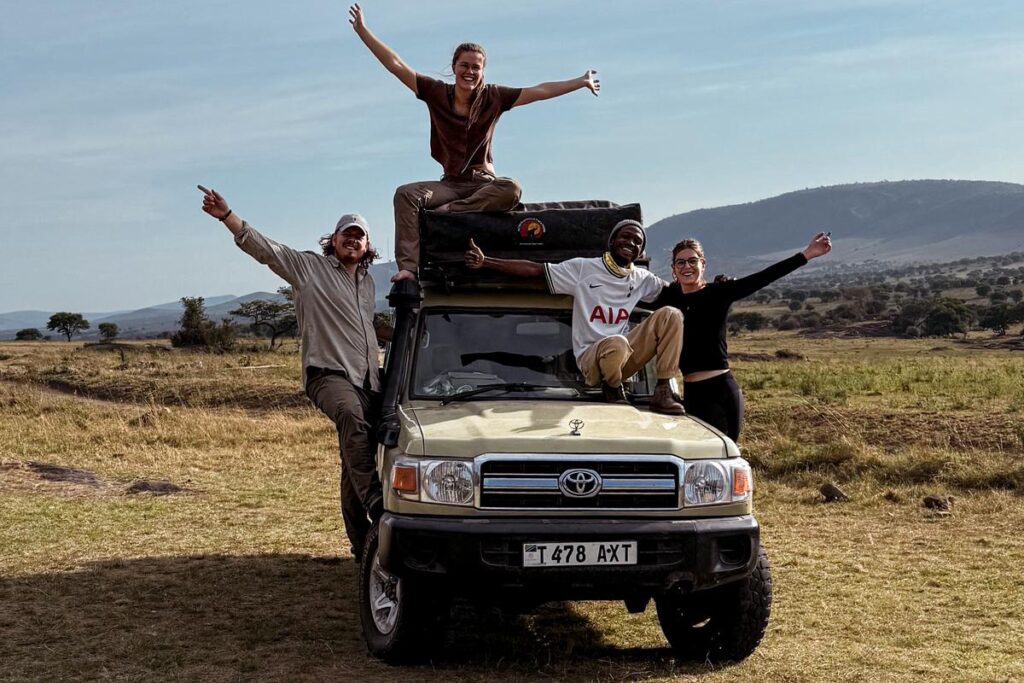
Why Travelers Should Consider a Self-Drive Road Trip in Tanzania
Tanzania is one of Africa’s most rewarding destinations for travellers seeking wildlife, nature, adventure and cultural experiences. The country is home to some of the world’s most famous safari destinations, including the Serengeti, Ngorongoro Conservation Area, Tarangire and Nyerere National Parks. Beyond its wildlife, Tanzania offers dramatic mountains, tropical beaches, remote wilderness areas, vibrant towns and fascinating local communities.
While many visitors experience Tanzania through organised guided safaris, a self-drive road trip in Tanzania offers a different kind of adventure. With your own rental vehicle, you can explore the country at your own pace, decide where to stop, spend more time in places that interest you and build an itinerary around your own travel style.
From the busy streets of Arusha and Dar es Salaam to the endless plains of the Serengeti, the forests and mountains of the southern highlands and the tropical islands of Zanzibar, Tanzania offers extraordinary variety for travellers prepared to get behind the wheel.
Whether you are interested in wildlife, photography, camping, culture, mountains, beaches or simply the freedom of the open road, there are many reasons to consider a self-drive safari in Tanzania.
A Rewarding Destination for Independent Travellers
Tanzania is one of East Africa’s classic safari destinations, and its extensive tourism infrastructure makes independent travel possible for experienced and well-prepared travellers.
Major cities and towns are connected by highways, while numerous secondary roads provide access to rural communities, national parks and remote destinations.
Arusha is one of the most popular starting points for northern Tanzania safaris, while Dar es Salaam provides an excellent gateway to the southern and coastal regions.
From these centres, travellers can create a wide variety of routes.
You could travel from Arusha through Tarangire and Manyara to Ngorongoro and the Serengeti. Alternatively, you could explore the southern circuit through Mikumi, Udzungwa, Ruaha and Nyerere. Adventurous travellers can continue towards Lake Tanganyika, Katavi, Lake Victoria or the western border regions.
The possibilities are extensive.
However, Tanzania is a large country, and distances between destinations can be considerable. Good preparation and realistic driving times are therefore essential for a successful self-drive adventure.
A Country Made for 4×4 Road Trips
One of the most important decisions when planning a self-drive trip in Tanzania is choosing the right vehicle.
While many main roads are paved, numerous roads leading to national parks, campsites, rural communities and remote attractions can be rough, corrugated, sandy or muddy depending on the season.
For this reason, a reliable 4×4 rental in Tanzania is strongly recommended for travellers planning to explore beyond the main highways.
Vehicles such as Toyota Land Cruisers and other capable 4WD models are popular among self-drive travellers because they offer greater ground clearance, durability and confidence on challenging terrain.
For travellers planning longer camping adventures, rental companies may also provide rooftop tents, mattresses, sleeping bags, refrigerators, cooking equipment, tables, chairs and other camping supplies.
The right vehicle can make a significant difference, especially when your itinerary includes national parks and remote areas.
Freedom to Travel at Your Own Pace
Perhaps the biggest advantage of a self-drive holiday in Tanzania is freedom.
On a guided safari, you normally follow a predetermined itinerary and timetable. Your guide decides when you leave camp, which route you take and when you return.
With your own rental vehicle, you have much greater control over your journey.
You can leave early to enjoy a sunrise drive, stop for photographs, spend longer at a scenic viewpoint or change your route when you discover somewhere interesting.
Imagine driving across the Serengeti and finding a spectacular wildlife sighting. Instead of worrying about a fixed group schedule, you can spend additional time observing and photographing the animals, subject to park regulations.
That freedom creates a more personal safari experience.
Discover Tanzania Beyond the Famous Parks
Tanzania is famous for the Serengeti and Ngorongoro, but there is much more to discover.
A self-drive road trip makes it possible to explore some of the country’s less-visited destinations and create an itinerary beyond the traditional northern safari circuit.
You can explore the southern wilderness areas of Nyerere and Ruaha, discover the forests and mountains of Udzungwa, visit the wildlife-rich plains around Mikumi or venture farther west towards Katavi and Lake Tanganyika.
You can also combine wildlife with cultural experiences.
Stop at local markets, visit small towns, interact with communities, try traditional food or spend time exploring Tanzania’s different landscapes.
This makes a self-drive holiday more than a safari. It becomes a journey through the country itself.
Rental Vehicles for Different Types of Adventures
Tanzania has a growing self-drive rental market, with vehicles available for different travel styles and budgets.
Travellers staying mainly on paved roads may find a standard vehicle suitable for their itinerary.
However, anyone planning to visit national parks, remote areas or undertake a camping safari should consider a properly equipped 4×4.
For longer adventures, a 4×4 with rooftop tent can be particularly practical. It combines transportation and accommodation, allowing travellers to camp at designated campsites while moving between destinations.
Depending on the rental company, additional equipment may include:
- Rooftop tent
- Mattress and bedding
- Camping chairs and table
- Refrigerator or cooler
- Cooking utensils
- Gas stove
- Water containers
- Recovery equipment
- Compressor
- Spare tyres
- Camping lights
Travellers should confirm exactly what is included before booking, as equipment packages vary between rental companies.
Privacy Without Being Completely Isolated
Self-driving gives travellers a level of privacy that is difficult to achieve on a group safari.
You choose your travelling companions, departure times, stops and daily schedule.
Families can organise their days around their children. Couples can enjoy a private safari adventure. Friends can share a vehicle and camping equipment while creating their own route.
Photographers also benefit significantly from this flexibility.
Wildlife photography often requires patience. With your own vehicle, you can spend additional time in a particular area when wildlife activity is good, provided you follow park rules and regulations.
At the same time, self-driving does not mean avoiding local communities.
Travelling through Tanzania provides countless opportunities to interact with local people, visit markets, eat at local restaurants and experience everyday life outside the main tourist centres.
Experience Tanzania’s Warm Hospitality
Tanzania is home to a diverse population with many cultural traditions, languages and communities.
A self-drive road trip gives you opportunities to experience this diversity beyond the standard tourist itinerary.
You may stop at a roadside fruit stall, visit a local market, enjoy nyama choma, drink Tanzanian coffee or simply speak with people in a small town.
Swahili is widely spoken throughout the country, and learning a few simple words can make interactions more enjoyable.
A friendly “Jambo” or “Habari” is an easy way to start a conversation, while “Asante” means thank you.
These small interactions can become some of the most memorable parts of a road trip.
A Wildlife Destination Like No Other
For many travellers, wildlife is the main reason to visit Tanzania.
The country contains some of Africa’s most important wildlife ecosystems.
Serengeti National Park
The Serengeti is one of the world’s most famous safari destinations.
Its vast grasslands support enormous populations of wildebeest, zebra, gazelles, lions, cheetahs, leopards, elephants and many other species.
The Serengeti is also at the centre of the annual Great Migration, when millions of wildebeest, zebra and other herbivores move through the wider Serengeti-Mara ecosystem.
Exploring the Serengeti on a self-drive safari can provide an extraordinary sense of freedom and wilderness.
Ngorongoro Conservation Area
The Ngorongoro Conservation Area is another essential destination in northern Tanzania.
The spectacular Ngorongoro Crater contains a remarkable concentration of wildlife within its enclosed ecosystem.
The wider conservation area also offers dramatic highland scenery, Maasai communities and opportunities to experience Tanzania’s cultural and natural heritage.
Tarangire National Park
Tarangire is famous for its elephants, ancient baobab trees and seasonal wildlife concentrations.
Its landscapes are particularly attractive for photographers and travellers looking for a quieter alternative to some of Tanzania’s busier safari destinations.
Lake Manyara National Park
Lake Manyara provides a compact but diverse safari experience, with woodland, open areas, wetlands and lake scenery.
The park is an easy addition to a northern Tanzania road trip.
Nyerere National Park
Southern Tanzania offers a different safari experience.
Nyerere National Park is one of Africa’s largest protected areas and provides expansive wilderness, rivers, lakes and diverse wildlife.
The southern circuit is particularly appealing to travellers looking for a more remote safari experience.
Ruaha National Park
Ruaha is famous for its rugged landscapes, baobabs and large elephant populations.
Its remote location and expansive wilderness make it an excellent destination for adventurous self-drive travellers who want to experience Tanzania away from the busiest safari routes.
Tanzania’s Landscapes Go Beyond Wildlife
One of the biggest attractions of a Tanzanian road trip is the variety of landscapes.
You can travel from the highlands around Arusha through the Rift Valley and into the Serengeti plains.
You can explore the volcanic landscapes around Ngorongoro, the forests of the southern highlands or the dry wilderness of Ruaha.
Further west, Lake Tanganyika offers a completely different environment, while Lake Victoria provides another perspective on Tanzania’s geography and communities.
The country’s size means that every region can feel like a different adventure.
A Photographer’s Dream Road Trip
Tanzania is one of Africa’s greatest destinations for photography.
Wildlife, landscapes, people and changing light provide endless photographic opportunities.
You can photograph elephants beneath enormous baobab trees in Tarangire, lions resting on the Serengeti plains, flamingos around lakes, dramatic sunsets over the savannah or mist-covered mountains in the distance.
A self-drive vehicle provides additional flexibility for photographers.
You can stop when the light is right, wait patiently for wildlife activity and spend more time composing photographs without being tied to a large group itinerary.
For serious wildlife photographers, the ability to control your own movements can be a major advantage.
Explore Tanzania’s Southern Safari Circuit
Travellers who want to escape the more established northern safari routes should consider the southern circuit.
A road trip can connect destinations such as Dar es Salaam, Mikumi, Udzungwa, Ruaha and Nyerere.
This region offers a mixture of wildlife, forests, mountains and rural landscapes.
The southern circuit also tends to appeal to travellers looking for a more adventurous and less conventional Tanzania experience.
Because distances can be long and some roads are more challenging, a suitable 4×4 and careful route planning are particularly important.
Combine Safari with the Tanzanian Coast
One of the most rewarding features of Tanzania is the ability to combine a wildlife safari with a beach holiday.
After exploring the national parks, travellers can continue towards the Indian Ocean.
Dar es Salaam provides a major coastal gateway, while destinations such as Bagamoyo, Pangani, Saadani and the Zanzibar archipelago offer opportunities for relaxation and cultural exploration.
Zanzibar is particularly popular for its beaches, historic Stone Town, Swahili culture and marine activities.
A road trip through mainland Tanzania followed by a few days on the coast can create an excellent combination of adventure and relaxation.
A Great Choice for Families, Couples and Friends
Self-driving in Tanzania can work well for different types of travellers.
Families appreciate the flexibility to stop whenever necessary and choose accommodation according to their preferences.
Couples can enjoy a private safari and combine wildlife with camping, mountains or the beach.
Friends can share the cost of a 4×4 and camping equipment while creating their own itinerary.
Experienced adventurers may also enjoy the challenge of navigating between remote destinations and discovering parts of Tanzania that are less frequently visited.
Plan Your Tanzania Self-Drive Adventure Carefully
Although Tanzania offers incredible opportunities for self-driving, preparation is essential.
Before your journey, consider:
- Choosing a vehicle appropriate for your route
- Confirming your driving licence requirements
- Checking insurance coverage
- Understanding the rental company’s terms and conditions
- Confirming whether national park travel is permitted with your vehicle
- Checking whether camping equipment is included
- Planning fuel stops carefully
- Downloading offline maps
- Checking road conditions before long journeys
- Allowing extra time for rough roads and park tracks
- Carrying sufficient drinking water
- Checking spare tyres and recovery equipment
- Saving your rental company’s emergency contact number
- Understanding national park entry and vehicle requirements
- Booking campsites or accommodation where necessary
Travellers should also remember that driving inside national parks is different from driving on public roads. Wildlife has priority, speed limits and park regulations must be followed, and drivers should never approach animals irresponsibly.
Crossing Borders from Tanzania into East Africa
For travellers interested in a longer adventure, Tanzania can form part of a wider East African road trip.
Depending on the rental company’s policies and the required documentation, it may be possible to combine Tanzania with Kenya, Uganda or Rwanda.
Popular possibilities include Kenya-Tanzania safari routes, such as travelling between the Maasai Mara and Serengeti ecosystems.
However, international rental travel requires advance preparation.
Travellers may need additional insurance, vehicle authorisation, customs documentation and other border paperwork.
Always confirm cross-border permission with your rental company before making a booking, rather than assuming that a vehicle can automatically be driven into another country.
When Is the Best Time for a Tanzania Self-Drive Road Trip?
Tanzania can be visited throughout the year, but the best time depends on the destinations and experiences you want.
The dry seasons are popular for wildlife viewing because animals may gather around water sources and many roads are easier to navigate.
The period from roughly June to October is particularly popular for safari travel.
However, the green seasons can also be rewarding. Landscapes become lush, migratory wildlife continues moving through the ecosystem and some destinations experience fewer visitors.
Travellers planning a self-drive safari should consider seasonal road conditions carefully. Heavy rains can make some unpaved roads, park tracks and remote routes considerably more difficult.
The best itinerary therefore depends not only on the weather but also on your vehicle, driving experience and destinations.
Why Choose a Self-Drive Road Trip in Tanzania?
Ultimately, the greatest attraction of a self-drive road trip in Tanzania is freedom.
You are not simply travelling from one safari lodge to another.
You are experiencing the country as a journey.
You can start in Arusha and travel towards Tarangire, Lake Manyara, Ngorongoro and the Serengeti. You can explore the southern circuit from Dar es Salaam through Mikumi, Udzungwa, Nyerere and Ruaha. You can head towards Lake Victoria, Lake Tanganyika or the coast.
Every route offers something different.
The road itself becomes part of the adventure.
Conclusion
A self-drive road trip in Tanzania offers one of the most rewarding ways to experience the country’s wildlife, landscapes, communities and culture.
From the legendary Serengeti and Ngorongoro Crater to the elephant-rich plains of Tarangire, the wilderness of Ruaha and Nyerere, the mountains of the north and the beaches of the Indian Ocean, Tanzania offers an extraordinary variety of experiences.
Self-driving gives you the freedom to create your own itinerary, travel at your preferred pace, stop for photographs, discover local communities and spend more time in the places that capture your imagination.
For travellers who want more than a conventional guided safari, Tanzania provides the opportunity to turn a holiday into a genuine African road-trip adventure.
Put yourself behind the wheel, choose your route and discover Tanzania at your own pace.
Ready for a Tanzania Self-Drive Adventure?
Whether you are planning a Tanzania self-drive safari, Serengeti road trip, northern circuit adventure, southern Tanzania expedition, 4×4 camping safari or Kenya-Tanzania cross-border journey, choosing the right vehicle and preparing your route carefully will make your experience more enjoyable.
With a reliable 4×4, suitable camping equipment and local support, you can explore Tanzania’s national parks, remote wilderness areas, cultural communities and coastal destinations with the freedom to create your own adventure.