
Arusha National Park Self-Drive Safari
An Arusha National Park self-drive safari is one of the most convenient ways to experience Tanzania’s diverse landscapes and wildlife. Located only a short drive from Arusha city, the park offers an impressive combination of mountains, forests, lakes, open grasslands and wildlife.
Unlike some of Tanzania’s more remote safari destinations, Arusha National Park can easily be included in a short Tanzania itinerary. It is particularly suitable for travellers who have limited time but still want to experience a Tanzanian national park by 4×4.
For independent travellers, renting a reliable Tanzania 4×4 rental vehicle provides the freedom to explore the area at your own pace while combining Arusha National Park with destinations such as Tarangire, Lake Manyara, Ngorongoro and Serengeti.
Whether you are planning a short day safari, a longer camping adventure or a multi-country East African road trip, Arusha National Park is an excellent starting point.
Where Is Arusha National Park?
Arusha National Park is located in northern Tanzania, approximately 30 kilometres from Arusha city.
Its close proximity to Arusha makes it one of the most accessible national parks in the northern safari circuit.
The park sits around Mount Meru, Tanzania’s second-highest mountain, and covers a diverse landscape that includes montane forest, savannah, wetlands, lakes and volcanic terrain.
Because of its location, Arusha National Park is often used as an introduction to Tanzania’s northern safari circuit.
Can You Self-Drive in Arusha National Park?
Yes. Travellers can visit Arusha National Park with a self-drive rental vehicle, subject to the park’s current entry regulations, vehicle requirements and applicable fees.
Self-driving gives you the flexibility to travel independently from Arusha, spend time exploring the park and continue to other destinations afterwards.
However, visitors should understand that driving inside a national park is different from driving on public roads.
Wild animals have priority, roads and tracks can vary considerably, and visitors must follow Tanzania National Parks rules and designated routes.
A reliable 4×4 is recommended, especially if you intend to combine Arusha National Park with more remote safari destinations.
Why Choose an Arusha National Park Self-Drive Safari?
There are several reasons why Arusha National Park is attractive to independent travellers.
A self-drive safari allows you to:
- Start your safari directly from Arusha.
- Explore the park at your own pace.
- Combine wildlife with mountain scenery.
- Visit lakes and forest areas.
- Plan a camping safari.
- Continue to other northern Tanzania parks.
- Build a longer Tanzania road trip.
- Combine Tanzania with Kenya or other East African destinations where cross-border rental arrangements permit.
Its proximity to Arusha also makes the park practical for travellers who do not have several days available for a safari.
Driving From Arusha to Arusha National Park
One of the major advantages of the park is its accessibility.
From Arusha city, you can drive towards the park entrance and begin your safari without spending an entire day travelling between destinations.
This makes Arusha National Park suitable for:
Half-day experiences
Full-day self-drive safaris
Overnight camping trips
Longer northern Tanzania road trips
A traveller arriving in Arusha can therefore collect a rental 4×4 and begin exploring the park without needing a long transfer.
Mount Meru
Mount Meru is one of the defining features of Arusha National Park.
Standing at more than 4,500 metres above sea level, Mount Meru dominates the surrounding landscape and provides an impressive backdrop for wildlife viewing.
The mountain is also an important destination for hikers and climbers.
Travellers interested in climbing Mount Meru should plan the activity separately from a normal self-drive game drive because mountain climbing involves guides, permits, preparation and several days of trekking.
For visitors who are not climbing, the mountain still provides spectacular scenery throughout the park.
Wildlife in Arusha National Park
Arusha National Park supports a variety of wildlife despite being relatively small compared with some of Tanzania’s larger safari destinations.
Animals you may encounter include:
- Giraffes
- Zebras
- Buffaloes
- Warthogs
- Bushbucks
- Waterbucks
- Elephants
- Baboons
- Monkeys
- Antelopes
- Hippos
- Various bird species
The park is particularly well known for its giraffes and forest-dwelling wildlife.
Wildlife sightings are naturally unpredictable, and a self-drive safari should be approached as a wildlife experience rather than a guarantee of seeing particular animals.
Colobus Monkeys
One of the attractions of Arusha National Park is its forest habitat.
The park provides opportunities to see monkeys and other forest species, including black-and-white colobus monkeys.
Driving through the forested sections creates a very different safari experience from the open plains of Serengeti.
Travellers interested in primates should take time to explore the forest environment rather than focusing only on large mammals.
Momella Lakes
The Momella Lakes are another major feature of Arusha National Park.
The collection of shallow lakes attracts large numbers of birds and provides important habitat for wildlife.
Depending on the season and water conditions, visitors may see:
- Flamingos
- Hippos
- Buffaloes
- Waterbirds
- Giraffes
- Zebras
The lakes also provide beautiful photographic opportunities, particularly with Mount Meru in the background.
Birdwatching in Arusha National Park
Arusha National Park is an excellent destination for bird enthusiasts.
The combination of forest, wetlands, lakes, grasslands and mountain habitats supports a wide range of bird species.
Some of the birds that visitors may encounter include flamingos, storks, herons, eagles and other water and forest species.
If birdwatching is one of your priorities, carry binoculars and allow plenty of time to stop and observe.
Ngurdoto Crater
Ngurdoto Crater is one of the most spectacular geological features within Arusha National Park.
The crater forms a natural enclosed landscape surrounded by forested slopes.
Wildlife can often be seen on the crater floor and around its edges.
The viewpoints provide opportunities to appreciate the scale of the crater and photograph the surrounding landscape.
Forest and Savannah Landscapes
One of the most interesting features of Arusha National Park is the diversity of its habitats.
Within a relatively small area, travellers can experience:
- Montane forest
- Open grassland
- Wetlands
- Lakes
- Volcanic landscapes
- Crater scenery
This makes the park particularly rewarding for photographers and travellers who enjoy landscapes as much as wildlife.
Walking Safari
Arusha National Park is also associated with guided walking experiences.
Walking provides a completely different perspective from viewing wildlife from a vehicle.
Instead of simply looking for large animals from the road, visitors can learn about plants, tracks, birds and smaller wildlife.
Walking activities must be arranged according to the park’s current regulations and with the appropriate guides.
Canoeing
Canoeing on designated waters around the park can provide another way to experience the landscape.
A canoeing experience allows visitors to observe wildlife and birds from a different perspective while enjoying the scenery around the lakes.
Availability and operating conditions can depend on weather, water levels and park arrangements, so confirm the activity when planning your itinerary.
What Type of 4×4 Do You Need?
A capable 4×4 is recommended for travellers planning a self-drive safari in Tanzania.
Toyota Land Cruiser
A Toyota Land Cruiser is a popular option for Tanzania safari travel.
Its high ground clearance and robust construction make it suitable for national park roads and longer journeys.
Toyota Hilux
A Toyota Hilux can be a practical choice for travellers who want a pickup-based 4×4.
It is particularly useful for travellers combining self-driving with camping equipment.
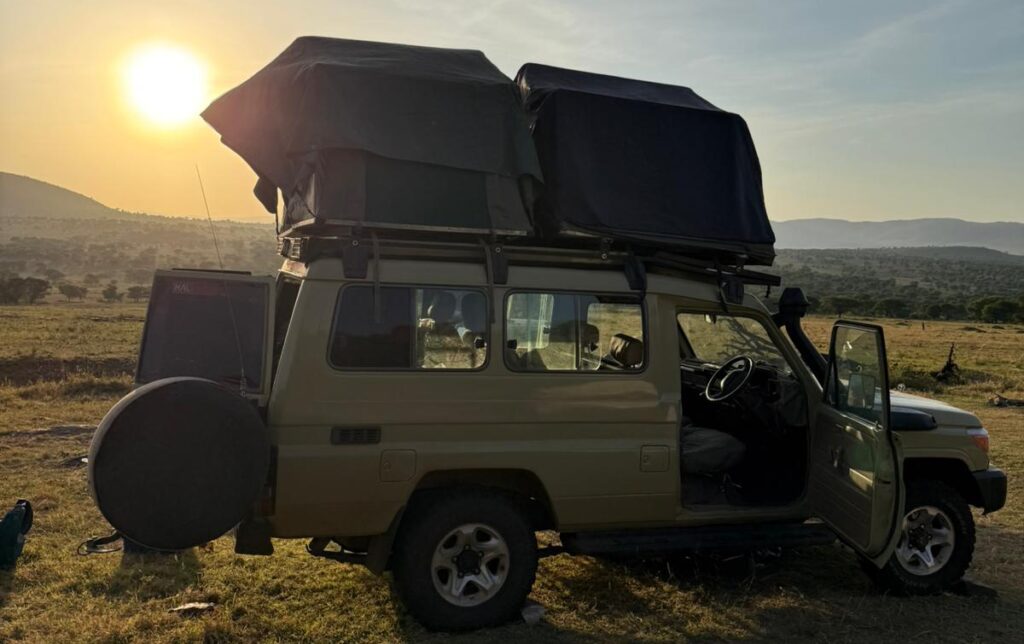
4×4 With Rooftop Tent
Travellers interested in camping can choose a 4×4 equipped with a rooftop tent.
Depending on the rental package, the vehicle may include:
- Rooftop tent
- Mattress
- Sleeping bags
- Fridge or cooler
- Camping table
- Camping chairs
- Cooking equipment
- Gas stove
- Kitchen utensils
- Water containers
- Recovery equipment
- Spare tyre
This setup gives travellers greater independence when exploring Tanzania’s northern safari circuit.
Arusha National Park and Camping
Camping is an attractive option for independent travellers.
Rather than staying in lodges throughout the safari, you can travel with your camping equipment and stay at designated campsites.
A rooftop tent is particularly convenient because it keeps the sleeping area above the ground while allowing you to pack your accommodation directly onto the vehicle.
Camping rules differ between locations, so travellers should always use authorized campsites and follow the instructions of park authorities.
Combining Arusha National Park With the Northern Safari Circuit
One of the biggest advantages of starting your safari in Arusha is the number of destinations that can be reached from the city.
A self-drive itinerary can combine:
Arusha → Arusha National Park → Tarangire → Lake Manyara → Ngorongoro → Serengeti → Arusha
This route gives travellers the opportunity to experience several different ecosystems during one road trip.
Each destination offers something different.
Arusha National Park provides mountain, forest and lake scenery.
Tarangire is famous for elephants and its distinctive baobab landscapes.
Lake Manyara offers diverse habitats and birdlife.
Ngorongoro provides spectacular crater scenery and abundant wildlife.
Serengeti offers vast savannah landscapes and exceptional wildlife viewing.
Arusha National Park to Tarangire
After exploring Arusha National Park, travellers can continue towards Tarangire National Park.
The two parks can be combined easily in a longer northern Tanzania itinerary.
Tarangire is particularly famous for its elephants, baobab trees and seasonal wildlife concentrations.
A self-drive 4×4 allows you to create a flexible route between the two destinations.
Arusha National Park to Ngorongoro
Ngorongoro Conservation Area can also be added to your itinerary.
The journey allows travellers to move from the mountain landscapes around Arusha into the broader northern safari ecosystem.
The Ngorongoro area is particularly famous for its crater, highlands and abundant wildlife.
Travellers should research current conservation area fees, crater access charges and other applicable costs before beginning their journey.
Arusha National Park and Serengeti
For a longer safari, you can continue from the northern circuit towards Serengeti National Park.
A self-drive Serengeti safari requires more preparation because distances are longer and road conditions can vary.
You should carry sufficient water, plan fuel carefully and make sure your rental vehicle is suitable for extended safari travel.
Kenya-Tanzania Self-Drive
Arusha is also strategically positioned for travellers planning a Kenya-Tanzania self-drive safari.
A longer itinerary could connect:
Nairobi → Amboseli → Arusha → Arusha National Park → Tarangire → Ngorongoro → Serengeti
Another option is to combine Kenya’s Masai Mara with Tanzania’s Serengeti.
Cross-border vehicle travel must be arranged in advance. Not every rental vehicle can cross international borders, and additional insurance, authorization and documentation may be required.
Best Time for an Arusha National Park Self-Drive Safari
Arusha National Park can be visited throughout the year.
The best time for your trip depends on whether your main interest is wildlife viewing, hiking, birdwatching, photography or a combination of activities.
Drier periods can make some roads easier to navigate, while the rainy periods bring greener landscapes and can be particularly rewarding for scenery and birdlife.
Because weather and road conditions can change, travellers should check current conditions before beginning their safari.
What to Pack
A self-drive safari requires practical preparation.
Recommended items include:
- Comfortable clothing
- Warm jacket
- Waterproof jacket
- Hiking shoes
- Sun hat
- Sunglasses
- Sunscreen
- Insect repellent
- Binoculars
- Camera
- Power bank
- Flashlight
- Reusable water bottle
- Personal first-aid kit
- Passport
- Driving licence
- Rental agreement
- Insurance documents
If you are camping, confirm that all camping equipment is included before collecting your vehicle.
Self-Drive Safety Tips
Driving independently inside a national park requires responsibility and preparation.
Follow Park Regulations
Always follow Tanzania National Parks regulations and obey signs and instructions from park authorities.
Stay on Designated Roads
Do not drive off established routes unless specifically permitted.
Respect Wildlife
Wild animals should never be approached too closely, chased or disturbed.
Drive Slowly
Safari roads can contain potholes, loose stones, mud and other hazards.
Carry Sufficient Water
Keep enough drinking water in your vehicle, particularly if you intend to spend several hours inside the park.
Check Your Vehicle
Before entering the park, check your tyres, spare wheel, fuel, recovery equipment and essential vehicle systems.
How Many Days Do You Need?
Arusha National Park can be explored in a single day, making it suitable for travellers with limited time.
However, staying overnight provides a more relaxed experience and allows you to combine several activities.
A simple itinerary could be:
Day 1: Arusha → Arusha National Park → Arusha
For a longer experience:
Day 1: Arusha → Arusha National Park
Day 2: Full-day exploration and activities
Day 3: Continue towards Tarangire or another destination
Example 7-Day Northern Tanzania Self-Drive Safari
Day 1 – Arusha
Collect your 4×4 rental and prepare for the safari.
Overnight in Arusha.
Day 2 – Arusha National Park
Drive into Arusha National Park and explore its forests, lakes, crater and open landscapes.
Overnight in or near the park depending on your accommodation arrangements.
Day 3 – Arusha National Park to Tarangire
Leave the park and continue towards Tarangire National Park.
Enjoy an afternoon wildlife drive if time allows.
Day 4 – Tarangire
Spend a full day exploring Tarangire.
Day 5 – Ngorongoro
Continue towards the Ngorongoro area.
Explore the highlands and prepare for the following day’s activities.
Day 6 – Ngorongoro
Spend the day exploring the Ngorongoro area and crater according to your planned itinerary and applicable regulations.
Day 7 – Ngorongoro to Arusha
Drive back towards Arusha and return your rental vehicle or continue with your next destination.
Arusha National Park Self-Drive With a Rooftop Tent
For travellers who enjoy independent adventure, combining an Arusha National Park self-drive safari with a rooftop tent can be an excellent way to explore northern Tanzania.
A fully equipped 4×4 gives you the freedom to travel between parks while carrying your accommodation and cooking equipment.
You can create a flexible route based on your interests, travel dates and available time.
For longer trips, the same vehicle can be used for a wider Tanzania itinerary or, where permitted, a cross-border East African adventure.
Frequently Asked Questions
Can I self-drive in Arusha National Park?
Yes. Visitors can explore the park using an appropriate rental vehicle, subject to current park rules and entry requirements.
Do I need a 4×4 for Arusha National Park?
A capable 4×4 is recommended for travellers planning a self-drive safari, particularly if the park is part of a longer Tanzania safari.
How far is Arusha National Park from Arusha city?
The park is very close to Arusha, making it one of the most convenient national parks for travellers staying in the city.
Can I visit Arusha National Park in one day?
Yes. Its proximity to Arusha makes a one-day self-drive safari possible.
Can I camp in Arusha National Park?
Camping is available at designated campsites subject to park regulations and availability.
Can I rent a 4×4 with a rooftop tent in Tanzania?
Yes, depending on vehicle availability and the rental package. Rooftop-tent 4x4s are popular with travellers planning independent camping safaris.
Can I combine Arusha National Park with Serengeti?
Yes. Arusha National Park can be included at the beginning of a longer northern Tanzania itinerary covering Tarangire, Ngorongoro and Serengeti.
Can I combine Arusha National Park with Kenya?
Yes, provided your rental vehicle is authorized for cross-border travel and the required insurance and documentation are arranged.
Is Arusha National Park good for families?
The park can be included in a family safari itinerary, although families should select activities and accommodation according to the ages and needs of their children.
Is Arusha National Park good for birdwatching?
Yes. Its combination of forest, wetlands, lakes and grassland habitats makes it an interesting destination for bird enthusiasts.
Book Your Tanzania Self-Drive 4×4
Ready to explore Arusha National Park independently?
A reliable Tanzania 4×4 rental gives you the freedom to explore Arusha National Park and continue into the wider northern safari circuit.
Choose from vehicle-only options or a fully equipped 4×4 with rooftop tent and camping equipment, depending on your travel style.
Whether you are planning a short Arusha National Park safari, a Tanzania self-drive safari, or a longer Kenya-Tanzania-East Africa road trip, we can help you plan the vehicle and equipment around your itinerary.
Contact us today to start planning your Arusha National Park self-drive adventure.