
Arusha to Kogatende Self-Drive Safari: A Great Migration Camping Itinerary
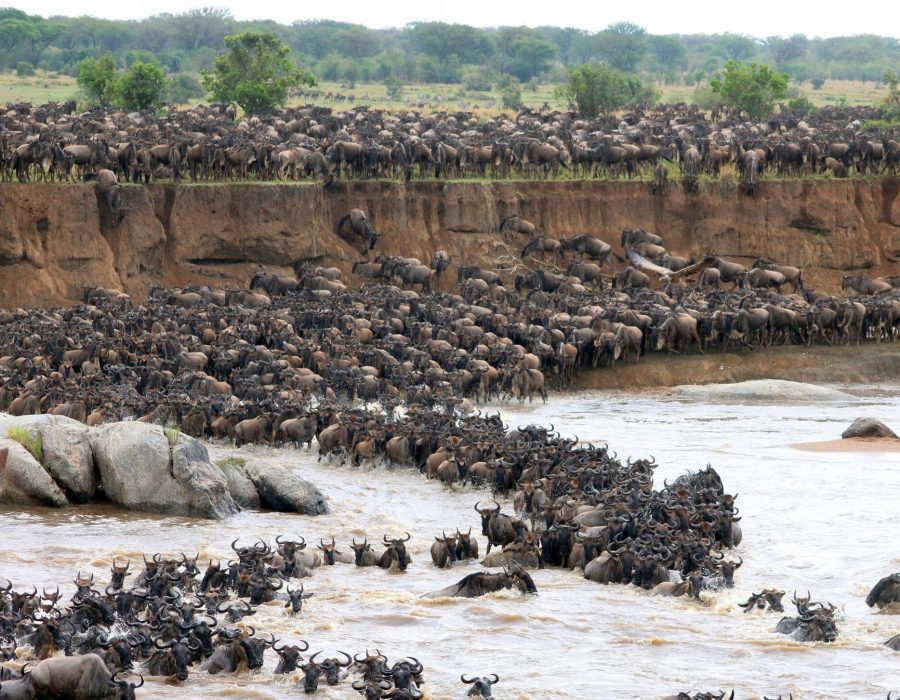
A self-drive safari from Arusha to the Northern Serengeti is one of the most exciting ways to experience Tanzania’s Great Migration. This route takes you from the northern safari circuit through Mto wa Mbu, the Ngorongoro Conservation Area, Central Serengeti, Lobo and finally to the remote Kogatende and Mara River region.
The itinerary is designed for travellers who want to spend several days searching for the migration in Northern Serengeti while combining public camping with lodge accommodation. It also allows time for game drives in Central Serengeti and Lobo before heading north.
Unlike itineraries that include a descent into the Ngorongoro Crater, this route only uses the Ngorongoro Conservation Area as a transit route where necessary. There is no Ngorongoro Crater game drive, so the separate crater vehicle service fee is not included in the planned costs.
Important: Tanzania park tariffs can change by financial year, visitor category and season. The figures below are intended as a planning guide for foreign non-resident visitors and should be reconfirmed with TANAPA and the Ngorongoro Conservation Area Authority before travel. TANAPA states that conservation fees are generally valid for 24 hours from entry.
Route Overview
The self-drive route follows this general itinerary:
Arusha → Mto wa Mbu → Central Serengeti → Lobo → Kogatende/Mara River → Central Serengeti → Arusha
The journey combines:
- Mto wa Mbu accommodation outside the national parks
- Central Serengeti game viewing
- Northern Serengeti and Lobo landscapes
- Extended time around Kogatende and the Mara River
- A mix of public campsites and booked lodge accommodation
- Great Migration tracking
- Transit through the Ngorongoro Conservation Area
- No Ngorongoro Crater descent
Arusha to Mto wa Mbu: Start the Self-Drive Adventure
The journey begins in Arusha, Tanzania’s main northern safari hub. From here, the drive to Mto wa Mbu is a relatively straightforward introduction to the safari route.
Mto wa Mbu is conveniently located near Lake Manyara and at the gateway to the Ngorongoro and Serengeti safari circuit. Spending the first night here is a good way to avoid starting the Serengeti journey with an excessively long drive from Arusha.
Accommodation outside the national parks also means that there are no Serengeti camping or concession charges for this overnight stop.
Before leaving Arusha, make sure you have:
- Enough fuel for the safari circuit
- A properly equipped 4×4 vehicle
- Spare tyre and essential recovery equipment
- Drinking water and food supplies
- Offline maps or a reliable navigation system
- Copies of your vehicle documents
- Park and accommodation confirmations where required
Mto wa Mbu to Central Serengeti
The drive from Mto wa Mbu toward Central Serengeti is one of the most scenic sections of a northern Tanzania self-drive safari.
The route normally passes through or alongside the Ngorongoro Conservation Area before continuing toward the Serengeti. Since this itinerary does not include a Ngorongoro Crater game drive, travellers should budget for the applicable Ngorongoro Conservation Area entry/transit requirements but not the separate crater descent/service charge.
For visitors entering the Serengeti, the park conservation fee is separate from camping or overnight accommodation charges. The official TANAPA tariff published for the 2025/26 tariff period lists Serengeti conservation fees for non-East African adult visitors at US$70 during the peak period and US$60 during the low period before applicable VAT treatment shown by different booking systems.
Because park entry is time-based, it is important to plan your gate entry and exit carefully.
Camping in Central Serengeti
The Seronera area is one of the most practical places to camp on a self-drive safari. It provides access to some of the Serengeti’s most productive wildlife areas, including the Seronera Valley and surrounding plains.
Popular public camping options may include Dik Dik Public Campsite or another authorised public campsite in the Seronera area, subject to availability and the current park reservation system.
Public campsites are ideal for independent travellers because they offer a more affordable way to stay inside the park. However, facilities are basic, and advance arrangements may be required.
When camping inside the Serengeti, expect to pay separately for:
- Park conservation fees
- Camping or overnight fees
- Vehicle-related park charges where applicable
Central Serengeti to Lobo
After exploring Central Serengeti, continue north toward Lobo.
This is a beautiful transition from the busier Seronera area into the more remote landscapes of Northern Serengeti. The journey itself can be a game drive, so allow plenty of time rather than treating it as a simple transfer.
Lobo is known for:
- Granite kopjes
- Lions and other predators
- Elephant sightings
- Open grasslands
- Lower visitor density than central Serengeti in some periods
- Access toward the Kogatende and Mara River region
An overnight stay at an authorised public campsite in the Lobo area breaks up the journey to Kogatende and gives you more time to explore Northern Serengeti.
Lobo to Kogatende and the Mara River
The drive north from Lobo toward Kogatende takes you into one of Tanzania’s most famous Great Migration areas.
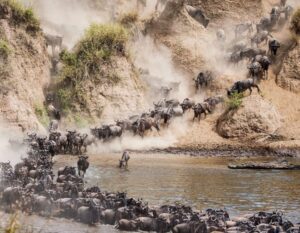
Kogatende is located in Northern Serengeti near the Mara River and is particularly well known for seasonal wildebeest migration activity. During the right migration period, huge herds may move through the area, and river crossings can occur.
However, one of the most important rules when planning a migration safari is this:
A Mara River crossing can never be guaranteed.
The migration depends on rainfall, grazing conditions, herd movements and other natural factors. Animals may cross repeatedly, remain near the river for long periods or move to another section of the ecosystem.
The best strategy is to spend several days in the region rather than expecting to see everything during a single game drive.
Exploring Kogatende and the Mara River
Allowing multiple full days around Kogatende provides the flexibility needed for a Great Migration safari.
Instead of rushing back toward Central Serengeti immediately, travellers can follow wildlife movements and explore different areas around the Mara River.
A typical day may include:
- An early morning game drive
- Searching for wildebeest concentrations
- Checking several Mara River crossing points
- Exploring riverine areas for wildlife
- Looking for lions, cheetahs and leopards
- Watching hippos and crocodiles
- Returning to camp or lodge before dark
Why Multiple Days Are Better
Wildlife movements are unpredictable. Spending several nights in Kogatende dramatically improves flexibility compared with visiting the area for only one afternoon.
If there is little activity at one crossing point, you can move to another area. If large herds begin gathering near the river, you can return later without facing a long drive from another part of the Serengeti.
Camping and Lodge Stays in Northern Serengeti
A combination of lodge accommodation and public camping can work particularly well for self-drive travellers.
Booked accommodation provides a comfortable base during part of the Kogatende stay, while public camping offers flexibility and can reduce overall accommodation costs.
Always confirm:
- Whether the campsite is officially operational
- Advance booking requirements
- Vehicle access conditions
- Current camping charges
- Whether camping equipment is included with your rental vehicle
- Availability of water and other facilities
Do not assume that every campsite shown on an old map or travel blog is currently available.
Kogatende to Central Serengeti
After spending several days in Northern Serengeti, the route heads south toward Central Serengeti.
This should again be treated as a game drive rather than simply a transfer day. The exact route can be adjusted according to road conditions, wildlife movements and the amount of time available.
An overnight stay in the Seronera area provides a sensible final stop inside the Serengeti before the long journey back toward Arusha.
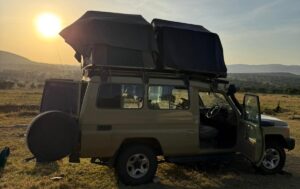
A public campsite can be a good choice for travellers using a Land Cruiser with a rooftop tent or full camping equipment.
Central Serengeti to Arusha
The final drive from Central Serengeti to Arusha is long and requires an early departure.
Travellers should allow enough time for:
- Breaking camp
- Driving to the relevant park exit
- Completing park procedures
- Transit through the Ngorongoro Conservation Area where required
- Road conditions
- Fuel stops
- Traffic closer to Arusha
This is not a day to leave late in the morning.
If you prefer a more relaxed safari, consider adding an overnight stop around Karatu or Mto wa Mbu before returning to Arusha.
Serengeti Park Fees and Concession Fees
The exact cost of a self-drive safari depends on nationality, residency status, age, vehicle registration and the season.
For foreign non-resident adults, the following table provides a useful planning framework. The official TANAPA tariff currently available online covers the 2023/24 through 2026/27 tariff period, while published operator summaries may show VAT-inclusive totals differently. Fees should therefore be reconfirmed before payment.
Indicative Serengeti and Ngorongoro Fees for Foreign Non-Resident Adults
| Fee | Approximate Rate | When It Applies |
|---|---|---|
| Serengeti conservation/park entry fee | US$70 peak / US$60 low before VAT treatment | Per person per applicable entry period |
| Serengeti public camping fee | 50$ per person per night VATincluded | Per person per night at an authorised public campsite |
| Serengeti concession fee | Generally applies to qualifying lodge/camp overnight stays; confirm whether included in accommodation. if not included, it will be 83$ per night per person | Per person per night where applicable |
| Ngorongoro Conservation Area entry/transit fee | 71$ per person per 24 hours | Required when entering/transiting the conservation area |
| Ngorongoro Crater vehicle service fee | Not applicable to this itinerary. where applicable, it is 300$ | Only payable when descending for a crater game drive |
| Serengeti vehicle charges | Depends on vehicle category and registration. local vehicle range around 20$ but determined by the vehicle wait | Applicable according to current TANAPA tariff |
The official TANAPA tariff distinguishes between conservation fees and campsite fees. Separate seasonal campsite categories and fees may apply, and prior booking can be required.
What Is a Serengeti Concession Fee?
A concession fee is not the same as the park entry fee.
In simple terms:
- Park/conservation fee: Gives you access to the national park.
- Camping fee: Applies when staying at an authorised campsite.
- Concession fee: May apply when staying overnight at certain lodges, tented camps or accommodation inside the park.
Some accommodation providers include applicable concession charges in their package price, while others show them separately. Always check your booking confirmation carefully.
For planning purposes, published 2026 operator fee summaries commonly show Serengeti overnight/concession-related charges for foreign non-resident adults varying by season and accommodation type, with figures around US$70–83 including VAT treatment in some published summaries. These figures should not be treated as a substitute for confirmation from the park authority or accommodation provider.
How Much Should You Budget for Park and Overnight Fees?
The total depends heavily on:
- Number of adults and children
- Visitor nationality or residency category
- Number of nights inside Serengeti National Park
- Whether you use public campsites or lodges
- Whether concession fees are already included in accommodation
- Number of 24-hour park entry periods
- Vehicle type and registration
- Current VAT and tariff rules
For this route, the biggest fee components are likely to be:
- Serengeti park entry fees
- Serengeti camping fees for public campsite nights
- Ngorongoro Conservation Area entry/transit charges
- Vehicle charges
- Concession fees for any qualifying lodge or camp stays
Because the itinerary does not include a Ngorongoro Crater game drive, the separate crater vehicle service charge should not form part of the planned budget. Published 2026 summaries place this fee at approximately US$295 including VAT, but it is only relevant to vehicles descending into the crater.
Best Vehicle for This Self-Drive Route
A proper 4×4 safari vehicle is strongly recommended.
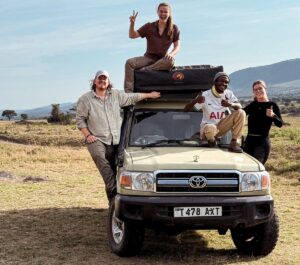
The best choice is typically a Toyota Land Cruiser 4×4, particularly for travellers planning to visit Central Serengeti, Lobo and Kogatende.
A suitable vehicle should ideally include:
- High ground clearance
- Reliable four-wheel drive
- Good-quality all-terrain tyres
- At least one full-size spare tyre
- Basic recovery equipment
- Sufficient fuel capacity
- Fridge or cool box for longer camping trips
- Rooftop tent if camping
- Table and chairs
- Cooking equipment
- Lighting for camp use
A standard two-wheel-drive vehicle is not suitable for this itinerary, and a low-clearance SUV can be limiting on rough Serengeti tracks.
Recommended: Land Cruiser for Northern Serengeti
A diesel Toyota Land Cruiser is particularly suitable because it offers:
- Better ground clearance
- Stronger performance on rough roads
- More space for camping equipment
- Better suitability for long distances
- Greater confidence on remote Northern Serengeti tracks
If renting a vehicle, confirm that the rental company specifically permits travel to Kogatende and the Northern Serengeti.
Fuel Planning
Fuel planning is essential for a self-drive safari.
Fill up before leaving the Arusha area and take advantage of reliable fuel stops before entering the remote parts of the safari circuit.
Do not rely on finding fuel exactly when needed inside or near the Serengeti. Availability and operating conditions can change.
A vehicle with good fuel range is a major advantage on this route.
For extra security:
- Start long sections with a full tank
- Know your approximate fuel consumption
- Carry additional fuel only in approved containers where necessary and permitted
- Avoid unnecessary engine idling
- Do not drive around searching for wildlife without monitoring your fuel level
Road Conditions and Driving Tips
Road conditions can change with rain and seasonal maintenance.
Some important self-drive rules include:
Drive During Daylight
Plan to reach your campsite or lodge before dark. Driving at night inside the parks is generally restricted, and wildlife on the roads creates an additional hazard.
Follow Park Speed Limits
Speed limits are enforced for wildlife protection and visitor safety.
Stay on Authorised Roads
Do not create new tracks by driving off-road where it is prohibited.
Carry Offline Navigation
Mobile signal can be unreliable in remote parts of Northern Serengeti. Download maps before entering the park.
Do Not Depend on One Route
Temporary road closures, washouts or maintenance can affect the best route. Ask at park gates, ranger posts or your accommodation for current road information.
Never Rush a Long Safari Day
Distances on the map can be misleading. Wildlife sightings, rough roads and park speed limits can make a relatively short distance take several hours.
Great Migration Tips for Kogatende
To get the most from your time in the Mara River region:
Start Early
The first hours of daylight are excellent for wildlife activity and cooler driving conditions.
Follow the Herds, Not a Fixed Schedule
The migration moves according to natural conditions. Be flexible.
Be Patient at the River
A crossing may happen quickly, after hours of waiting, or not at all.
Do Not Crowd Animals
Keep a safe and respectful distance and follow park regulations.
Use Several Days Wisely
Explore different parts of the Kogatende region rather than waiting all day at one crossing point.
Avoid Chasing Other Vehicles
A group of safari vehicles does not always mean a crossing is about to happen. Drive according to your own observations and information from authorised guides and park staff.
Camping Safety in the Serengeti
Camping inside the Serengeti is an incredible experience, but you are staying in a genuine wildlife environment.
Follow campsite rules carefully:
- Never leave food unattended
- Keep your campsite clean
- Store food securely
- Do not walk away from the campsite at night
- Follow instructions from campsite staff and rangers
- Never approach wildlife
- Keep children under close supervision
- Use a torch after dark
- Stay inside your tent or vehicle when advised
A rooftop tent can provide an additional level of comfort for independent travellers, although all campers must still follow the rules of the authorised campsite.
Frequently Asked Questions
Can I drive from Arusha to Kogatende on a self-drive safari?
Yes, provided you have a suitable 4×4 vehicle, the correct permits and park access, and enough time for the journey. A Land Cruiser is strongly recommended for a route that includes Central Serengeti, Lobo and Northern Serengeti.
Can I camp in the Serengeti?
Yes, authorised public and other approved campsites are available, subject to current availability, booking requirements and park regulations. Camping fees are separate from park entry fees.
Do I have to pay a concession fee when staying in the Serengeti?
It depends on the type of accommodation and the current fee structure. Concession fees are generally associated with qualifying overnight accommodation inside the park and may already be included in the price quoted by a lodge or camp. Always confirm this before booking.
Do I need to pay the Ngorongoro Crater fee if I only transit through the conservation area?
You should not pay the separate crater descent/service fee if you do not descend into the crater. However, Ngorongoro Conservation Area entry or transit charges may still apply depending on the current route and visitor/vehicle category. Confirm this with the NCAA before travel. Published 2026 fee summaries distinguish the general NCA entry fee from the separate crater vehicle service charge.
Is a 4×4 necessary for Kogatende?
A proper 4×4 is strongly recommended. Road and track conditions can vary significantly, particularly after rain.
Can I guarantee seeing a Mara River crossing?
No. The Great Migration is a natural event, and no operator or guide can guarantee that a river crossing will happen during your visit.
How many days should I spend in Kogatende?
Several days are recommended if your main objective is to search for migration activity and possible Mara River crossings. More time provides greater flexibility.
Is Central Serengeti to Arusha possible in one day?
Yes, but it is a long journey and requires a very early departure. Some travellers prefer to break the journey with an overnight stop around Karatu or Mto wa Mbu.
Final Thoughts
A self-drive safari from Arusha to Kogatende offers an excellent combination of independence, wildlife viewing and Great Migration adventure.
The route through Central Serengeti, Lobo and Northern Serengeti allows travellers to experience several very different landscapes while dedicating valuable time to the Mara River region.
By combining public campsites with pre-booked accommodation, travellers can balance comfort and cost while enjoying the freedom of a private 4×4 safari.
The most important preparations are choosing a reliable Land Cruiser, confirming all current park and overnight charges, checking which concession fees are included in accommodation, planning fuel carefully and allowing enough time for the long drives.
Most importantly, remain flexible. The Serengeti’s wildlife does not follow a timetable—and that unpredictability is exactly what makes a self-drive Great Migration safari such an unforgettable adventure.