
15-Day Tanzania and Uganda Self-Drive Safari: The Ultimate East African Road Trip
Introduction: Explore Tanzania and Uganda on a 15-Day Self-Drive Safari
A 15-day Tanzania and Uganda self-drive safari is an exciting way to discover East Africa’s extraordinary wildlife, dramatic landscapes and rich cultural heritage. From Tanzania’s famous Serengeti plains and Ngorongoro Crater to Uganda’s tropical rainforests, mountain gorillas and wildlife-rich savannahs, this two-country road trip combines classic African safaris with unforgettable primate encounters.
Starting in Arusha or Dar es Salaam, travellers can explore Tanzania’s spectacular national parks before continuing towards Uganda for gorilla trekking, chimpanzee tracking and wildlife viewing. Depending on your starting point, route and rental arrangements, highlights may include Tarangire National Park, Ngorongoro Conservation Area, Serengeti National Park, Bwindi Impenetrable National Park, Queen Elizabeth National Park and Kibale Forest.
A self-drive safari offers flexibility over your daily schedule, accommodation and sightseeing stops. You can choose budget campsites, comfortable lodges or luxury properties while travelling at your own pace.
However, a successful Tanzania and Uganda road trip requires careful planning. Cross-border vehicle permissions, insurance, border procedures, park regulations and long driving distances must be considered before booking.
With a suitable 4×4 rental vehicle and a realistic route, a Tanzania and Uganda self-drive safari can be an unforgettable adventure for wildlife enthusiasts, couples, families and independent travellers.
Why Choose a Tanzania and Uganda Self-Drive Safari?
Tanzania and Uganda offer complementary safari experiences. Tanzania is famous for its vast savannah ecosystems and major wildlife parks, while Uganda is renowned for mountain gorillas, chimpanzees, lakes, forests and diverse wildlife habitats.
Combining the two countries creates an opportunity to experience several of East Africa’s most remarkable natural environments in one holiday.
Discover Tanzania’s Famous Wildlife Parks
Tanzania is home to internationally renowned destinations, including Serengeti National Park, Ngorongoro Conservation Area and Tarangire National Park.
The Serengeti offers expansive grasslands and opportunities to observe predators and large herbivore populations. Ngorongoro is known for its spectacular crater landscape, while Tarangire is particularly associated with elephants, baobab trees and seasonal wildlife concentrations.
These parks make northern Tanzania an excellent starting point for a wildlife-focused road trip.
Experience Mountain Gorilla Trekking in Uganda
Uganda provides an opportunity to encounter endangered mountain gorillas in their natural habitat. Bwindi Impenetrable National Park is one of the principal destinations for guided gorilla trekking.
The forest environment is very different from Tanzania’s open savannahs, giving travellers a varied experience within one holiday.
Gorilla trekking requires advance permits and authorized park guides. Self-driving allows you to reach the designated trekking area independently, but it does not replace the required guided trekking experience.
Enjoy Chimpanzee Tracking and Traditional Game Drives
Uganda’s Kibale Forest is a popular destination for chimpanzee tracking, while Queen Elizabeth National Park offers game drives and boat excursions along the Kazinga Channel.
Combining these destinations with Tanzania’s northern safari circuit creates a trip that includes both primate encounters and traditional African wildlife viewing.
Travel Independently
A self-drive holiday provides greater control over accommodation, departure times and sightseeing stops. It is particularly attractive to travellers who prefer independent travel over a fixed group itinerary.
The right vehicle depends on the road conditions, your planned destinations and whether you intend to camp or stay in lodges.
Detailed 15-Day Tanzania and Uganda Self-Drive Itinerary
This suggested itinerary begins in northern Tanzania and continues towards Uganda. It includes several of the region’s most popular safari highlights, but it is ambitious and requires careful coordination of vehicle permissions, border arrangements and flights.
A direct overland drive from northern Tanzania to Uganda involves substantial distances and may require travel through Kenya, depending on your route and border arrangements. Do not assume that a rental vehicle can cross every international border. Confirm the permitted route with your rental provider before booking.
Day 1: Arrive in Arusha, Tanzania
Arrive at Kilimanjaro International Airport or travel to Arusha, Tanzania’s main northern safari hub.
Collect your rental vehicle, complete the handover and check the vehicle’s condition, insurance documents and safari equipment if included.
Use the remainder of the day to prepare for the safari, purchase essential supplies and confirm accommodation and park reservations.
Overnight: Arusha.
Day 2: Drive to Tarangire National Park
Leave Arusha and travel towards Tarangire National Park, known for its elephants, ancient baobab trees and varied savannah landscapes.
Depending on your arrival time and park arrangements, enjoy an afternoon game drive on authorized park roads.
Tarangire is an excellent introduction to Tanzania’s wildlife, particularly during periods when animals concentrate around reliable water sources.
Overnight: Tarangire area.
Day 3: Tarangire to the Ngorongoro Highlands
Enjoy a morning wildlife drive before continuing towards the Ngorongoro Conservation Area and the nearby town of Karatu.
The journey passes through rural landscapes and highland scenery. Take time to enjoy viewpoints and local stops where appropriate, while allowing sufficient time to reach your accommodation.
Prepare for your planned crater visit and confirm applicable entry and vehicle arrangements.
Overnight: Karatu or the Ngorongoro highlands.
Day 4: Explore Ngorongoro Crater
Visit the Ngorongoro Conservation Area and, if arranged, descend into Ngorongoro Crater for a wildlife viewing experience.
The crater floor contains grasslands, wetlands and other habitats that support a wide range of wildlife. Sightings may include zebras, wildebeest, buffaloes, elephants, lions and, with luck, the endangered black rhinoceros.
Crater visits involve specific access rules, fees and timing requirements. Check current regulations and confirm that your rental agreement permits the intended activity.
Overnight: Karatu or the Ngorongoro area.
Day 5: Drive to Serengeti National Park
Travel towards Serengeti National Park through the Ngorongoro region, allowing time for the journey, park procedures and wildlife viewing along authorized routes.
The Serengeti is one of Africa’s most celebrated wildlife destinations, with vast plains, rocky kopjes and diverse wildlife habitats.
Choose your overnight location according to your travel dates, accommodation availability and the wildlife areas you want to explore.
Overnight: Serengeti area.
Day 6: Full-Day Wildlife Safari in the Serengeti
Spend the day exploring the Serengeti’s authorized game-drive routes.
Look for lions, elephants, giraffes, zebras, wildebeest, cheetahs and other wildlife. The animals you encounter depend on season, weather and location.
Travellers interested in the Great Wildebeest Migration should select their accommodation according to expected seasonal herd movements. Migration timing varies, and river crossings or specific sightings cannot be guaranteed.
Overnight: Serengeti area.
Day 7: Serengeti to Arusha or an Agreed Transit Stop
Begin the journey out of the Serengeti and towards your planned onward route.
This day is important because the journey from northern Tanzania to Uganda is long and may require several travel days, depending on your approved border crossings and overnight stops.
Do not attempt to combine a full Serengeti game drive with an excessively long road transfer. Choose a practical overnight stop and confirm the onward route with your rental company.
Overnight: According to the confirmed transit plan.
Day 8: Begin the Journey Towards Uganda
Continue along the approved cross-border route towards Uganda. Depending on your starting point, vehicle permissions and border arrangements, the journey may involve travelling through Kenya.
Allow sufficient time for immigration procedures, vehicle inspections and any required insurance or authorization checks.
Before leaving Tanzania, confirm that the vehicle is approved for every country you intend to enter. If your rental company does not allow this route, consider a separate vehicle rental in Uganda with an agreed transfer between the two countries.
Overnight: Along the confirmed route.
Day 9: Arrive in Southwestern Uganda
Continue towards southwestern Uganda and your reserved accommodation near Bwindi Impenetrable National Park.
Road conditions and journey times vary considerably, so avoid scheduling gorilla trekking for the same day as a long border transfer.
Confirm the location of your gorilla permit and stay in the correct sector of Bwindi before the trekking date.
Overnight: Bwindi area.
Day 10: Gorilla Trekking in Bwindi Impenetrable National Park
Spend the day participating in a guided mountain gorilla trekking experience in Bwindi.
After an early briefing, authorized guides lead visitors through the forest in search of a habituated gorilla family. The trek may take several hours depending on the location of the gorillas and the terrain.
Book your permit well in advance, follow park instructions and bring suitable hiking footwear, rain protection and drinking water.
Overnight: Bwindi area.
Day 11: Explore Lake Bunyonyi
Drive to Lake Bunyonyi, a scenic destination surrounded by green hills, terraced farmland and numerous small islands.
Relax at a lakeside lodge, take a boat trip or enjoy the views after your gorilla trekking experience.
Lake Bunyonyi is a convenient stop between southwestern Uganda’s forest destinations and the country’s savannah parks.
Overnight: Lake Bunyonyi.
Day 12: Drive to Queen Elizabeth National Park
Continue north towards Queen Elizabeth National Park, one of Uganda’s leading wildlife destinations.
Depending on your route, you may travel through the Ishasha sector, known for occasional sightings of tree-climbing lions.
Arrive at your accommodation and prepare for a wildlife drive the following day. Allow enough time for the journey, particularly if you plan to stop for wildlife viewing en route.
Overnight: Queen Elizabeth National Park area.
Day 13: Wildlife Safari in Queen Elizabeth National Park
Explore authorized game-drive routes in Queen Elizabeth National Park. Wildlife may include elephants, buffaloes, Uganda kob, waterbucks, warthogs, lions and many bird species.
Consider a boat cruise along the Kazinga Channel, where hippos, buffaloes, elephants and waterbirds may be observed from the water.
Overnight: Queen Elizabeth National Park area.
Day 14: Visit Kibale Forest National Park
Travel towards Kibale Forest National Park near Fort Portal, a region known for tropical forest, crater lakes and green countryside.
If your schedule and permit availability allow, arrange a guided chimpanzee tracking experience. If the tracking activity is planned for the following morning, stay overnight near the designated meeting point.
For a more relaxed itinerary, spend additional time in western Uganda instead of attempting to include too many activities in one day.
Overnight: Kibale or Fort Portal.
Day 15: Complete the Safari and Depart
Use your final day for chimpanzee tracking if it has been booked for the morning, or begin travelling towards your agreed vehicle return location.
The departure plan depends on whether your rental ends in Uganda or you are returning to Tanzania. A same-day long-distance road transfer between countries and an international flight is not recommended without a generous time buffer.
For a practical 15-day trip, arrange an international flight from Uganda if your rental provider permits a one-way return there. Otherwise, extend the itinerary to allow time for the return journey to Tanzania.
Overnight: According to your departure schedule.
Best Places to Visit on a Tanzania and Uganda Road Trip
Serengeti National Park, Tanzania
The Serengeti is famous for its vast savannah plains, predators and seasonal wildlife migration. It is a major highlight for travellers interested in classic African game viewing.
Ngorongoro Conservation Area, Tanzania
Ngorongoro combines dramatic highland scenery with a wildlife-rich crater landscape. A crater visit offers an opportunity to observe several wildlife species within a distinctive natural setting.
Tarangire National Park, Tanzania
Tarangire is known for elephants, baobab trees and diverse savannah wildlife. It is an excellent addition to a northern Tanzania self-drive safari.
Bwindi Impenetrable National Park, Uganda
Bwindi is one of Uganda’s principal mountain gorilla trekking destinations. Its rainforest and steep terrain create a very different experience from Tanzania’s open grasslands.
Lake Bunyonyi, Uganda
Lake Bunyonyi is a scenic place for lakeside relaxation, boat trips and countryside views. It is an excellent stop after gorilla trekking.
Queen Elizabeth National Park, Uganda
Queen Elizabeth National Park offers traditional game drives, birdwatching and boat excursions along the Kazinga Channel. It adds a varied wildlife experience to the road trip.
Kibale Forest National Park, Uganda
Kibale is a popular destination for chimpanzee tracking and forest experiences. Advance arrangements are recommended for authorized tracking activities.
Choosing the Best 4×4 Rental in Tanzania
Your vehicle choice will influence comfort, route flexibility and the type of accommodation you can access. Consider your group size, luggage, driving experience and whether your trip includes camping.
Toyota Land Cruiser Prado
A Land Cruiser Prado or comparable 4×4 is a strong option for long-distance travel, luggage and rural access roads. It is worth considering for a multi-park safari where comfort and ground clearance are important.
Toyota Land Cruiser 70 Series
A suitable Land Cruiser 70 Series can be useful for travellers seeking a robust safari vehicle. Depending on the model and configuration, it may suit camping equipment and more demanding rural routes.
Toyota RAV4 or Compact SUV
A compact SUV may work for travellers staying in lodges and following suitable established roads. However, confirm the specific vehicle’s capabilities and whether it is authorized for the planned park routes and international travel.
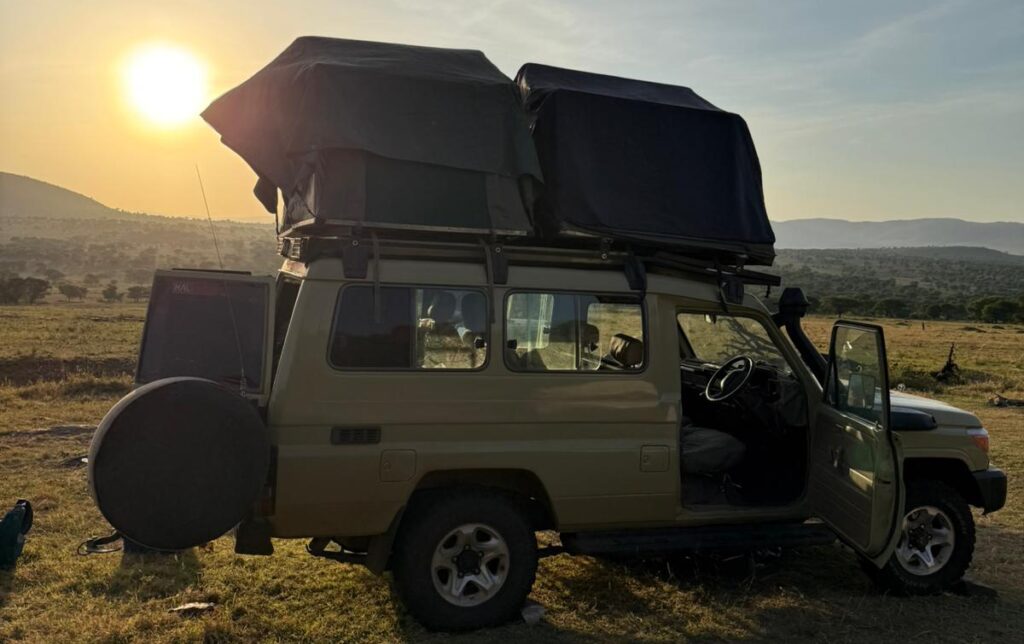
Land Cruiser with Rooftop Tent
Travellers who prefer camping can consider a 4×4 equipped with a rooftop tent and appropriate camping equipment.
Confirm what is included in the rental, such as bedding, cooking equipment, table, chairs, refrigerator and recovery equipment. Use designated campsites and check whether your intended route and vehicle are permitted.
Explore our 4×4 car rental in Tanzania, self-drive safari in Tanzania, Toyota Land Cruiser rental in Tanzania and 4×4 rental with rooftop tent pages to find a vehicle that suits your journey.
Cross-Border Car Rental Between Tanzania and Uganda
Cross-border travel requires careful preparation. A vehicle rented in Tanzania cannot automatically be driven into Uganda, and a direct route may require passage through another country.
Before confirming your booking, ask your rental provider about:
- Written authorization to enter Uganda and any transit country.
- Applicable insurance coverage and cross-border documentation.
- Vehicle registration papers and authorization letters.
- Approved border crossing points and permitted routes.
- Any additional cross-border or one-way return fees.
- Vehicle restrictions in the national parks you intend to visit.
- Roadside assistance and emergency support across borders.
- Whether the vehicle must return to Tanzania or can be dropped off in Uganda.
Important: Obtain written confirmation before paying for a rental. If a suitable cross-border rental is unavailable, consider using one vehicle in Tanzania and a separate rental vehicle in Uganda, with a planned transfer between the countries.
This approach may simplify vehicle authorization and reduce complications associated with long-distance one-way returns.
Estimated Budget for a 15-Day Tanzania and Uganda Self-Drive Safari
The total cost depends on the vehicle, fuel, accommodation, park fees, primate permits and cross-border arrangements.
| Expense | What to budget for |
|---|---|
| 4×4 car rental | Daily rental rate multiplied by rental days |
| Fuel | Depends on route, vehicle and total distance |
| Accommodation | Campsites, budget stays, midrange lodges or luxury properties |
| Tanzania park fees | Applicable national park and conservation-area charges |
| Uganda park fees | Applicable park entry and vehicle charges |
| Gorilla trekking | Permit and any related activity costs |
| Chimpanzee tracking | Permit and authorized activity costs |
| Cross-border expenses | Insurance, vehicle authorization and any required transit arrangements |
| Food and drinks | Restaurants, lodge meals or self-catering |
| Optional activities | Boat trips, cultural visits and other excursions |
For an accurate quotation, calculate Tanzania and Uganda expenses separately and confirm which items are included in your rental agreement. Do not assume that permits, park fees, fuel or cross-border charges are included unless explicitly stated.
Best Time for a Tanzania and Uganda Self-Drive Safari
Tanzania and Uganda can be visited throughout the year, although seasonal rainfall affects road conditions, trekking and wildlife viewing.
The relatively drier periods are often popular for general safari travel. However, conditions vary between Tanzania’s savannah parks and Uganda’s mountainous rainforest regions.
If the Great Wildebeest Migration is a priority, choose your Tanzania travel dates according to the expected seasonal movement of the herds. The migration’s location varies with rainfall and grazing conditions.
Gorilla trekking is possible throughout the year, but wet forest trails can become muddy and slippery. Appropriate footwear, rain protection and flexible travel plans are advisable.
Book popular accommodation and primate permits in advance, especially when travelling during busy periods.
Practical Tips for Driving in Tanzania and Uganda
Drive on the left. Both Tanzania and Uganda use left-hand traffic. Drive carefully on unfamiliar roads and when entering busy towns.
Plan realistic driving days. Distances between Tanzania’s northern parks and Uganda are substantial. Allow extra time for border procedures, road conditions and rest stops.
Avoid night driving. Limited lighting, pedestrians, livestock and changing road conditions make daytime driving preferable.
Check cross-border documents. Carry your passport, driving licence, rental agreement, insurance documents and written vehicle authorization.
Plan fuel stops. Refuel when convenient on longer rural journeys and do not assume that fuel is readily available in remote areas.
Follow park regulations. Use authorized roads, observe speed limits and respect wildlife.
Arrange permits early. Gorilla and chimpanzee tracking activities require advance planning and authorized guides.
Confirm the final return location. One-way returns across countries may be restricted or expensive, and some rental companies require the vehicle to return to its original country.
Frequently Asked Questions
Is 15 days enough for Tanzania and Uganda?
Fifteen days can cover highlights in both countries, but it is a demanding itinerary when northern Tanzania’s safari circuit and Uganda’s primate destinations are combined. Allow sufficient time for long transfers and border formalities.
Can I rent a car in Tanzania and drive to Uganda?
Only if the rental company authorizes the vehicle for the complete international route and the necessary insurance and documentation are in place. Depending on the route, you may also need permission to transit another country.
Is a 4×4 necessary for a Tanzania and Uganda safari?
A suitable 4×4 is recommended for many safari routes, particularly where unpaved park access roads and variable weather conditions are expected. Vehicle suitability depends on the exact route and rental restrictions.
Can I see gorillas in Uganda during a Tanzania safari?
Yes. You can combine Tanzania’s wildlife parks with a guided gorilla trekking experience in Bwindi Impenetrable National Park. Arrange the gorilla permit and accommodation before finalizing your route.
Can I track chimpanzees in Uganda?
Yes. Kibale Forest National Park is a popular destination for guided chimpanzee tracking. Book through an authorized operator and confirm permit availability.
Can I return my rental vehicle in Uganda?
That depends on your rental provider. Some companies may offer cross-border one-way returns for an additional charge, while others require the vehicle to return to Tanzania. Confirm the arrangement before booking flights.
How much does a 15-day Tanzania and Uganda self-drive safari cost?
Costs vary according to vehicle category, fuel, accommodation, park fees, primate permits, cross-border arrangements and travel season. A tailored quotation is the best way to estimate the total.
Should I book gorilla permits before renting a car?
It is sensible to secure your preferred trekking dates first, particularly if your travel dates are fixed. You can then select your vehicle and accommodation to match the confirmed trekking location.
Book Your Tanzania and Uganda Self-Drive Adventure
A 15-day Tanzania and Uganda self-drive safari combines the Serengeti’s expansive plains, Ngorongoro’s spectacular crater, Tarangire’s elephants and Uganda’s unforgettable mountain gorilla and chimpanzee experiences.
With a suitable vehicle, confirmed cross-border permissions and a realistic itinerary, you can explore two remarkable East African destinations on one independent road trip.
At Self Drive Tanzania, travellers can explore vehicle options for discovering Tanzania and planning onward journeys into East Africa. Choose a vehicle suited to your group size, accommodation style and route, and confirm all international travel arrangements before booking.
Start planning your adventure with 4×4 car rental in Tanzania, self-drive safari in Tanzania, Toyota Land Cruiser rental in Tanzania and Tanzania Uganda cross-border car rental. Contact our team with your travel dates, group size and preferred vehicle to request a tailored quotation.