
Empakaai and Olmoti Walking Safari: Exploring Tanzania’s Hidden Crater Landscapes
Introduction: Discover Empakaai and Olmoti on Foot
Tanzania is internationally recognised for its spectacular wildlife safaris, but beyond the traditional game-drive experience lies another fascinating way to explore its natural beauty. The Empakaai and Olmoti walking safari offers visitors an opportunity to discover the dramatic volcanic landscapes of the Ngorongoro Highlands on foot.
Located within the Ngorongoro Conservation Area in northern Tanzania, Empakaai and Olmoti are two remarkable volcanic craters that provide rewarding hiking experiences. Their landscapes feature green highland vegetation, ancient volcanic formations, spectacular viewpoints, crater lakes and beautiful waterfalls.
Unlike conventional wildlife safaris, which primarily involve exploring national parks in a 4×4 vehicle, these walking excursions allow visitors to experience Tanzania’s wilderness at a slower and more intimate pace. Accompanied by authorised local personnel, travellers can explore scenic trails, appreciate the region’s biodiversity and learn about the relationship between nature and the traditional Maasai communities.
Whether you are planning a northern Tanzania adventure, a photography holiday, a hiking expedition or a longer self-drive safari in Tanzania, visiting Empakaai and Olmoti can add a memorable dimension to your itinerary.
Empakaai Crater Walking Safari: Exploring a Spectacular Volcanic Caldera
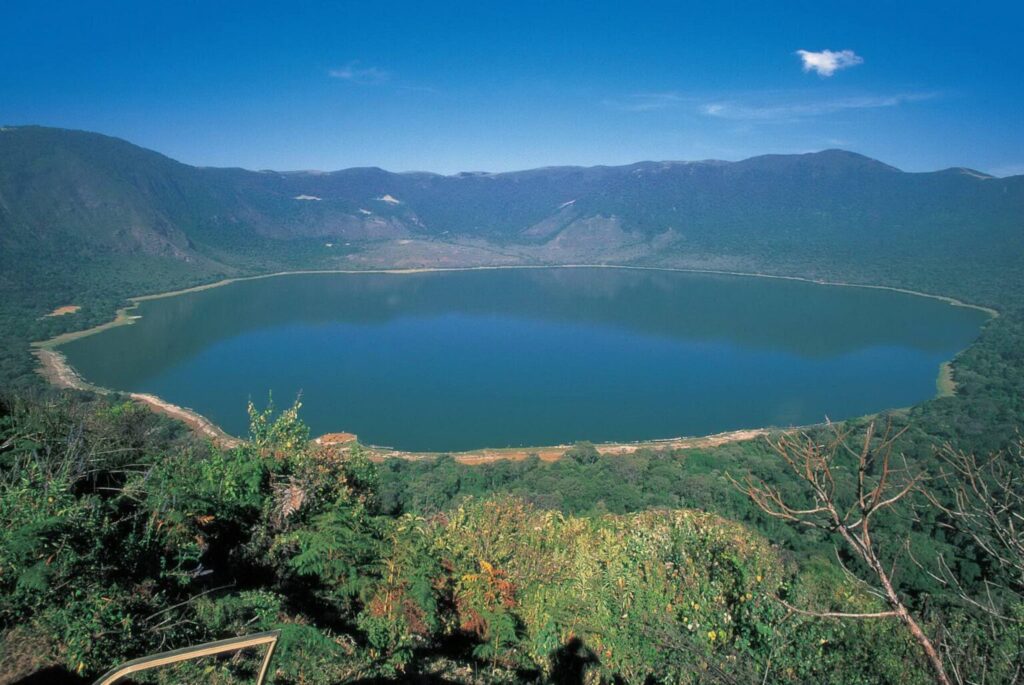
Empakaai Crater is one of the most beautiful natural attractions in the Ngorongoro Conservation Area. This impressive volcanic caldera is characterised by steep forested slopes surrounding a deep crater lake.
The crater is particularly famous for its spectacular scenery and the alkaline lake that occupies much of its floor. Depending on seasonal conditions, flamingos and other waterbirds can be spotted around the lake, making it an interesting destination for nature enthusiasts and birdwatchers.
The walking safari usually begins near the crater rim, where visitors can appreciate panoramic views before descending towards the crater floor.
What to Expect During an Empakaai Walking Safari
The descent into Empakaai Crater takes visitors through sections of montane forest and lush vegetation. The trail provides opportunities to appreciate the region’s diverse plant life while enjoying magnificent views of the surrounding highlands.
At the crater floor, visitors can explore the lake surroundings and observe birdlife. The experience is particularly rewarding for travellers interested in photography, hiking and natural landscapes.
Wildlife such as buffalo and antelope may occasionally be encountered around the crater, although sightings are not guaranteed.
One of the most memorable aspects of the experience is the return journey. The climb from the crater floor to the rim is relatively steep and requires a reasonable level of physical fitness.
Empakaai is therefore particularly suitable for adventurous travellers who enjoy challenging outdoor activities.
Olmoti Crater Walking Safari: Discovering the Munge Waterfall
Olmoti Crater offers a different but equally rewarding hiking experience in the Ngorongoro Highlands.
Unlike the dramatic descent into Empakaai, Olmoti is known for its relatively gentle highland scenery, open grasslands, volcanic landscapes and beautiful Munge Waterfall.
The crater provides an excellent opportunity to explore the natural environment surrounding the Ngorongoro Highlands while enjoying panoramic views of the surrounding countryside.
Exploring the Munge Waterfall
One of the highlights of the Olmoti walking safari is the Munge Waterfall.
The waterfall is associated with the Munge River, which drains from the highlands towards the Ngorongoro region. Its appearance and water flow vary depending on seasonal rainfall.
The walking trail takes visitors through attractive highland vegetation towards the waterfall viewpoint. Along the way, hikers can appreciate the surrounding landscape, observe birdlife and learn about the area’s natural features.
The experience is especially rewarding during wetter months when the vegetation becomes greener and the waterfall is more impressive.
Wildlife and Natural Scenery Around Olmoti
Olmoti’s highland environment supports a variety of wildlife and bird species. Visitors may encounter antelope, buffalo and other animals in the surrounding grasslands.
The landscape also provides excellent opportunities for nature photography, particularly when clouds move across the volcanic highlands.
For travellers who prefer walking excursions that combine natural scenery, relatively gentle trails and cultural encounters, Olmoti is an excellent choice.
Empakaai vs Olmoti: Which Walking Safari Should You Choose?
Although both destinations are located within the Ngorongoro Conservation Area, they offer different experiences.
Empakaai is particularly attractive to adventurous hikers interested in crater exploration and dramatic volcanic scenery. Its descent towards the crater lake and subsequent climb provide a more physically demanding excursion.
Olmoti, on the other hand, is ideal for travellers interested in highland landscapes, open grasslands and the Munge Waterfall.
Both destinations offer rewarding opportunities to appreciate the natural beauty of northern Tanzania.
Travellers with sufficient time should consider visiting both craters to enjoy two contrasting hiking experiences during the same safari.
Can You Visit Empakaai and Olmoti in One Day?
Yes, it may be possible to combine both destinations in one day, depending on your starting point, road conditions, walking pace and the time required for ranger arrangements.
A combined excursion generally involves visiting Olmoti first, followed by Empakaai, although the order can be adjusted according to your itinerary.
The Olmoti excursion usually takes approximately one to two hours, while the Empakaai descent and return can take approximately two to four hours or longer.
These are indicative walking times rather than fixed schedules. Additional time should be allowed for driving, photography, breaks and administrative arrangements.
Travellers who prefer a relaxed experience may find it more enjoyable to allocate separate days to the two destinations.
Do You Need a Guide or Armed Ranger for Empakaai and Olmoti?
Yes. Walking excursions within the Ngorongoro Conservation Area must follow the conservation authority’s regulations and ranger arrangements.
Visitors should arrange their walking permits and authorised ranger accompaniment through the Ngorongoro Conservation Area Authority (NCAA) or a registered safari operator.
An armed ranger is important because wildlife such as buffalo can be encountered along the walking routes.
Even experienced hikers should not attempt these excursions independently without the required authorisation and ranger arrangements.
Best Time to Visit Empakaai and Olmoti
Empakaai and Olmoti can be visited throughout the year, although the experience changes with the seasons.
June to October: Dry Season
The dry season is generally favourable for hiking because trails are often less muddy and walking conditions can be more comfortable. Visitors can also enjoy excellent visibility across the highlands.
November to December: Short Rain Season
The short rains bring fresh vegetation and beautiful scenery. Visitors may experience occasional showers, so suitable hiking clothing is recommended.
January to February: Relatively Dry Period
These months can provide favourable hiking conditions between rainy periods, although weather conditions vary.
March to May: Long Rain Season
The highlands become greener, and waterfalls can be particularly impressive. However, muddy trails, rain and reduced visibility may make hiking more challenging.
The best time ultimately depends on whether you prioritise comfortable hiking conditions, green landscapes, waterfalls or birdwatching.
What to Pack for an Empakaai and Olmoti Walking Safari
Proper preparation is important for enjoying the walking experience safely and comfortably.
Recommended items include:
- Comfortable hiking boots with good grip.
- A lightweight waterproof jacket.
- Warm clothing for the cool highland temperatures.
- Drinking water.
- Sunscreen and sunglasses.
- A camera and binoculars.
- A small backpack.
- Personal snacks.
- A hat and comfortable hiking trousers.
Visitors planning the Empakaai descent should pay particular attention to footwear because some sections of the trail can be steep and slippery.
Combining Empakaai and Olmoti with a Northern Tanzania Safari
The two craters can easily complement a broader northern Tanzania safari itinerary.
A suggested itinerary could include:
Day 1: Arrival in Arusha
Arrive in Arusha and prepare for your northern Tanzania adventure.
Day 2: Tarangire National Park
Explore Tarangire’s famous baobab landscapes and large elephant populations.
Day 3: Lake Manyara National Park
Enjoy a game drive through the park’s groundwater forests, grasslands and lakeshore habitats.
Day 4: Ngorongoro Crater
Descend into the world-famous Ngorongoro Crater for wildlife viewing.
Day 5: Olmoti Crater Walking Safari
Explore the highland landscapes and enjoy a guided walk towards the Munge Waterfall.
Day 6: Empakaai Crater Walking Safari
Descend into Empakaai Crater and explore its spectacular lake environment.
Day 7: Departure or Extension to Lake Natron
Continue towards Lake Natron for additional hiking, flamingo viewing and spectacular views of Ol Doinyo Lengai.
This itinerary can be adjusted depending on travel dates, accommodation preferences and the availability of authorised walking excursions.
Self-Drive Safari to Empakaai and Olmoti
For adventurous travellers, exploring the Ngorongoro Highlands with a rental 4×4 offers flexibility and independence.
A reliable 4×4 vehicle is particularly useful when travelling between the different attractions of northern Tanzania, including Tarangire, Lake Manyara, Ngorongoro and Lake Natron.
However, visitors should remember that having a self-drive vehicle does not remove the requirement for authorised walking guides and ranger arrangements at Empakaai and Olmoti.
At Self Drive in Tanzania, travellers can arrange suitable 4×4 rental vehicles for exploring northern Tanzania. Options can include Toyota Land Cruiser models, safari-ready vehicles and 4×4 vehicles equipped with rooftop tents and camping equipment.
Whether you prefer a fully equipped camping vehicle or a comfortable 4×4 for lodge-based travel, choosing the right vehicle can make your northern Tanzania adventure more convenient.
Explore our Tanzania 4×4 car rental options and plan an independent journey through the Ngorongoro Highlands.
Frequently Asked Questions About Empakaai and Olmoti Walking Safaris
1. Where are Empakaai and Olmoti craters located?
Both craters are located within the Ngorongoro Conservation Area in northern Tanzania, in the scenic Ngorongoro Highlands.
2. Is Empakaai Crater worth visiting?
Yes. Empakaai is particularly rewarding for visitors interested in volcanic landscapes, crater lakes, forest hiking and birdwatching.
3. What is Olmoti Crater famous for?
Olmoti is famous for its green highland scenery, volcanic formations and the Munge Waterfall.
4. Can I visit Empakaai without a guide?
No. Visitors must follow NCAA regulations and arrange the required authorised ranger accompaniment for walking excursions.
5. How difficult is the Empakaai hike?
The hike is moderately challenging to challenging, particularly because of the steep descent into the crater and the climb back to the rim. Reasonable physical fitness is recommended.
6. Is Olmoti suitable for beginners?
Olmoti is generally a gentler hiking experience than Empakaai. However, visitors should be comfortable walking on uneven natural trails.
7. Can children participate in these walking safaris?
Participation depends on the child’s age, fitness, trail conditions and current conservation authority requirements. Families should confirm age restrictions and suitability before booking.
8. Can I see flamingos at Empakaai Crater?
Yes. Flamingos are sometimes seen on the alkaline lake, although their presence and numbers vary with seasonal conditions.
9. What is the best time to visit Empakaai and Olmoti?
June to October is generally favourable for hiking. The rainy seasons offer greener landscapes and potentially more impressive waterfalls.
10. Can I combine Empakaai and Olmoti with a Serengeti safari?
Yes. Both destinations can be incorporated into a northern Tanzania itinerary that also includes the Serengeti, Ngorongoro Crater, Tarangire and Lake Manyara.
Plan Your Empakaai and Olmoti Walking Safari in Tanzania
Empakaai and Olmoti offer an exciting alternative to traditional wildlife game drives. From the spectacular crater lake at Empakaai to the beautiful Munge Waterfall at Olmoti, these destinations showcase a different side of Tanzania’s remarkable natural heritage.
Whether you are an adventurous hiker, a nature enthusiast, a photographer or an independent traveller, exploring the Ngorongoro Highlands on foot provides an unforgettable safari experience.
Combine these walking excursions with a northern Tanzania wildlife safari and discover the country’s volcanic landscapes, wildlife and traditional Maasai surroundings.
Contact Self Drive in Tanzania to arrange your 4×4 rental and start planning your Ngorongoro Highlands adventure.