
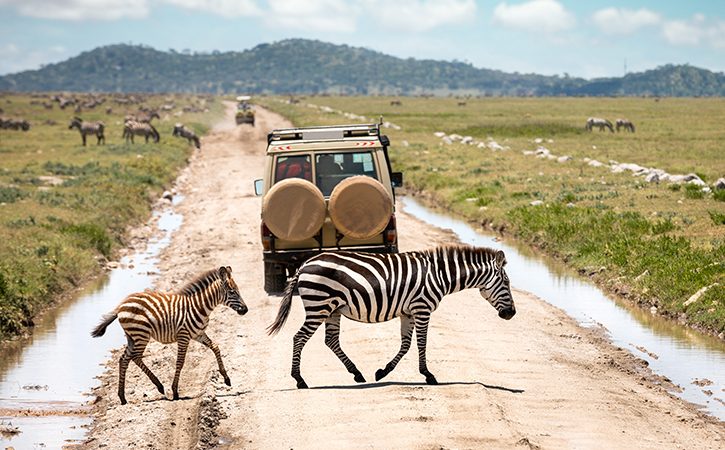
10-Day Tanzania Wildlife Self-Drive Safari: Serengeti, Ngorongoro & Tarangire
Explore Tanzania on your own terms with a 10-day wildlife self-drive safari through Tarangire, Lake Manyara, Ngorongoro and the Serengeti. Rent a reliable 4×4 in Tanzania and discover elephants, lions, leopards, buffalo, giraffes, zebra and wildebeest while travelling independently through northern Tanzania’s spectacular safari landscapes.
Tanzania is one of Africa’s premier destinations for a self-drive wildlife safari. A well-planned 10-day itinerary allows you to combine some of the country’s most famous wildlife destinations while enjoying the freedom to choose your route, accommodation and daily pace.
From the elephant-rich landscapes of Tarangire National Park to the dramatic Ngorongoro Crater and the vast plains of the Serengeti, this itinerary is designed for travellers who want an independent Tanzania safari without being tied to a conventional group tour.
A suitable Tanzania 4×4 rental can also be equipped with a rooftop tent, fridge, cooking equipment and other camping gear for travellers who want to combine wildlife viewing with camping.
10-Day Tanzania Wildlife Self-Drive Safari at a Glance
Route: Arusha → Tarangire → Lake Manyara → Karatu/Ngorongoro → Serengeti → Ngorongoro → Arusha
Duration: 10 days / 9 nights
Travel style: Self-drive wildlife safari
Main highlights:
- Arusha
- Tarangire National Park
- Lake Manyara
- Ngorongoro Conservation Area
- Ngorongoro Crater
- Serengeti National Park
- Great Migration landscapes
- Big cats and large herbivores
- Elephant viewing
- Wildlife photography
- 4×4 self-drive
- Optional rooftop-tent camping
The itinerary can be adjusted depending on your arrival airport, safari priorities and whether you want to include Zanzibar or southern Tanzania.
Day 1: Arrive in Arusha – Pick Up Your 4×4
Arrive at Kilimanjaro International Airport (JRO) or Arusha Airport and meet your Tanzania car rental representative.
After completing the vehicle handover, receive a briefing about the 4×4, insurance, park driving regulations, emergency procedures and your planned route.
If you arrive early, spend the afternoon exploring Arusha or preparing your safari equipment.
Travellers using a rooftop tent can check that all camping equipment is correctly packed before beginning the safari.
Overnight: Arusha
Day 2: Arusha – Tarangire National Park
Leave Arusha after breakfast and drive towards Tarangire National Park.
Tarangire is an excellent first stop on a northern Tanzania self-drive safari and is particularly well known for its large elephant populations, giant baobab trees and seasonal wildlife concentrations.
Enter the park and begin your first game drive.
Look for:
- Elephants
- Lions
- Giraffes
- Buffalo
- Zebra
- Wildebeest
- Oryx
- Warthogs
- Impala
- Numerous bird species
Tarangire’s landscape changes dramatically depending on the season, with the Tarangire River and other water sources attracting wildlife during drier periods.
Overnight: Tarangire area
Day 3: Tarangire – Lake Manyara – Karatu
Enjoy an early morning game drive in Tarangire before continuing towards Lake Manyara National Park.
Lake Manyara is smaller than the Serengeti and Ngorongoro ecosystems but offers varied scenery, including woodland, open plains, wetlands and the alkaline lake.
Possible wildlife sightings include:
- Elephants
- Buffalo
- Giraffes
- Zebra
- Wildebeest
- Hippos
- Monkeys
- Baboons
- Lions
- Numerous bird species
After your game drive, continue towards Karatu, a convenient base for visiting the Ngorongoro Conservation Area.
Overnight: Karatu
Day 4: Karatu – Ngorongoro Crater
Leave early for the Ngorongoro Conservation Area.
The road climbs into the highlands before reaching the Ngorongoro Crater.
Descend into the crater for a full or extended game drive.
The crater provides one of Tanzania’s most concentrated wildlife experiences, with opportunities to see:
- Lions
- Buffalo
- Zebra
- Wildebeest
- Hippos
- Hyenas
- Giraffes in the surrounding conservation area
- Elephants in the highland forests
- Black rhinoceros, although sightings are not guaranteed
The dramatic crater walls provide an unforgettable backdrop for wildlife photography.
After your crater experience, continue towards the Serengeti or stay near the Ngorongoro highlands depending on your chosen itinerary.
Overnight: Serengeti or Ngorongoro area
Day 5: Ngorongoro – Serengeti National Park
Today you enter the Serengeti National Park, one of the world’s most famous wildlife ecosystems.
The drive from Ngorongoro towards the Serengeti is itself a safari experience.
As you travel across the plains, you may encounter zebra, wildebeest, giraffes, gazelles and other wildlife before reaching your accommodation.
Begin an afternoon game drive once you are in the appropriate safari area.
The Serengeti is particularly famous for its populations of:
- Lions
- Leopards
- Cheetahs
- Elephants
- Buffalo
- Giraffes
- Wildebeest
- Zebra
- Hyenas
- Gazelles
Overnight: Serengeti
Day 6: Full-Day Serengeti Wildlife Safari
Spend a full day exploring the Serengeti.
This is one of the most important days of the itinerary, so avoid rushing back to Arusha.
Start early and spend several hours exploring different areas of the park.
The Serengeti is a huge ecosystem, and wildlife distribution changes according to rainfall, water availability, vegetation and seasonal movements.
During the Great Migration, millions of wildebeest and large numbers of zebra and other herbivores move through the wider Serengeti-Mara ecosystem.
Migration timing varies from year to year, so travellers planning specifically around the migration should choose their travel dates and Serengeti region carefully.
A self-drive vehicle allows you to stop for wildlife viewing and photography according to your own schedule, while still following park regulations and designated routes.
Overnight: Serengeti
Day 7: Serengeti Wildlife Exploration
Enjoy another full or extended game-drive day in the Serengeti.
Rather than rushing to another destination, use the additional day to explore a different part of the park.
Your exact route can depend on the season.
Possible areas include:
Central Serengeti
Known for year-round wildlife and convenient access from the main northern Tanzania safari circuit.
Northern Serengeti
Particularly important during parts of the Great Migration and useful for travellers continuing towards the Mara River region.
Western Serengeti
The western corridor can be particularly interesting during migration periods and offers a different landscape from central Serengeti.
Southern Serengeti
Important during the wildebeest calving period, depending on seasonal conditions.
Overnight: Serengeti
Day 8: Serengeti – Ngorongoro Highlands
Enjoy an early morning game drive before leaving the Serengeti.
Drive back towards the Ngorongoro highlands.
The return journey provides another opportunity to see wildlife along the route.
Depending on your accommodation, spend the evening around Karatu or near the Ngorongoro Conservation Area.
This shorter travel day provides time to relax after several days of game drives.
Overnight: Karatu / Ngorongoro area
Day 9: Ngorongoro – Arusha
After breakfast, begin your return journey towards Arusha.
Depending on your departure arrangements, you can stop at local markets, cultural sites or viewpoints along the way.
Arrive in Arusha in the afternoon.
Return your Tanzania 4×4 rental vehicle if your booking ends that day, or keep the vehicle overnight if you have a later departure.
Overnight: Arusha
Day 10: Arusha and Departure
Enjoy your final breakfast in Tanzania before completing your vehicle return and transferring to Kilimanjaro International Airport.
If your flight is later in the day, you can spend the morning exploring Arusha, shopping for souvenirs or relaxing at your hotel.
Your 10-day Tanzania wildlife self-drive safari ends in Arusha.
Tanzania Wildlife Self-Drive Route
Arusha
↓
Tarangire National Park
Elephants • Baobabs • Lions • Giraffes
↓
Lake Manyara
Elephants • Hippos • Primates • Birds
↓
Ngorongoro
Crater • Rhino • Lions • Buffalo • Zebra
↓
Serengeti
Wildebeest • Zebra • Lions • Cheetahs • Leopards
↓
Ngorongoro Highlands
↓
Arusha
Best 4×4 for a Tanzania Wildlife Self-Drive Safari
A reliable Toyota Land Cruiser is one of the most practical choices for a Tanzania wildlife self-drive safari.
Common options include:
- Toyota Land Cruiser Prado
- Toyota Land Cruiser 70 Series
- Toyota Land Cruiser 78 Series
- Toyota Land Cruiser 79 Series
- Toyota Hilux or similar 4×4
For travellers spending several days in the Serengeti and Ngorongoro areas, a high-clearance 4×4 with good ground clearance, reliable tyres and appropriate recovery equipment is particularly useful.
If you plan to camp, consider a 4×4 with rooftop tent and full camping equipment.
Tanzania 4×4 Rental Options
| Vehicle option | Approx. daily planning rate | 10-day estimate |
|---|---|---|
| Toyota RAV4 / similar | US$70–100 | US$700–1,000 |
| Toyota Prado | US$100–140 | US$1,000–1,400 |
| Land Cruiser 4×4 | US$120–160 | US$1,200–1,600 |
| Rooftop-tent Land Cruiser | US$120–170+ | US$1,200–1,700+ |
These figures are planning estimates rather than fixed rental prices. Tanzania rental prices vary according to the vehicle, season, insurance, camping equipment, rental duration, pickup/drop-off point and availability.
A longer rental period may also result in a lower effective daily rate.
Estimated 10-Day Tanzania Self-Drive Safari Cost
For two travellers, the total budget depends heavily on accommodation and park-related expenses.
| Expense | Estimated planning range |
|---|---|
| 10-day 4×4 rental | US$1,000–1,600 |
| Fuel | Variable |
| Park/conservation fees | Variable |
| Accommodation | Variable |
| Camping fees | Variable |
| Food | Variable |
| Vehicle insurance/excess | According to rental package |
| Camping equipment | Included or additional |
| Airport delivery/collection | Depending on rental |
A traveller using budget accommodation or camping can keep costs considerably lower than someone choosing luxury safari lodges.
Always request a complete quotation showing vehicle rental, insurance, park fees, camping fees and any additional charges separately.
Tanzania Self-Drive Safari With Rooftop Tent
A rooftop-tent Tanzania safari is ideal for adventurous travellers who want greater independence.
A typical camping-equipped 4×4 can include:
- Rooftop tent
- Mattress
- Sleeping bags
- Fridge
- Camping table
- Camping chairs
- Cooking equipment
- Gas stove
- Kitchen utensils
- Water containers
- Recovery equipment
- Spare wheel
- Compressor
- Basic camping supplies
Camping arrangements inside Tanzania’s national parks and conservation areas must follow the applicable campsite and park regulations.
Serengeti Self-Drive Safari
The Serengeti is the centerpiece of this 10-day Tanzania wildlife itinerary.
Self-driving through the Serengeti gives travellers the opportunity to experience the enormous scale of the ecosystem independently.
However, the Serengeti is remote, and drivers should be well prepared.
Before entering the park, make sure you have:
- Sufficient fuel
- Drinking water
- Spare tyres
- Recovery equipment
- Navigation
- Emergency contacts
- Appropriate camping equipment, if camping
- A reliable 4×4
Drivers should remain on permitted roads and follow all Tanzania National Parks regulations.
Ngorongoro Self-Drive Safari
The Ngorongoro Conservation Area is one of the most important stops on a northern Tanzania self-drive route.
The Ngorongoro Crater provides a spectacular wildlife setting, but travellers should distinguish between the crater itself and the wider conservation area.
A self-drive itinerary should allow enough time for:
- Crater game viewing
- Highland scenery
- Cultural experiences
- Wildlife viewing outside the crater
- Travel between Ngorongoro and Serengeti
Permit, conservation and crater access charges should be confirmed for your travel dates because fees and conditions can change.
Tarangire Self-Drive Safari
Tarangire is particularly attractive for travellers who want to see elephants and enjoy a less expansive environment than the Serengeti.
The park’s characteristic baobabs and seasonal river create a distinctive landscape.
It is also conveniently located for a self-drive circuit from Arusha.
For travellers arriving through Kilimanjaro International Airport, Tarangire can be incorporated into a longer northern Tanzania route without returning to Arusha between every destination.
Tanzania Wildlife Safari and the Great Migration
Travellers interested in the Great Migration should design the itinerary around the seasonal location of the herds.
The migration moves through the Serengeti ecosystem throughout the year.
A simplified seasonal pattern is:
January–March: Southern Serengeti and Ndutu region can be important for calving.
April–May: Herds generally move northwards through the Serengeti.
June–July: Western and northern Serengeti can become increasingly important.
August–October: Northern Serengeti and Mara ecosystem are often associated with migration activity.
November–December: Herds generally move back towards the southern Serengeti.
These are broad seasonal patterns rather than guaranteed dates. Rainfall can change the timing and exact location of the animals.
For a migration-focused self-drive safari, spend more nights in the relevant Serengeti region instead of trying to cover too many parks.
Can I Combine Tanzania Wildlife Safari With Zanzibar?
Yes.
A popular Tanzania itinerary is:
Arusha → Tarangire → Ngorongoro → Serengeti → Arusha → Zanzibar
After completing the northern circuit, fly from Arusha or Kilimanjaro towards Zanzibar for several days on the beach.
This combination provides a balance of:
Wildlife + Safari + Culture + Indian Ocean Beach
For a 10-day trip, however, adding Zanzibar means reducing the number of safari days. A longer 12–14 day Tanzania safari and Zanzibar itinerary provides more time for both experiences.
Can I Combine Tanzania With Kenya?
Yes, although cross-border vehicle arrangements require advance planning.
Travellers interested in an East Africa self-drive adventure can potentially combine:
Kenya → Tanzania
or
Tanzania → Kenya
Possible routes include:
Nairobi → Amboseli → Arusha → Tarangire → Ngorongoro → Serengeti
Cross-border rental requires the rental company to authorize the vehicle’s international travel and provide the appropriate documentation and insurance.
Tanzania Wildlife Self-Drive From Dar es Salaam
Travellers arriving in Dar es Salaam can also arrange a Tanzania self-drive safari.
However, the northern circuit is a considerable distance from Dar es Salaam.
For a northern wildlife itinerary focused on Serengeti, Ngorongoro and Tarangire, Kilimanjaro International Airport or Arusha is generally a more convenient starting point.
Travellers based in Dar es Salaam may instead consider a southern Tanzania route incorporating:
- Mikumi National Park
- Udzungwa Mountains
- Nyerere National Park
- Ruaha National Park
A separate southern Tanzania self-drive itinerary can be designed around these destinations.
Best Time for a Tanzania Wildlife Self-Drive Safari
Tanzania is a year-round safari destination, but conditions vary with rainfall and wildlife movements.
The generally drier periods can provide convenient road and wildlife-viewing conditions, while the green seasons can produce beautiful landscapes and excellent photography.
Travellers specifically interested in the Great Migration should choose dates based on the expected location of the herds rather than relying only on a generic “best time to visit Tanzania.”
The Serengeti, Ngorongoro and Tarangire can all offer wildlife experiences outside the peak migration periods.
Tanzania Self-Drive Safari Packing List
For a 10-day safari, consider bringing:
- Lightweight safari clothing
- Warm jacket or fleece
- Comfortable shoes
- Hat
- Sunglasses
- Sunscreen
- Insect repellent
- Binoculars
- Camera
- Spare batteries
- Power bank
- Reusable water bottle
- Headlamp
- Rain jacket
- Small backpack
- Personal medication
- Travel documents
- Copies of rental documents
For camping, add appropriate sleeping and outdoor equipment or confirm what is included in your rental package.
Is Tanzania Suitable for Self-Drive Safaris?
Yes, but self-driving in Tanzania requires preparation.
The distances between parks can be long, and some safari roads are rough, remote or affected by seasonal weather.
Drivers should understand:
- Park entry procedures
- Park opening hours
- Speed restrictions
- Designated roads
- Wildlife-viewing regulations
- Fuel availability
- Emergency procedures
- Vehicle recovery procedures
A professional rental company should provide a vehicle briefing and practical advice before departure.
Why Choose a Tanzania Wildlife Self-Drive Safari?
A self-drive safari gives you more independence than a standard group safari.
Flexible travel
Choose when to leave your accommodation and how long to spend on the road.
Private vehicle
Travel without sharing your vehicle with a large tour group.
Wildlife photography
Stay longer at wildlife sightings when conditions and park regulations permit.
Camping option
Use a rooftop tent to create a more adventurous safari experience.
Customized route
Combine Tarangire, Manyara, Ngorongoro and Serengeti according to your interests.
East Africa connections
Potentially combine Tanzania with Kenya, Rwanda or Uganda with the correct vehicle and border arrangements.
Frequently Asked Questions
1. Can I do a Tanzania safari by self-drive?
Yes. Tanzania offers self-drive safari opportunities, particularly for experienced travellers using a suitable 4×4 and following national park and conservation-area regulations.
2. How many days do I need for a Tanzania self-drive safari?
Ten days provides enough time for a northern Tanzania circuit covering Tarangire, Lake Manyara, Ngorongoro and the Serengeti. Twelve to fourteen days allows a slower itinerary.
3. What is the best 4×4 for Tanzania?
A Toyota Land Cruiser Prado or Land Cruiser 70 Series is a popular choice for demanding safari routes. A rooftop-tent Land Cruiser is suitable for travellers planning to camp.
4. How much does a Tanzania 4×4 rental cost?
A 10-day rental can broadly range from around US$700 to US$1,700+, depending on the vehicle, season and camping equipment. A final quotation should always be requested for your dates.
5. Can I self-drive in the Serengeti?
Yes, self-drive travel is possible in the Serengeti subject to TANAPA regulations, park fees, permitted roads and other applicable requirements.
6. Can I self-drive into the Ngorongoro Crater?
Access is subject to the applicable Ngorongoro Conservation Area rules, fees and vehicle requirements. Confirm the current regulations before your trip.
7. Can I rent a rooftop-tent 4×4 in Tanzania?
Yes. Specialist Tanzania rental companies offer 4x4s equipped with rooftop tents and camping equipment.
8. Can I see the Big Five on a Tanzania self-drive safari?
Tanzania has all of the traditional Big Five—lion, leopard, elephant, buffalo and rhinoceros—but wildlife sightings are never guaranteed.
9. Can I combine the Serengeti with Zanzibar?
Yes. Many travellers combine a northern Tanzania safari with a Zanzibar beach holiday.
10. Can I drive from Tanzania to Kenya?
Cross-border self-drive is possible with certain rental arrangements, but advance permission, documentation, insurance and additional fees may apply.
11. Is fuel included in Tanzania car rental?
Fuel is normally separate from the vehicle rental price. Confirm the fuel policy when requesting your quotation.
12. Where is the best place to start a Tanzania self-drive safari?
For a northern circuit, Arusha or Kilimanjaro International Airport is convenient. For southern Tanzania, Dar es Salaam can be a practical starting point.
Book Your Tanzania Wildlife Self-Drive Safari
Ready to explore Tanzania independently?
Rent a reliable 4×4 and discover Tarangire, Ngorongoro and the Serengeti on your own schedule.
We can arrange a Tanzania self-drive 4×4 for your safari, with options for a Toyota Prado, Land Cruiser or fully equipped rooftop-tent vehicle.
Tell us:
- Your travel dates
- Number of travellers
- Pickup location
- Drop-off location
- Preferred 4×4
- Whether you need a rooftop tent
- Whether you need full camping equipment
- Your preferred national parks
- Whether you want to visit Zanzibar
- Whether you want to cross into Kenya or another East African country
We can then prepare a personalized Tanzania 4×4 rental quotation and wildlife self-drive itinerary around your travel dates.
Start Your Tanzania Self-Drive Safari
Book your 4×4, choose your wildlife route and experience Tanzania independently—from the elephant-filled landscapes of Tarangire to the endless plains of the Serengeti.
Tanzania 4×4 Rental | Self-Drive Safari | Serengeti Self-Drive | Rooftop Tent Camping | Wildlife Safaris