
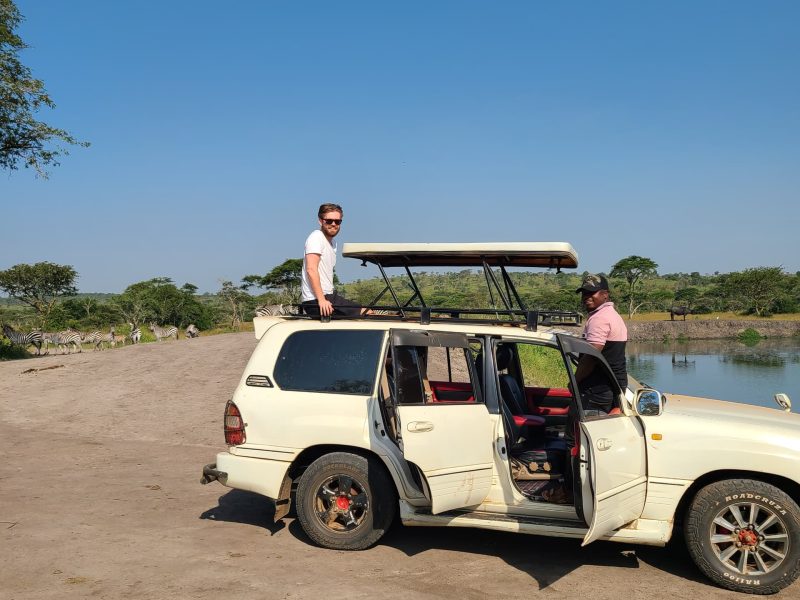
Wildebeest Calving Season & Uganda Self-Drive Safari: Gorillas, Chimps & Serengeti
A wildebeest calving season and Uganda self-drive safari is one of the most exciting ways to combine East Africa’s spectacular savannah wildlife with Uganda’s mountain gorillas, chimpanzees and diverse national parks.
From the open plains of the southern Serengeti, where thousands of wildebeest gather to give birth, to the forests of Uganda where travellers can trek mountain gorillas and chimpanzees, this itinerary brings together two completely different wildlife environments.
The calving season generally takes place from January to March, with late January and February traditionally offering particularly strong opportunities to see newborn wildebeest and increased predator activity in the southern Serengeti. TANAPA identifies January and February as the key calving period in the Serengeti.
Uganda can then add an entirely different dimension to the journey with:
- Mountain gorilla trekking
- Chimpanzee tracking
- Murchison Falls
- Queen Elizabeth National Park
- Lake Mburo
- Bwindi Impenetrable Forest
- Kibale Forest
- Kazinga Channel
- Uganda’s scenic self-drive roads
For travellers looking for a calving season safari and Uganda gorilla self-drive adventure, this combination offers an exceptional East African road trip.
Why Combine Wildebeest Calving with Uganda?
The southern Serengeti and Uganda offer two very different safari experiences.
During the calving season, the southern Serengeti becomes a major gathering area for migrating wildebeest. Fresh grazing attracts large herds, while newborn calves attract predators such as lions, cheetahs and hyenas.
Uganda provides a contrasting experience.
Instead of following large herds across open plains, you can walk through rainforest in search of mountain gorillas or chimpanzees.
Uganda’s national parks are managed by the Uganda Wildlife Authority, which also administers gorilla and chimpanzee trekking permits and other park activities.
The combination therefore allows you to experience:
Wildebeest calving + gorillas + chimpanzees + Big Five wildlife + rainforest + savannah + self-drive adventure
When Is the Wildebeest Calving Season?
The main calving period is generally January through March, with late January and February traditionally regarded as the strongest period.
TANAPA lists January–February as the Serengeti’s calving season, while Tanzania tourism information also identifies late January and February as the main period for viewing wildebeest calving in the southern Serengeti.
The exact timing is controlled by rainfall, grazing conditions and the natural movement of the herds.
For this reason, no responsible safari operator should guarantee that a particular number of calves will be born on a specific day or that the herds will be in exactly the same location every year.
January – Beginning of the Calving Period
January can be an excellent time to visit the southern Serengeti.
As the herds concentrate around the short-grass plains, travellers may encounter large groups of wildebeest and zebra.
February – Peak Calving Experience
February is one of the most popular months for travellers specifically interested in newborn wildebeest.
Large concentrations of animals can create excellent predator-viewing opportunities.
This makes February particularly attractive to wildlife photographers.
March – Continuing Calving and Migration Movement
Calving activity can continue into March, although the herds may begin changing location as conditions change.
Travellers visiting later in March should therefore build some flexibility into their itinerary.
Why Choose a Uganda Self-Drive Safari?
Uganda is an excellent addition to a Tanzania wildlife itinerary for travellers who want more than conventional game drives.
The country is known for its forests, mountains, lakes and savannah parks.
A self-drive route can connect several major wildlife destinations while allowing travellers to determine their own pace.
A popular Uganda wildlife route is:
Kampala/Entebbe → Murchison Falls → Kibale → Queen Elizabeth → Bwindi
This route combines big-game viewing, chimpanzee trekking and gorilla trekking and is recognized as a major Uganda self-drive wildlife circuit.
Uganda Self-Drive Safari Highlights
Entebbe and Kampala
Most Uganda self-drive adventures begin in the Entebbe or Kampala area.
After collecting your 4×4 vehicle, you can prepare for the road trip before heading toward Uganda’s national parks.
Travellers can also use Entebbe as the arrival point and begin the safari immediately.
Murchison Falls National Park
Murchison Falls is one of Uganda’s classic wildlife destinations.
The park combines open savannah with the Nile River and the spectacular Murchison Falls.
A self-drive safari can include:
- Game drives
- Nile boat cruises
- Wildlife photography
- Birdwatching
- Scenic viewpoints
Wildlife may include elephants, buffaloes, lions, giraffes, antelopes and hippos.
Kibale Forest National Park
Kibale is an important stop for travellers interested in primates.
The forest is particularly famous for chimpanzee tracking.
Adding Kibale after a Tanzania calving safari creates a strong contrast between the open Serengeti plains and Uganda’s dense rainforest.
Queen Elizabeth National Park
Queen Elizabeth National Park provides another opportunity for classic African wildlife viewing.
The park is known for elephants, buffaloes, lions, hippos, antelopes and abundant birdlife.
The Kazinga Channel is one of the major attractions, with boat trips providing opportunities to see hippos, crocodiles and wildlife along the shoreline.
Bwindi Impenetrable National Park
Bwindi is the highlight for travellers who want to add mountain gorilla trekking to their Uganda self-drive adventure.
The forest is home to mountain gorillas, and trekking provides an opportunity to observe habituated gorilla families in their natural environment.
Uganda’s Ministry of Tourism identifies mountain gorillas in Bwindi as one of the country’s major tourism attractions.
Calving Season and Uganda Gorilla Safari
Combining the two experiences creates a particularly strong itinerary.
The first part of the journey focuses on the dramatic wildlife activity of the Serengeti calving season.
The second part moves into Uganda’s mountain forests.
A traveller can therefore experience:
Wildebeest calves in Tanzania → chimpanzees in Kibale → gorillas in Bwindi
This is an excellent itinerary for wildlife photographers, primate enthusiasts and travellers who want a more comprehensive East African experience.
Recommended Tanzania & Uganda Route
A practical itinerary can begin in Tanzania and finish in Uganda.
Arusha → Tarangire → Ngorongoro → Serengeti → Ndutu → Kenya/Uganda connection → Queen Elizabeth → Bwindi → Kigali/Entebbe
Alternatively, travellers can start in Uganda and finish in Tanzania:
Entebbe → Kibale → Queen Elizabeth → Bwindi → Tanzania → Ngorongoro → Serengeti → Ndutu → Arusha
The best direction depends on international flights, vehicle availability and cross-border rental arrangements.
16-Day Calving Season & Uganda Self-Drive Safari
Day 1 – Arusha
Arrive in Arusha and collect your 4×4 vehicle.
Spend the evening preparing for your Tanzania safari.
Day 2 – Arusha to Tarangire
Drive to Tarangire National Park.
Enjoy an afternoon game drive before spending the night near the park.
Day 3 – Tarangire to Ngorongoro
Continue toward the Ngorongoro area.
Enjoy the changing scenery as you approach the highlands.
Day 4 – Ngorongoro Crater
Spend the day exploring the crater.
The crater offers excellent general wildlife viewing and provides a strong introduction to Tanzania’s northern safari circuit.
Days 5–7 – Serengeti and Ndutu
Continue toward the southern Serengeti and Ndutu region.
Spend several days searching for migrating wildebeest, newborn calves and predators.
Allowing multiple days is important because wildlife movement is naturally unpredictable.
Day 8 – Serengeti to Western Tanzania
Begin the journey toward Uganda.
The exact route should be planned according to border conditions, road conditions and vehicle authorization.
Day 9 – Cross into Uganda
Complete the approved border crossing and continue toward western Uganda.
Day 10 – Queen Elizabeth National Park
Enjoy a game drive or Kazinga Channel boat experience.
Day 11 – Queen Elizabeth to Kibale
Drive toward Kibale Forest.
Relax and prepare for chimpanzee trekking.
Day 12 – Chimpanzee Trekking
Spend the day tracking chimpanzees in Kibale Forest.
Day 13 – Kibale to Bwindi
Continue toward Bwindi through the scenic southwestern Ugandan countryside.
Day 14 – Gorilla Trekking
Spend the day trekking mountain gorillas.
Gorilla permits should be arranged before the trip because availability can be limited.
Day 15 – Bwindi
Enjoy a relaxed day around Bwindi or continue toward your final destination depending on your departure plans.
Day 16 – Entebbe / Kampala
Complete the journey toward Entebbe or Kampala for your onward flight or vehicle return.
Alternative 14-Day Uganda-to-Tanzania Route
Travellers who prefer to start with Uganda can reverse the journey.
Days 1–2
Entebbe and Kampala
Days 3–4
Kibale Forest and chimpanzee trekking
Days 5–6
Queen Elizabeth National Park
Days 7–8
Bwindi and gorilla trekking
Day 9
Cross-border journey toward Tanzania
Day 10
Northern Tanzania
Days 11–13
Serengeti and Ndutu calving season
Day 14
Ngorongoro / Arusha
This route works particularly well for travellers arriving in Uganda and departing from Tanzania.
4×4 Rental for Calving Season and Uganda
A reliable 4×4 is recommended for a Tanzania–Uganda self-drive safari.
Potential vehicles include:
- Toyota Land Cruiser Prado
- Toyota Land Cruiser 70 Series
- Toyota Land Cruiser Hardtop
- Toyota Hilux
- Similar high-clearance 4WD vehicles
A 4×4 is particularly useful because the journey combines long-distance highway driving with national park tracks and potentially rough or muddy roads.
Vehicle choice should also take into account the number of travellers and the amount of luggage and camping equipment.
Rooftop Tent Calving Season Safari
Travellers who enjoy camping can combine a 4×4 with a rooftop tent.
A typical camping package may include:
- Rooftop tent
- Mattress
- Sleeping bags or bedding
- Camping table
- Camping chairs
- Cooking equipment
- Gas stove
- Kitchen utensils
- Fridge or cooler
- Water containers
- Recovery equipment
- Compressor
- Spare wheel
A rooftop tent can reduce accommodation costs and give travellers greater flexibility.
However, camping must always take place in permitted campsites and according to the regulations of the relevant park or conservation area.
Self-Drive Between Tanzania and Uganda
A Tanzania–Uganda self-drive journey requires advance planning.
The rental company must confirm that its vehicle is permitted to cross the relevant borders.
Before booking, confirm:
- Cross-border vehicle authorization
- Insurance coverage
- Temporary vehicle import documentation
- Border crossing requirements
- Driver documentation
- Park permits
- Emergency support
- Additional cross-border charges
- Vehicle recovery arrangements
Do not assume that a vehicle rented in Tanzania or Uganda can automatically cross the border.
Calving Season Photography
The calving season is particularly attractive to wildlife photographers.
Newborn wildebeest create opportunities for photographing:
- Mothers and calves
- Herd movements
- Predator interactions
- Lions
- Cheetahs
- Hyenas
- Zebra
- Wide savannah landscapes
The green-season landscape can also provide a striking contrast to the dry-season appearance of the Serengeti.
Travellers should carry sufficient camera batteries, memory cards and protection against dust and occasional rain.
Calving Season and Chimpanzee Trekking
Adding chimpanzee trekking to a calving-season itinerary creates a remarkable contrast.
In Tanzania, you may spend hours observing large herds moving across open plains.
In Uganda, you enter dense rainforest and search for chimpanzees in the canopy and forest floor.
This makes the itinerary particularly attractive to travellers interested in both wildlife photography and primates.
Calving Season and Gorilla Trekking
For many travellers, the combination of wildebeest calving and gorilla trekking is the ultimate attraction.
The experiences are completely different.
Serengeti
Open plains, thousands of wildebeest and zebra, predators and newborn calves.
Bwindi
Dense rainforest, steep terrain and close encounters with habituated mountain gorilla families.
The combination creates a safari experience that goes far beyond a conventional Big Five tour.
How Much Does a Calving Season & Uganda Self-Drive Safari Cost?
The total cost depends on the duration, vehicle, number of travellers, accommodation and activities.
| Expense | Description |
|---|---|
| 4×4 rental | Vehicle hire |
| Insurance | Vehicle insurance and excess |
| Fuel | Fuel for the road trip |
| Serengeti fees | Park and conservation-related costs |
| Ngorongoro fees | Conservation area and crater-related costs |
| Gorilla permit | Uganda gorilla trekking |
| Chimpanzee permit | Kibale chimpanzee trekking |
| Accommodation | Hotels, lodges or campsites |
| Camping equipment | Rooftop tent and camping equipment |
| Border costs | Cross-border vehicle and administrative charges |
| Food | Meals and supplies |
| Activities | Boat trips and other experiences |
Because the itinerary crosses borders and includes major wildlife activities, a personalized quotation is recommended.
When Should You Book?
If your priority is the wildebeest calving season, booking ahead is recommended, particularly for February travel.
Gorilla and chimpanzee permits should also be secured before finalizing the self-drive itinerary.
Uganda’s official tourism services direct visitors toward Uganda Wildlife Authority for park and primate permit bookings.
This is especially important if you have fixed international flights.
Who Is This Safari Best For?
This itinerary is ideal for:
- Wildlife photographers
- Gorilla enthusiasts
- Chimpanzee enthusiasts
- Experienced self-drive travellers
- Couples
- Friends travelling together
- Adventure travellers
- Camping enthusiasts
- Long-distance road-trip travellers
- Travellers seeking an alternative to a conventional safari
It is particularly attractive to people who want to experience both East Africa’s savannah and rainforest ecosystems.
Frequently Asked Questions
When is the wildebeest calving season?
The main calving period is generally January to March, with January and February particularly associated with calving in the southern Serengeti.
Can I combine calving season with Uganda gorilla trekking?
Yes. Uganda’s gorilla trekking can be combined with a Tanzania calving-season safari to create a multi-country East African adventure.
Can I self-drive from Tanzania to Uganda?
Cross-border self-drive may be possible depending on the rental company, vehicle and approved border arrangements. The vehicle must be specifically authorized for the intended countries.
Can I add chimpanzee trekking?
Yes. Kibale Forest is an excellent addition to a Uganda self-drive itinerary and can be placed between Queen Elizabeth National Park and other western Uganda destinations.
What is the best month for calving?
February is often considered one of the strongest months for the calving experience, although natural conditions mean that the exact timing varies.
Can I use a rooftop tent?
Yes, where permitted by the rental provider and campsite regulations. A rooftop-tent 4×4 is particularly attractive for travellers who want an independent camping safari.
How many days do I need?
A combined Tanzania and Uganda self-drive safari is best planned for at least 14–18 days. Three weeks or longer allows a more relaxed itinerary.
Is February good for Uganda self-drive?
Yes. February can be a good time to combine Uganda with the Tanzania calving season, particularly if gorilla and chimpanzee trekking are priorities.
Will I definitely see newborn wildebeest?
No wildlife sighting can be guaranteed. Calving activity is seasonal, but the exact location and timing of animals naturally change according to environmental conditions.
Book Your Calving Season & Uganda Self-Drive Safari
Combine the Serengeti wildebeest calving season with Uganda’s gorillas, chimpanzees and spectacular national parks on one unforgettable East African road trip.
We can help organize a suitable 4×4 rental, rooftop tent and camping equipment where required, together with a customized itinerary based on your travel dates and preferred route.
Choose from:
Arusha → Tarangire → Ngorongoro → Serengeti → Ndutu → Uganda → Queen Elizabeth → Kibale → Bwindi
or:
Entebbe → Kibale → Queen Elizabeth → Bwindi → Tanzania → Ngorongoro → Serengeti → Ndutu → Arusha
Tell us your travel dates, number of travellers, preferred vehicle, pickup location and return location.
Start planning your wildebeest calving season and Uganda self-drive safari and experience newborn wildlife, mountain gorillas, chimpanzees and the spectacular landscapes of East Africa in one journey.